
Skaters + Curves
Skateboard culture is not for straight lines

I have always wanted to know how to skateboard. There’s nothing cooler. It just seemed like magic that you could hop on this thing and just go. Skateboarding, I imagined, turned the world around you into a playground: every handrail is a challenge, every concrete has its own taxonomy, every ramp has its specific useful tilts. Skaters understand urban terrain the way that I imagine hunters know the forrest.
Which is funny, when you think that skateboarding used to be a completely flat art. In the 1950s and 1960s skateboarding “tricks” used to look like this:
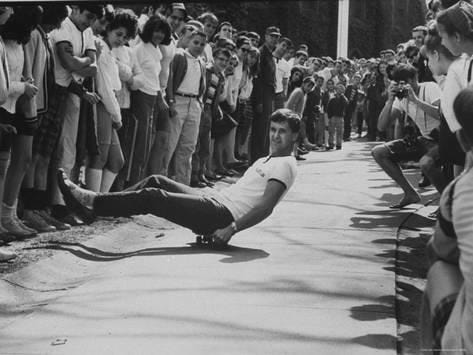
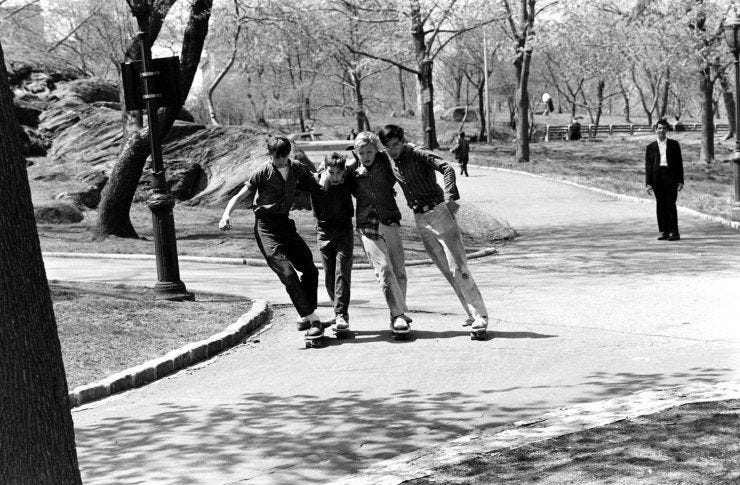
That was…until 1975. That year there was a drought in southern California and everyone in Los Angeles was instructed to empty their swimming pools.
And that year, a bunch of surfer kids broke into some of those empty pools and started to emulate surfing on their skateboards. They turned this flat art vertical. The documentary Dogtown and Z-boys tells this history so well. These kids gave the sport its dimension and attitude.
However. The burning question I had was… why did everyone in LA have a curvy pool? Right?
If everyone had square swimming pools, these rounded edges wouldn’t have existed. And then, skateboarding, as we know it, would not be a thing. Or at least skateboarding probably would not be AS cool. The bean-shaped swimming pool accidentally created the skateboard ramp, and therefore accidentally created skate culture.
Years ago, I set out to answer this question, in a whole story about why swimming pools are shaped like kidney beans. It’s one of my favorite adventures I’ve ever gone on. To completely ruin the story for you, here’s the answer. Most of the pools in Southern California are based on this pool in Northern California:
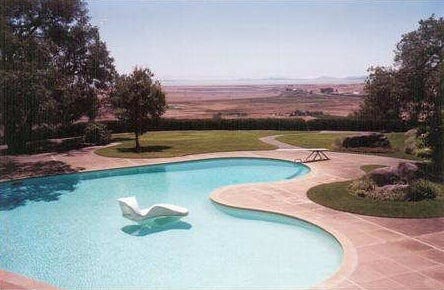
This is the Donnell Garden, an icon of landscape design that was featured on the cover of Sunset magazine. A lot of WWII veterans who had landed in California after being stationed in the Pacific Theater, found themselves as first time suburban home owners.
For the first time these young homeowners (former city dwellers) had lawns. They didn’t know what to do with the damn things! The big bright idea was to put in a pool. And many of these homeowners and developers saw the image of the Donnell Garden pool. I mean, it’s a totally amazing pool.
May I brag? I swam in it.
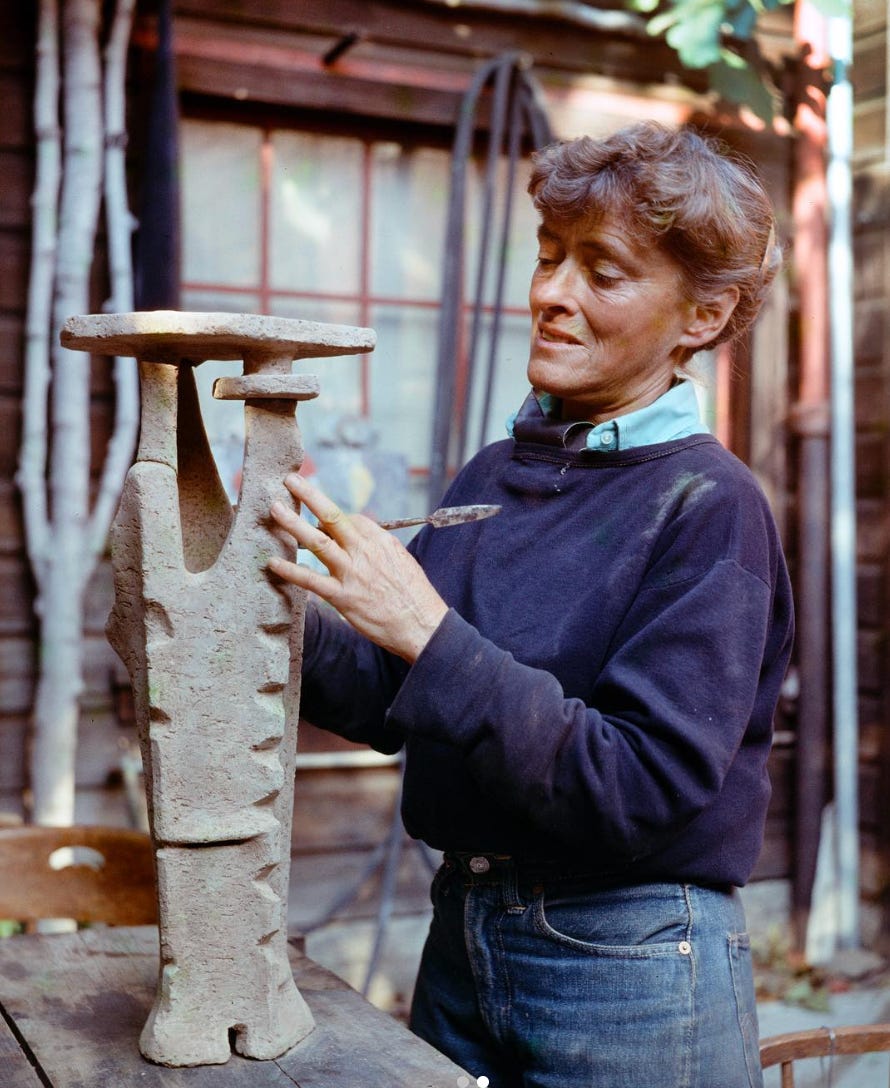
The Donnell Garden was designed by the famous landscape architect Thomas Church. The whole pool is a work of fine art: that white thing floating in the center of it is actually a stone sculpture by Adaline Kent
And.
You can trace Church’s inspiration back to a meeting Church had with the famous Finnish Architect Alvar Aalto.
Aalto is the father of woodsy modernist design, in part supported by the Finnish government. Not only because lumber was a major Finnish export, but it was also an international effort to align Finland with Scandinavia rather than Russia, because Finland is RIGHT in between the two regions. (I digress! Aalto is fascinating!)
When Church and Aalto met, Aalto was designing one of his masterworks, the Villa Mairea, located in rural inland Finland. Beautiful, but tragically far from any bodies of water.

And, because this is Finland, any proper country house needs a sauna. And after the sauna, of course, you must jump in an ocean or river or lake. But this villa is, again, tragically, inland. So Aalto designed a pool that looked like a natural body of water.
LOOK AT THE POOL
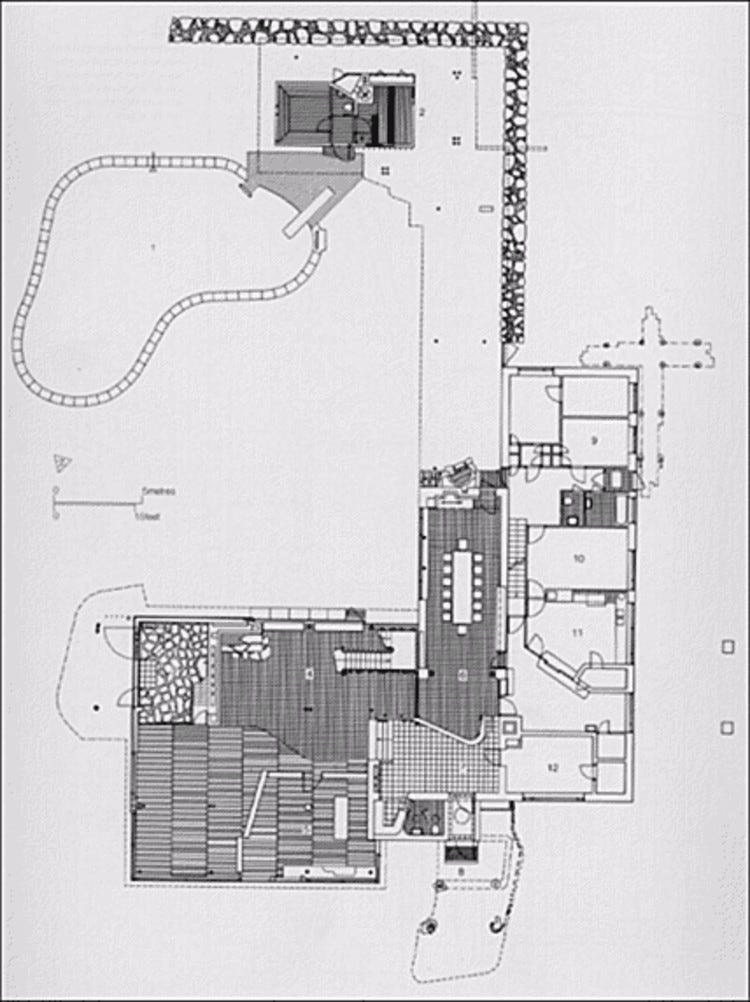
It’s hard to say directly that this is the inspiration for the pool. There’s no document of Church saying “and so I took the pool from Alvar Aalto.” But Church definitely saw these plans. These were on the wall when they met. Church took the lake-like form and made it slightly ever so jazzy, and modern.
And through this strange game of architectural telephone, curves became embedded into skateboarding culture. Curves are just part of what skateboarding is. The sport is no longer a flat and rigid. I couldn’t possibly be.
So it makes sense to me that the clothing for skateboarding also should not be flat and straight.
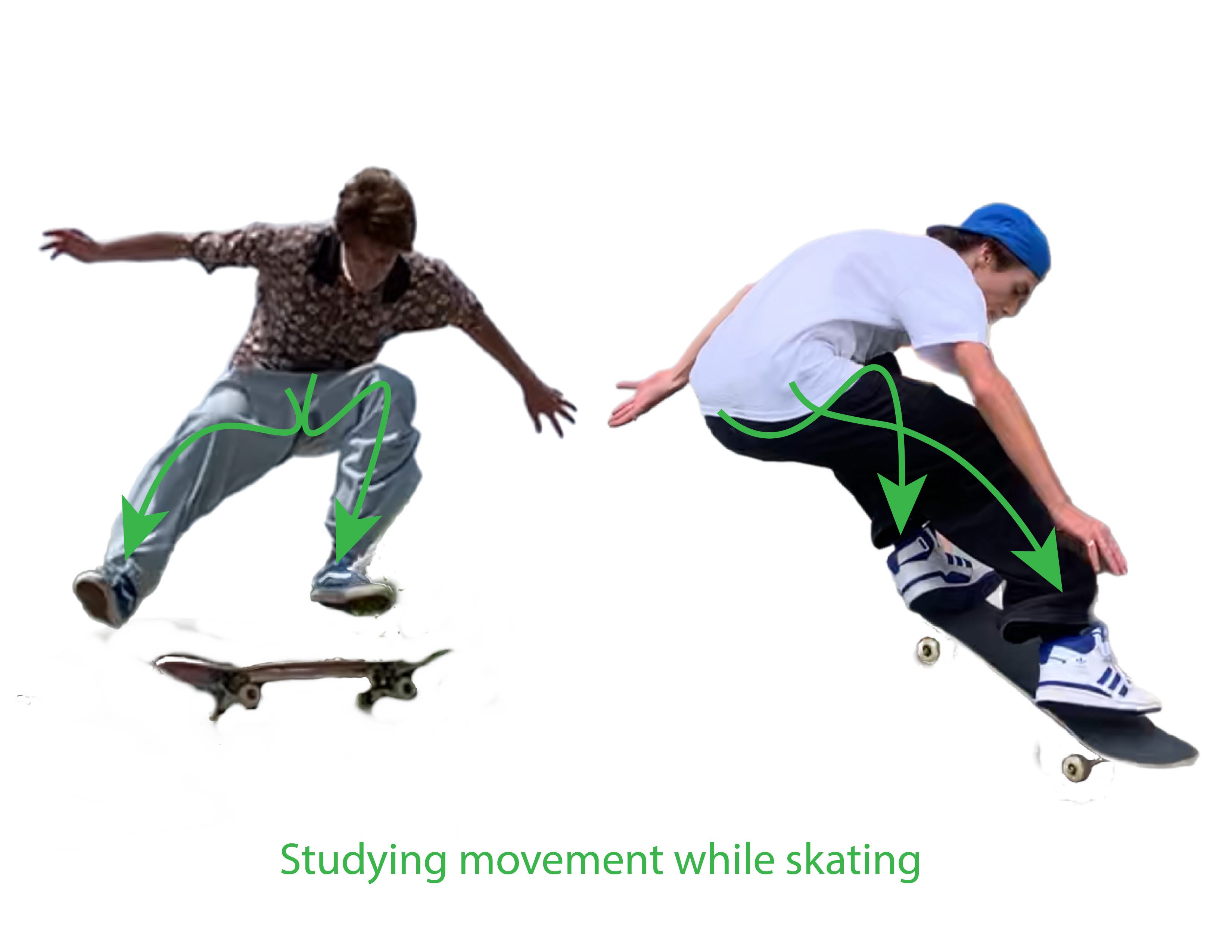
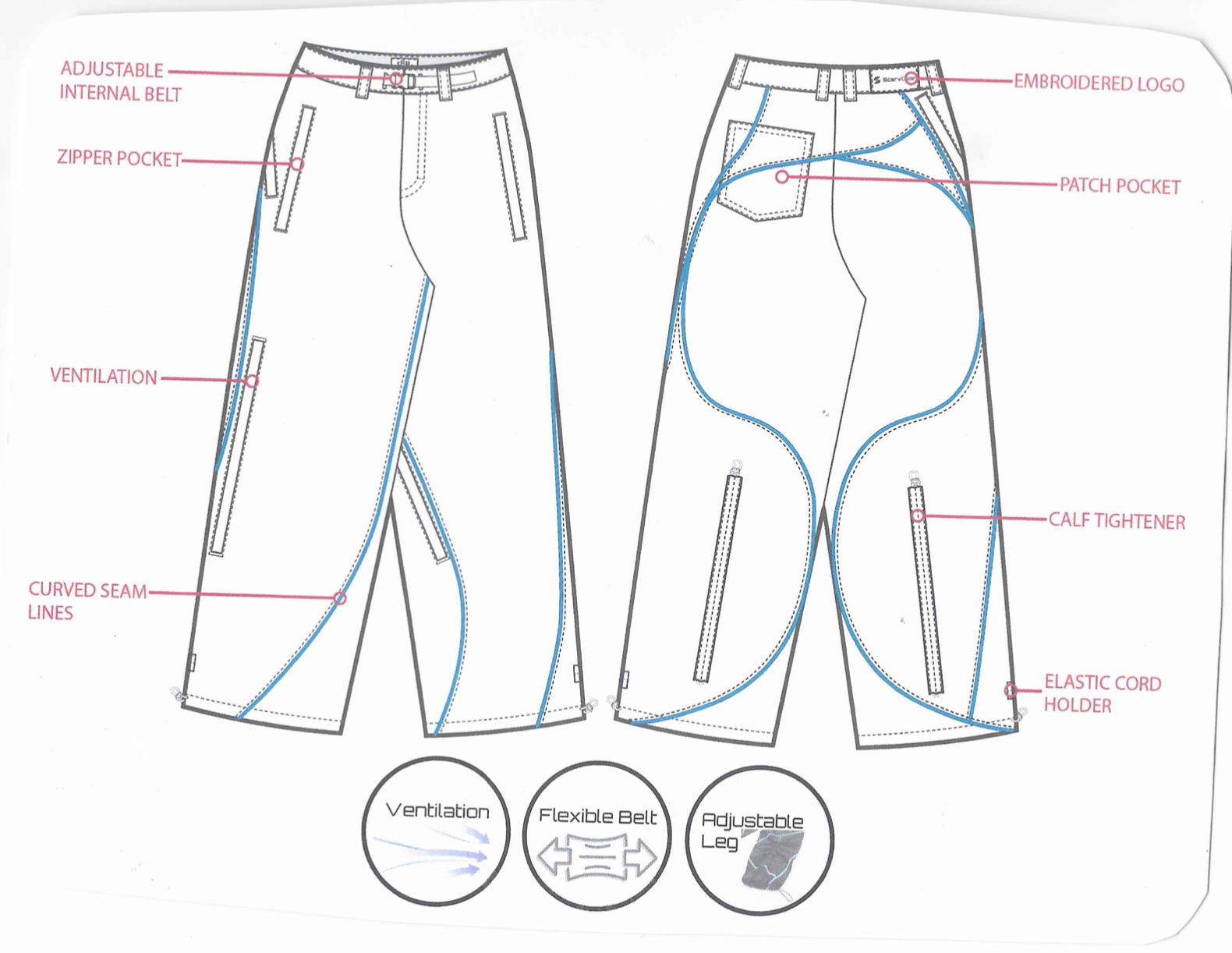
This is why I just love what August Duncan is making with ScervGear. August is a skater from Santa Cruz, a design school graduate, and for the past eight years, a self-taught sewist. My favorite project of his has been a radical reconsideration of skate pants, to better match the sport.
August wanted pants that would breath and flex with him. “I try to accentuate certain movements with my clothes,” August says. “I like to do a lot of grabs in skating where you bring your board up close to you and you’re in these warped positions where your knees are at your chest. So I wanted pants that not only allow this movement, but it accentuated it in a certain way.”
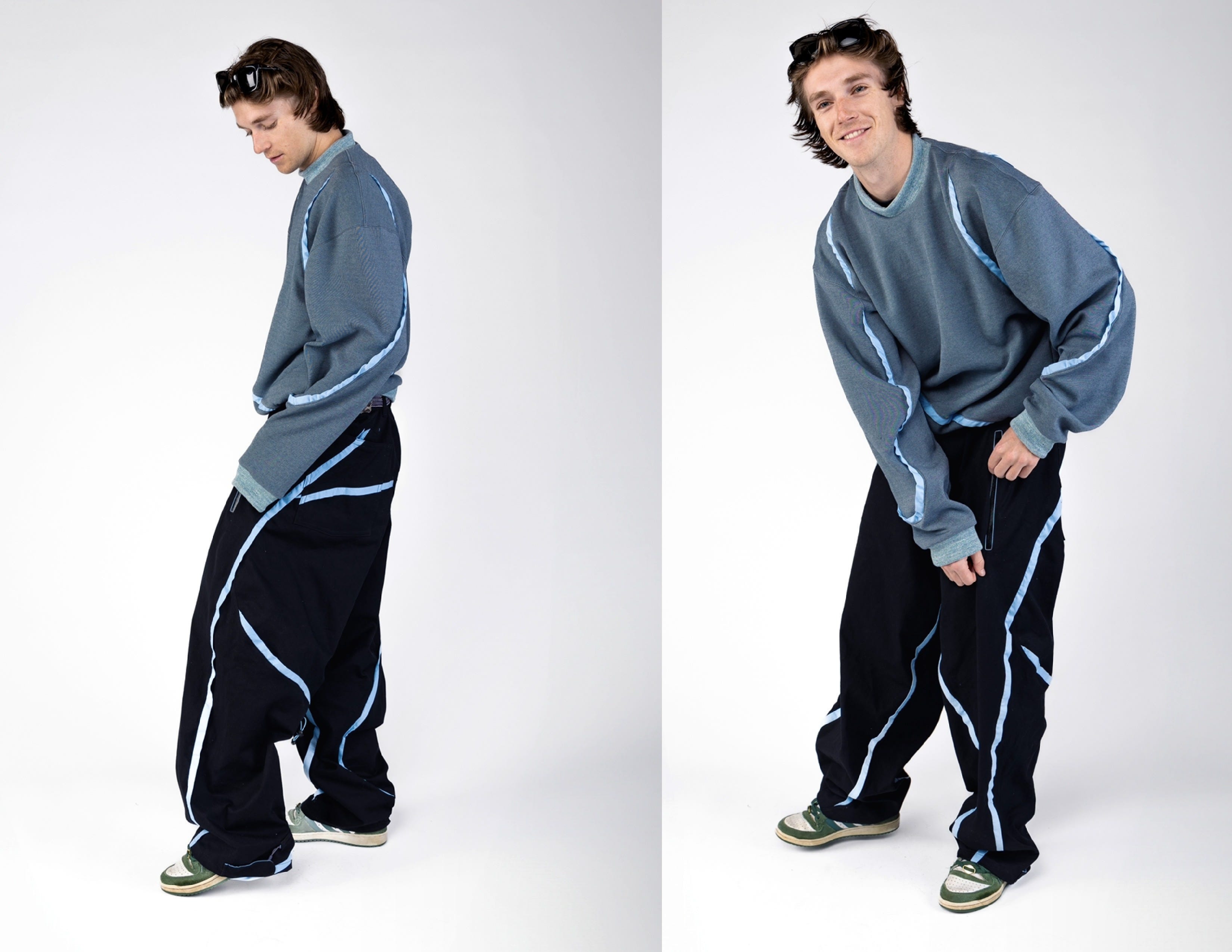
The resulting pants have barely any straight lines in them. They are truly curvy pants with curved seams. “A lot of people when they do curved seam lines, the regular seams are still there.” August, however, was insistent that he would go back to first principles. These would not be standard pants. “So I feel like it's important to, to remove that regular straight side seam and come in totally with the curves.”

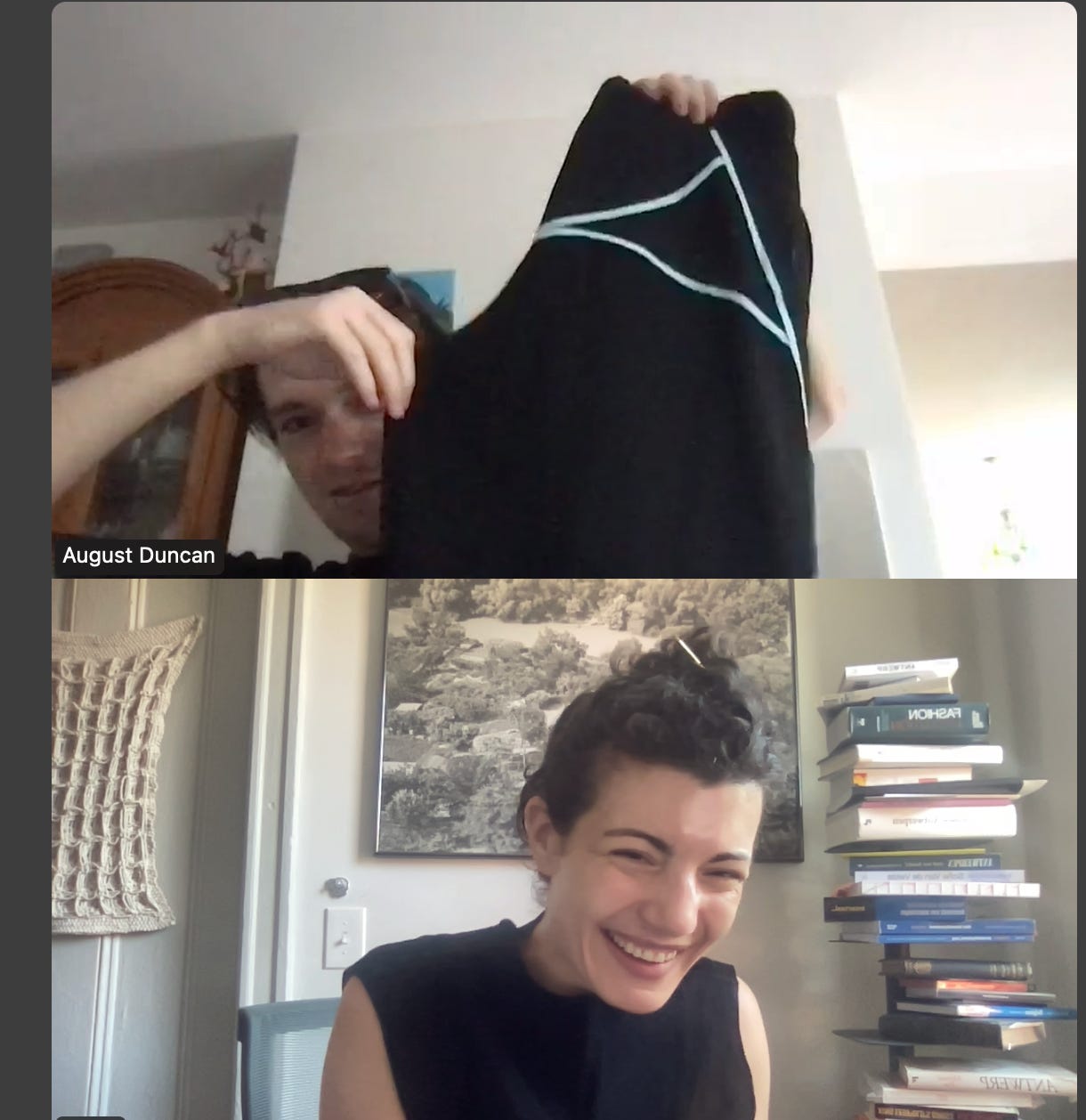
August had to functionally go back to basics of pattern making and re-define what pants are from scratch. “They're definitely more complicated to make,” August sighed. “If you lay the pattern of the pants out on flat ground, it's just this assortment of different shapes. It almost doesn't look like a pant pattern compared to a regular pair of jeans at all.” He’s right. The pattern looks like a Matisse:

The advantage of curved seams, August learned, is that he could have more freedom to remove or add fabric, to allow the pants to sit in certain ways and “really map out where you want the curves on the body.”
For example, even though the 90s and baggy style is in, curves seams help his pants look baggier than they actually are. August’s pants secretly sort of high-waisted. “A lot of the baggy pants I've gotten nowadays, the crotch is dropped super low. And when you drop the crotch lower on the pants, you're not gonna be able to open your legs as far , essentially it kind of stops your legs.” The curves help create a low look with actual movement capability.
It’s so funny to think that Alvar Aalto is indirectly responsible for these totally cool pants.
In all seriousness, I think he would have really liked them. I truly think they’re not far removed from what Aalto would have designed. if Aalto had only known what skateboarding would become.
Great piece that is exceptionally Articles Of Interest-y in terms of its research and interweaving of history/culture/technology
Aalto fact!!! The savoy vase is an iconic piece of his glassware, fluid like his architecture, on the shelf of every finnish home next to the moomin mug and the mari totes.
his famous collection of vases is titled Eskimoerindens skinnbuxa (The Eskimo Woman's Leather Breeches), based on a sketch he did, appreciating the flexible but structured form of a relaxed fit. From pants we come pants we return to