
"Cocktail Attire"
What does it even mean

Wedding invitations all seem privy to a sort of code within the dress code. There, embossed in stiff card stock, is the suggested “cocktail attire.”
This is the gateway to innumerable bridal forums and discussion boards seeking to decode what, exactly, “cocktail attire” means. For those who wear suits, the answer is, of course a suit- one that’s loose and unstructured. For those of us who wear dresses, we are at a loss.
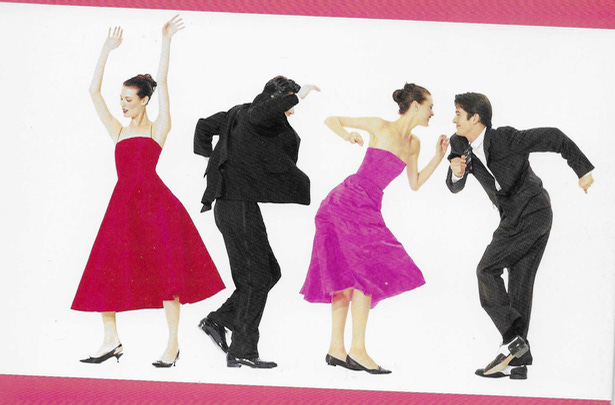
A 1960s shift? That’s a cocktail dress. A full-skirted Doris Day-esque number? Also a cocktail dress. A slinky jersey dress that could be worn to studio 54? This too, is a cocktail dress. In fact, it might be easier to define a cocktail dress by what it isn’t. It’s not a sundress or a playdress for romping around in the day. Nor is it an impressive evening gown, or a flowy dance dress. A cocktail dress is, in the words of Jean Arthur in the 1936 film The Ex-Mrs.Bradford, “Something to spill cocktails on.” None of this brings me any closer to pinning down a definition.
Truly, I have imbibed cocktails in all kinds of dress and (during pandemic lockdown), in various states of undress. There is perhaps no other food or drink, with the possible exception of the lobster bib, that demands its own uniform. Despite the sassy assertion of Jean Arthur, the name “cocktail dress” is a bit of a red herring. The notion of the cocktail dress has less to do with the drink itself, and more to do with the circumstance that allow for it.
One is only able to kick back with a stiff drink once the chores have been done, the children are put to bed, and there’s a moment devoid of obligation (or, at least, a moment to forget obligation). The freedom to get wasted was, therefore, elusive for most women for most of the cocktail’s history. To give you an idea of the gender disparity: the word “cocktail” entered the American lexicon in 1803, and it was over a hundred years later(!) in 1910 when The Boston American announced “It has become a well-established habit for women to drink cocktails It is thought a smart thing to do.”
Sure, at various points in history everyone- including children- drank beer when it was considered cleaner and more pure than potentially cholera-infected water. But hard liquor? That was on the level of smoking tobacco. It was a privilege for men, unbecoming and sinful for a Victorian woman, who was more or less resigned to her home in the evenings.
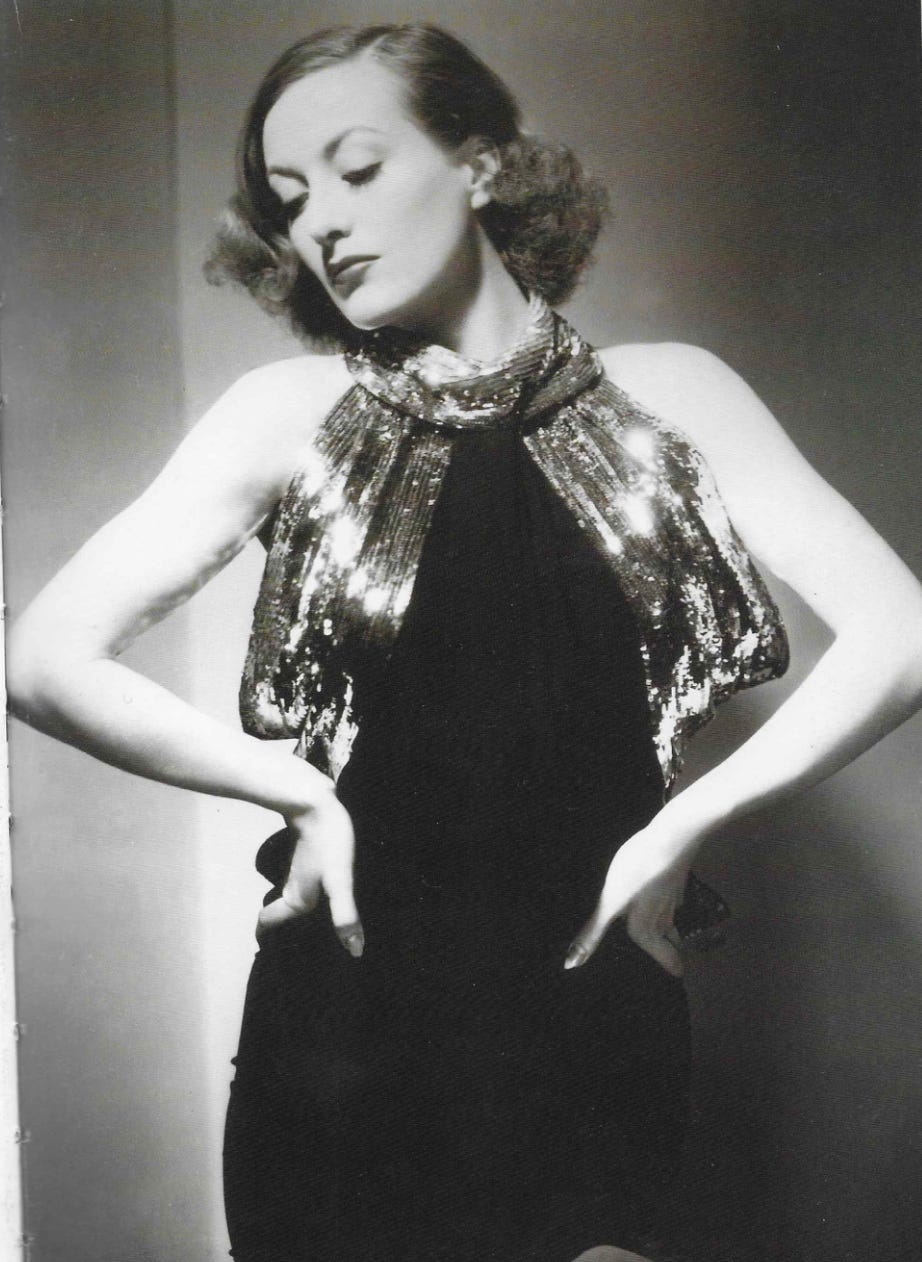
In the turn of the last century, the kind of woman who drank cocktails was probably the same kind of woman who was starting to ride bikes and wear bloomers and make noise about wanting to be able to vote. This new “Drinking Woman” led a busy, active lifestyle, extending beyond the private sphere. Into the 1920s, when a woman could finally find herself able to vote, bike, wear pants, and hold down both a job and social engagements, she would soon realize she needed a flexible, versatile dress for her flexible, versatile day. It was like Coco Chanel read their minds.
In 1926, when Chanel presented a simple dropped-waist black dress, Vogue breathlessly described it as “a sort of uniform for all women of taste.” Here it was at last! A ready-to-wear staple, able to get the modern, dynamic woman through all the events of her day! This minimalist dress could go from afternoon to evening to night to late night, and American women took this French design and made it wholly their own. “The real masterpieces of American design are the cocktail dresses,” Christian Dior wrote in his 1957 autobiography. “[T]he cocktail being the symbol par excellence of the American way of life.” Dior, the first designer to proclaim that an even dress was officially called a “cocktail dress,” was enamored of the way that feisty American women lived and drank. The martini, after all, was “the only American invention as perfect as the sonnet,” in the words of H.L. Menken. Similarly to the martini, the cocktail dress was deceptively simple, and mostly just well-accessorized.
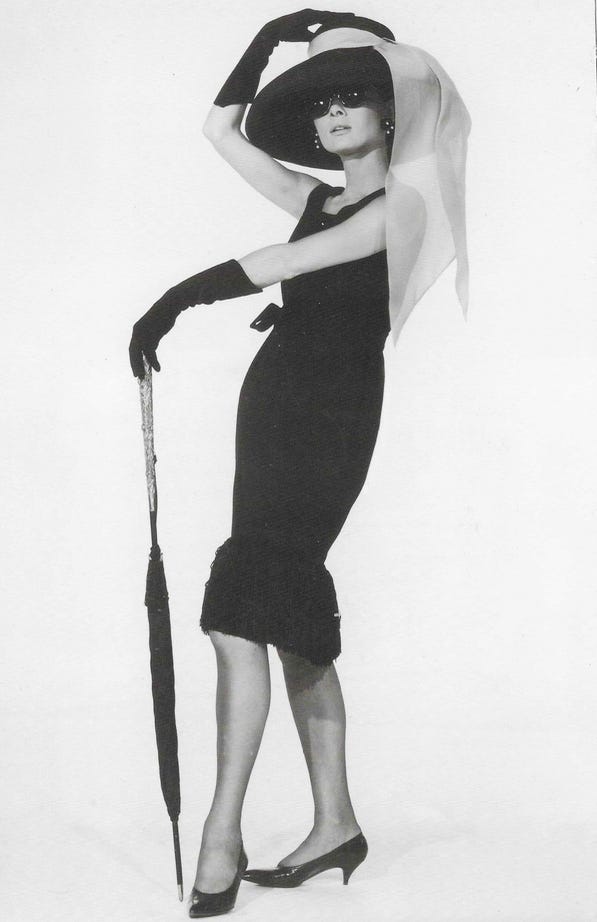
“The quickest way to transform a little black dress into a personal fashion statement is through creative accessorizing, which has always been an important aspect of cocktail dressing.” Laird Borrelli-Persson wrote in her book The Cocktail Dress. The otherwise-plain cocktail dress was intended to be dressed up or dressed down as needed, by means of loud accessories.
“Cocktail rings” were big and flashy. “Cocktail hats” had feathers, rhinestones and beaded embroidery, and Dior himself noted that “cocktail hats are the fanciest hats of all.”Cocktail dresses were, therefore, distinguished by their accouterments. “Cocktail wear can be made of any fabric and be of almost any style design and still be appropriate,” Anne Fogarty admitted in her 1959 book, Wife Dressing. “I believe in accessories as the prime factor for cocktail garb,” Fogarty advised. “ Satin shoes. Marvelous jewelry. White kid shorties [gloves]. Festive handbag. These can transform a simple, uncluttered wool or silk into a gala ensemble.” The most glamorous and important accessory of all, of course, was your drink, garnished in its elegant coupe glass. As Borrelli-Persson put it, “one should look like a long cold drink of water while sipping something decidedly more intoxicating."
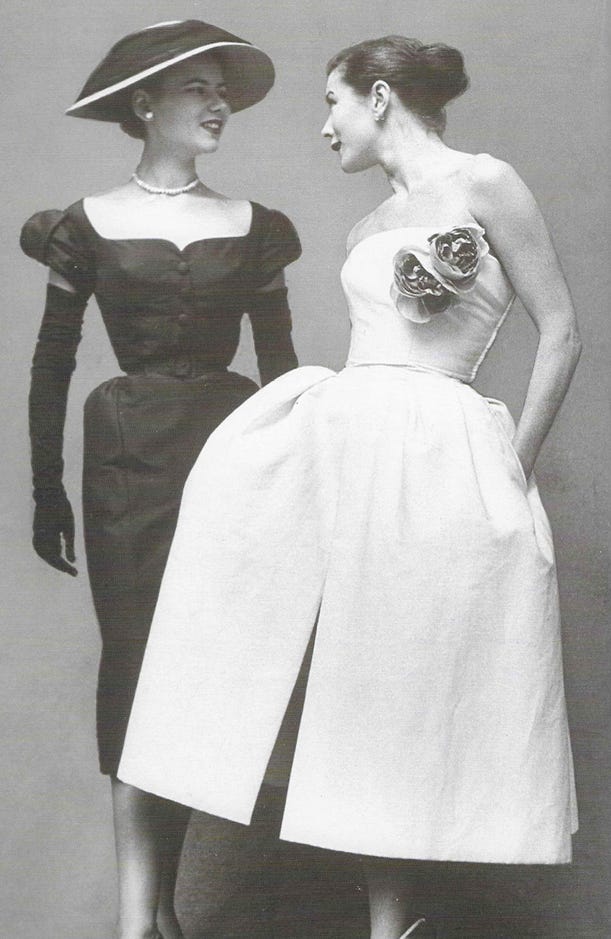
This, today, feels absurd. I cannot imagine anyone who could wear a dress from work right to a wedding. Adding a hat, or a ring, or an elaborate drink, could only do so much. And so. “Cocktail attire,” in the original sense, is not actually what these wedding invitations are soliciting. Somewhere, the meaning of “cocktail attire” changed. “Although the cocktail dress was originally intended to give women an informal and practical dressing option,” Laird Borrelli Persson wrote, “it's now one of the most formal items in the closets of many modern women, not limited to any sort of time or social function.”
While “cocktail attire” has become fancier, cocktails themselves have become more casual occurrences. We are expected to drink at family gatherings, work outings, and any given Saturday night. Just as you don’t need a party to buy tupperware, you don't need a party to drink cocktails. In fact, one has a hard time finding an excuse to host a party at all. The only real reason to have a gathering now, is just to look at each other, and to be seen by each other. And so while the “cocktail dress” used to be a simple addendum to the main event (the drink), now it’s up to the dress to make the occasion.
So this is my interpretation. Ultimately, these wedding invitations are asking for help. The work of enlivening the party cannot only be placed solely upon the humble cocktail, no matter how delicious, or how well garnished. A gathering can only be elevated as an “event” through everyone’s participation. Which means everyone’s dress.
Yes, the notion of a cocktail dress is as diffuse as it's ever been, but it’s also the most liberating. A cocktail dress is something less formal than a gown, more formal than a sundress, but now its main objective is to be fun. It aims to be intriguing to the eye and energizing to the party. As guests, we play a role. Our attire can,”represent not only our ticket of admission, but our contribution to the effect of a party,” Emily Post wrote in 1922. “What makes a brilliant party? Clothes. Good Clothes.”
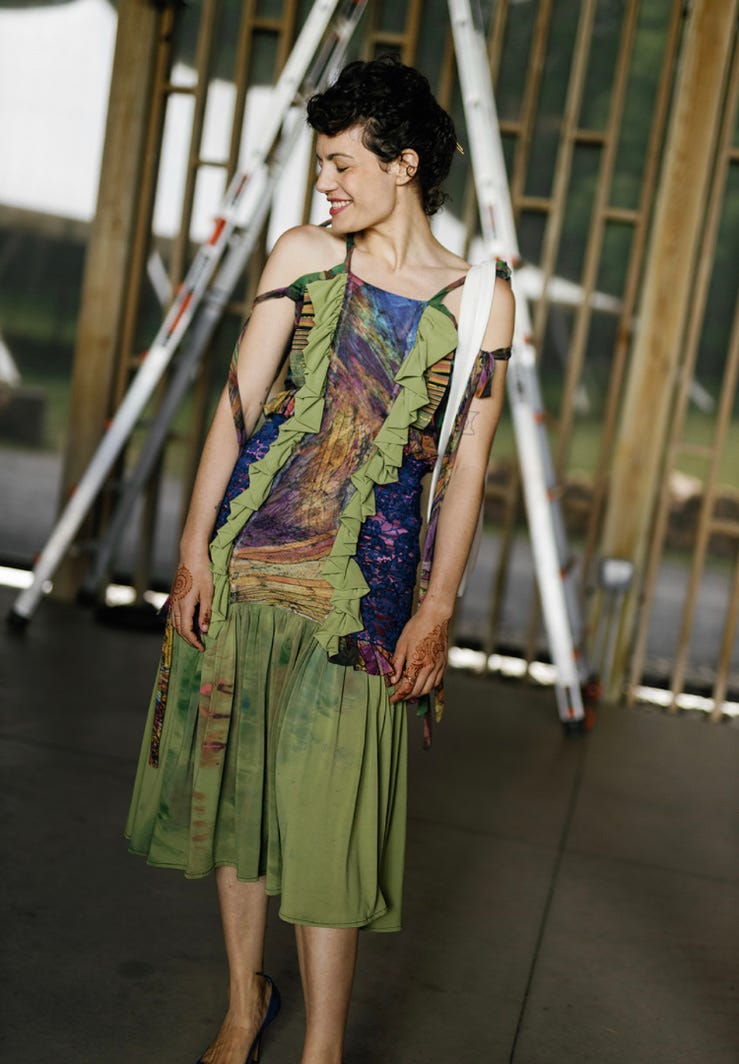
All historical images (and many quotations) taken from the excellent The Cocktail Dress by Laird Borrelli-Persson, except for the image of me, which was taken by Nicole Plett.
Best cocktail party ever filmed: the opening scene in "Auntie Mame" – a movie that is wonderful in every way.
I *just* got a wedding invite that wants me to wear a cocktail dress, and I’m going to have a time of it figuring out what to wear.