
Wrestling in Riyadh
What do women wrestlers wear in Saudi Arabia?


On the podcast feed today is a very special treat: a feature from one my favorite new podcasts, Signal Hill. Signal Hill is an audio magazine, where every article, opinion piece, and feature is an original podcast. It’s so smart. There’s a story I particularly love, about a push up bras, which you can hear on the Articles of Interest podcast feed.
But here on Substack is something completely different.
I can’t say that I’ve ever really watched wrestling - or even thought about it at all. But Scarlett Harris, author of A Diva Was a Female Version of a Wrestler: An Abbreviated Herstory of World Wrestling Entertainment, has opened my eyes.
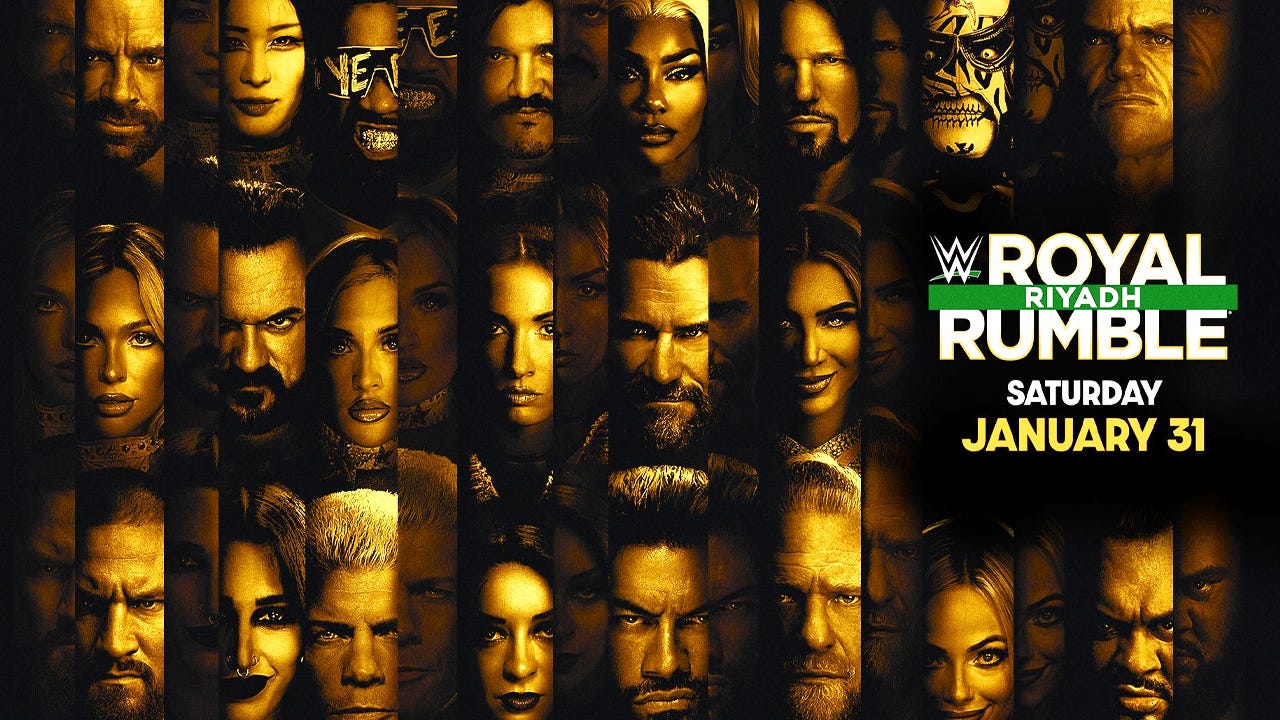
There’s a huge match coming up tomorrow- the Royal Rumble in Riyadh. And in a country with strict modesty laws… what are women wrestlers supposed to wear? It’s a rich and complicated answer.
Take it away, Scarlett:
Everyone knows wrestling matches are predetermined. WWE even acknowledges this in their Netflix docuseries. Borne of carnival tents and traveling circuses, the concept of “kayfabe”—maintaining the suspended reality that wrestling is real—persists today. Still, the spectacle of the show matters. Especially when you’re looking at women in the ring, and what they are wearing.
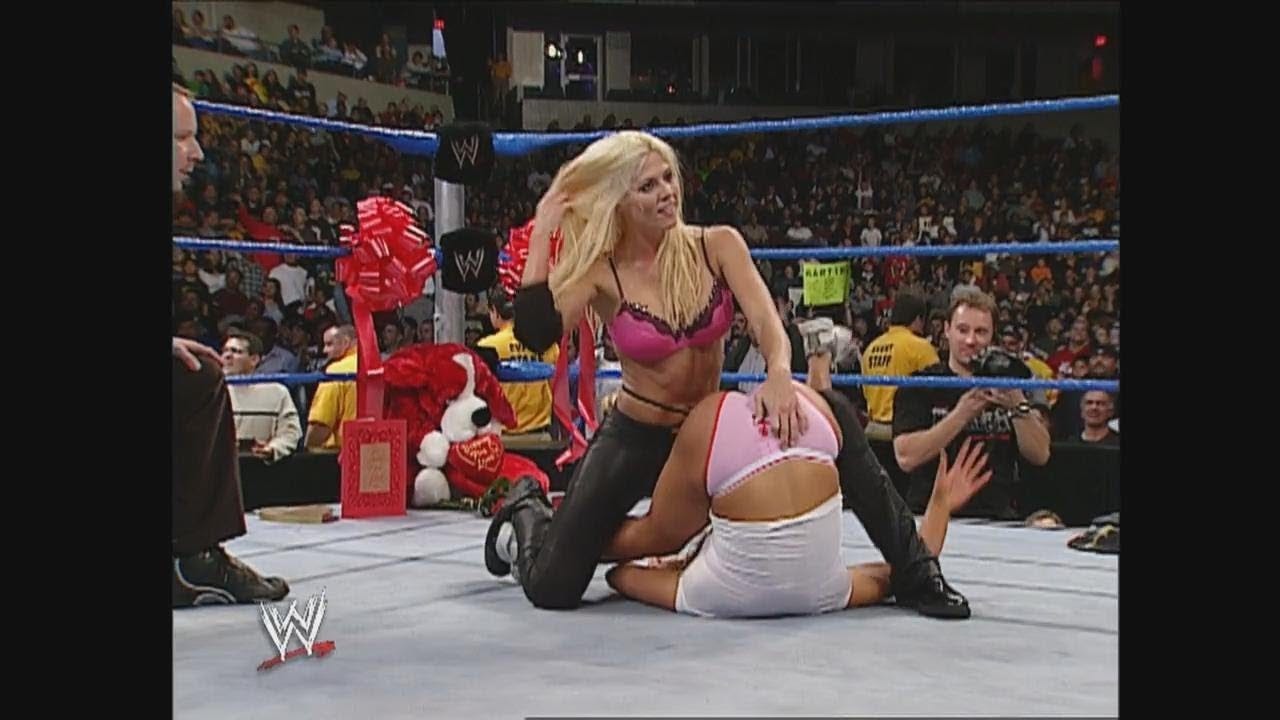
In the late ’90s and 2000s, many women in WWE were untrained models. Women’s “wrestling” often consisted of little more than slaps and hair pulling. Usually these were bikini contests masquerading as wrestling competitions.
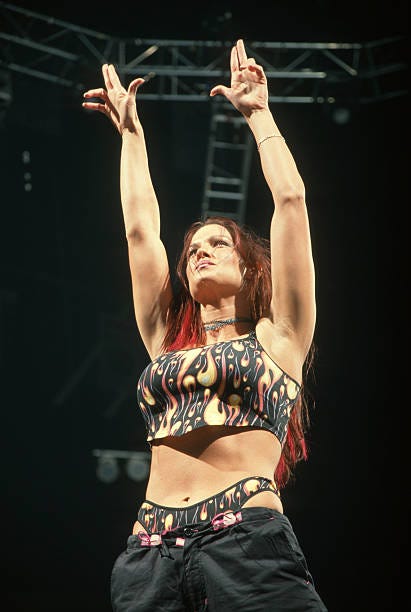
Still, some athletes managed to stand out, like Lita, who dressed like a fly-girl in baggy pants, fishnet arm sleeves and an exposed thong—not unlike what can be seen in the Y2K fashion renaissance today.
Women’s wrestling has been taken more seriously in recent years, and so some wrestlers have amped up the performance aspect in their intricate outfits, bringing in elements of their heritage, pop culture and cosplay. Some even make their own gear and dedicate themselves to never repeating an outfit—current WWE star Bianca Belair does both!
McKenzie Mitchell, ring announcer for WWE and TNA and author of the forthcoming book Threads of Triumph: Professional Wrestling’s Most Iconic Looks, is excited by “how far we’ve come in professional wrestling in these women’s gear.” As Mitchell puts it, the sport has gone beyond looking for a reason to put a woman in a thong bikini- “ it’s taking them seriously as true performers, as true athletes who don’t have to be in bikinis or doing a wet t-shirt contest. They’re able to show up as actual athletes which is what they deserve in the ring.”
This conversation was started anew in 2019, when WWE premiered women’s wrestling in Saudi Arabia. Given that the kingdom had only recently permitted women to drive and to vote (and to this day, women are still unable to marry, divorce, travel, or get elective surgery without approval from a male guardian), it was shocking that there was a publicly viewable women’s match, between Natalya and Lacey Evans.
In observation of modesty laws, the two women wore oversized t-shirts over long-sleeved tops and pants: a marked difference from the often scanty-yet -utilitarian gear women often wrestle in. Since 2019, women have wrestled frequently in Saudi Arabia, including in the fast-approaching women’s Royal Rumble match.
This weekend, during the Royal Rumble, 30 female fighters will enter the ring at two-minute intervals, all desperately attempting not to get thrown over the top rope and remain the last woman standing.
With the added limitations in Saudi Arabia, women wrestlers have upped the ante with their gear. “We can’t use plunging necklines, for example, because they don’t want to imply overt sexiness,” says Lori Gassie of No Gimmick Gear, who freelances for WWE. “If there is a sheer element, we have to put a true color behind it.” Given these constraints, Gassie put Tiffany Stratton in a space camp-meets-sleepover bodysuit emblazoned with her catchphrase, “Tiffy Time.” In 2024 Gassie designed a Britney Spears-inspired red catsuit for wrestler Liv Morgan.
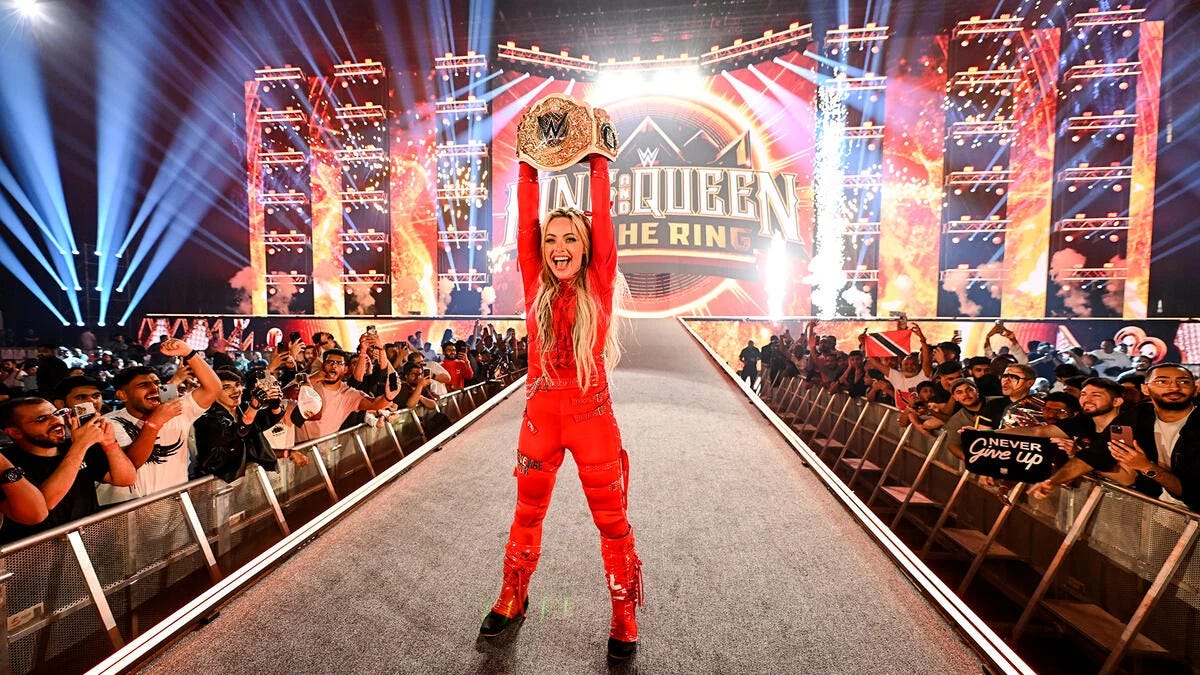
Allegations of “sportswashing” aside (though I’ve been critical of this practice elsewhere including in my book on women’s wrestling), we’ve come a long way since the XXL t-shirts of the first women’s matches, baby.
While the kingdom’s strict modesty laws nominally apply to men, WWE’s male wrestlers have never actually been required to adhere to them (because sexism), and still perform in glorified underwear briefs.
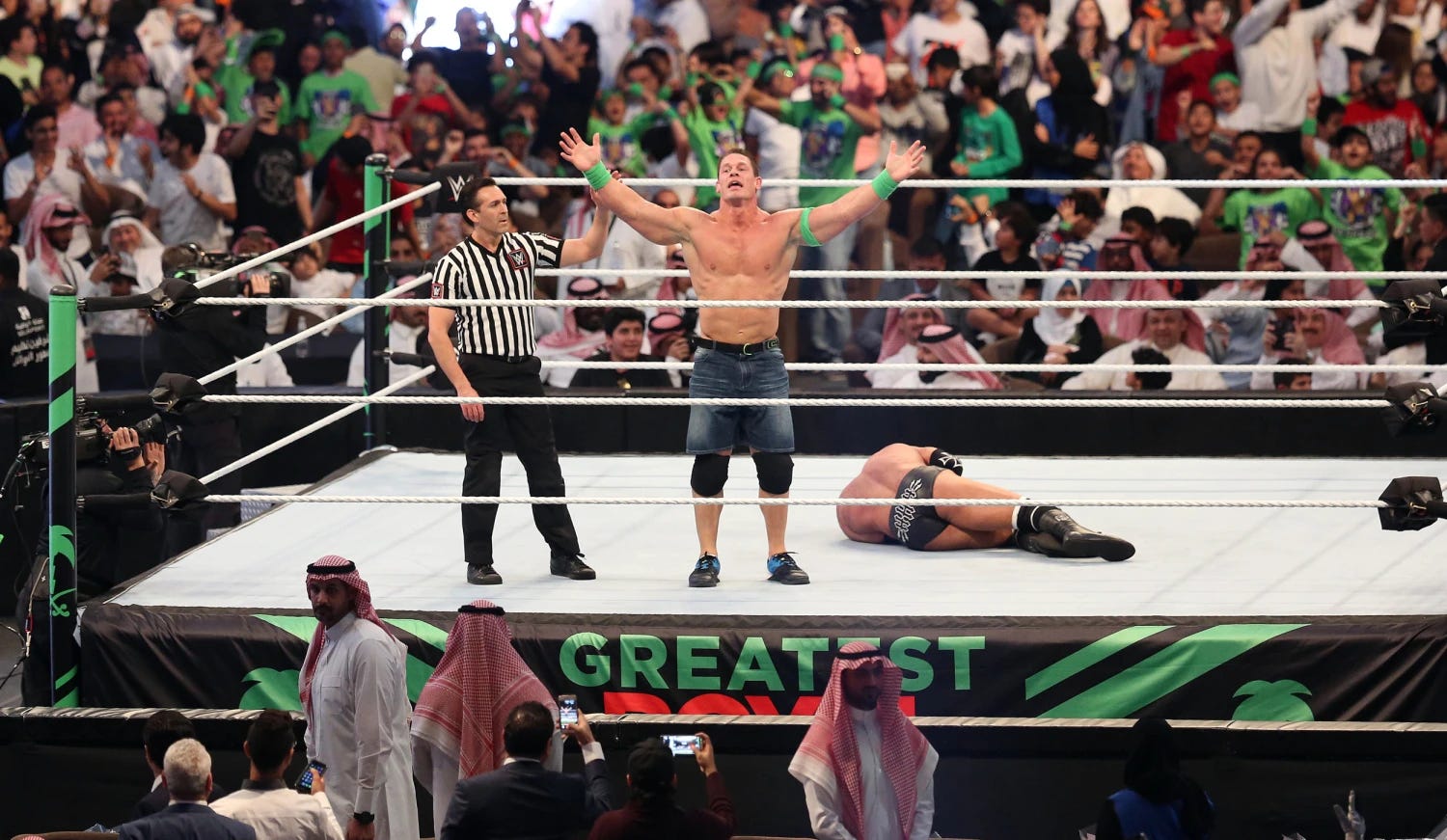
So this begs the question: since women have to completely rethink and readjust their fabric-intensive costumes for the Saudi market, should women wrestlers receive a bonus in their paycheck? Given that 30 women will be wrestling in Saudi Arabia as part of the Royal Rumble, is this something that has been factored into their contracts for the event?
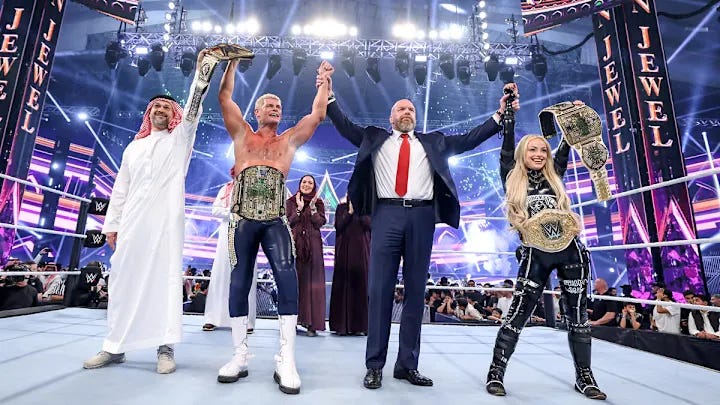
According to an anonymous wrestler speaking to the wrestling news site Fightful, women wrestlers are “responsible for paying for and having our own gear made for the show to fit those parameters.” Just as they presumably do not receive a “glam” allowance for the makeup, hair extensions and self-tanning that are required to perform on international television 52 weeks a year because there is no off-season in wrestling.
When top female star Bayley was being interviewed by Kristine Leahy for Fox Sports in a since deleted clip, Leahy expressed surprise that the wrestlers were not unionized. Wrestlers are considered independent contractors, which means they have to pay for their own health insurance and travel—you can bet your bottom dollar this includes forking out for their own clothes and makeup.
Yes, male wrestlers are also required to buy their own costumes and to be in top physical shape, but let’s be real: the beauty standards are unbalanced. And while wrestlers who perform on high-grossing cards, such as WrestleMania, usually receive a bonus, the majority of the women’s roster will be competing in the 30-person Royal Rumble match that stipulates that only they be covered, so wouldn’t it make sense to just put it in all women’s contracts?
“I wouldn’t break it down to a nickel and a dime and say that it’s costing this much more,” McKenzie Mitchell says, “In professional wrestling you’re going to be spending money to invest in your character regardless. I see it as an investment rather than an expense going to Saudi Arabia.”
In fact, designer Lori Gassie estimates that the modest gear doesn’t actually require as much fabric, time and effort as one might imagine. “I would say it’s probably an extra yard of fabric,” she says, noting that regular wrestling gear already covers the legs and arms with kick pads, knee pads, arm bands and a variety of smaller garments. However, Gassie says. “The rhinestones can get a little out of control, though!”
I’m not surprised that no one wants to speak ill of WWE. Even though WWE has been embroiled in a sex trafficking lawsuit with its former boss, Vince McMahon, the company remains the pinnacle of the wrestling business. Many former employees are hesitant to speak critically about WWE, in case they have a chance of working there again. Similarly, there isn’t a lot of criticism about the requirements stipulated by their host country. No one is batting an eye that the temporary stadium for The Royal Rumble event was erected in just three weeks (I bet you can guess using what kind of labor).
The modest looks for Royal Rumble will be another way for wrestlers to invest in their characters and careers. “The Royal Rumble is like a fashion show for sports,” says Mitchell. “Sometimes you have only five seconds to be memorable in that moment and that really boils down to your gear.” Like everyone else, I’ll be observing the fashions and admiring every wrestler’s 5-second debut. But the hidden costs will always be in the back of my mind.

 | A guest post by
|