
Trader Joe's Totes
The It Bag of 2025


Are you also seeing this everywhere? Everyone is carrying the Trader Joe’s tote bag. This especially caught the eye of Holly Davies, an audio maker and environmental campaigner based in London.
To Holly, this bag felt quintessentially American. During a strange time to brandish anything American, why does everyone suddenly proudly carry these bags? And, most mysteriously of all, why does Holly feel so protective of them?
Take it away, Holly.
It’s been increasingly difficult to connect with my American-ness recently. Most of the reasons are perhaps glaringly obvious, but it’s especially stark as someone who grew up and lives in the United Kingdom. I have the mangled ‘London’ accent and I have the British overwhelming sense of shame. And while I also have an American passport, the most American thing about me might be my unabashed and undying love for Trader Joe’s.
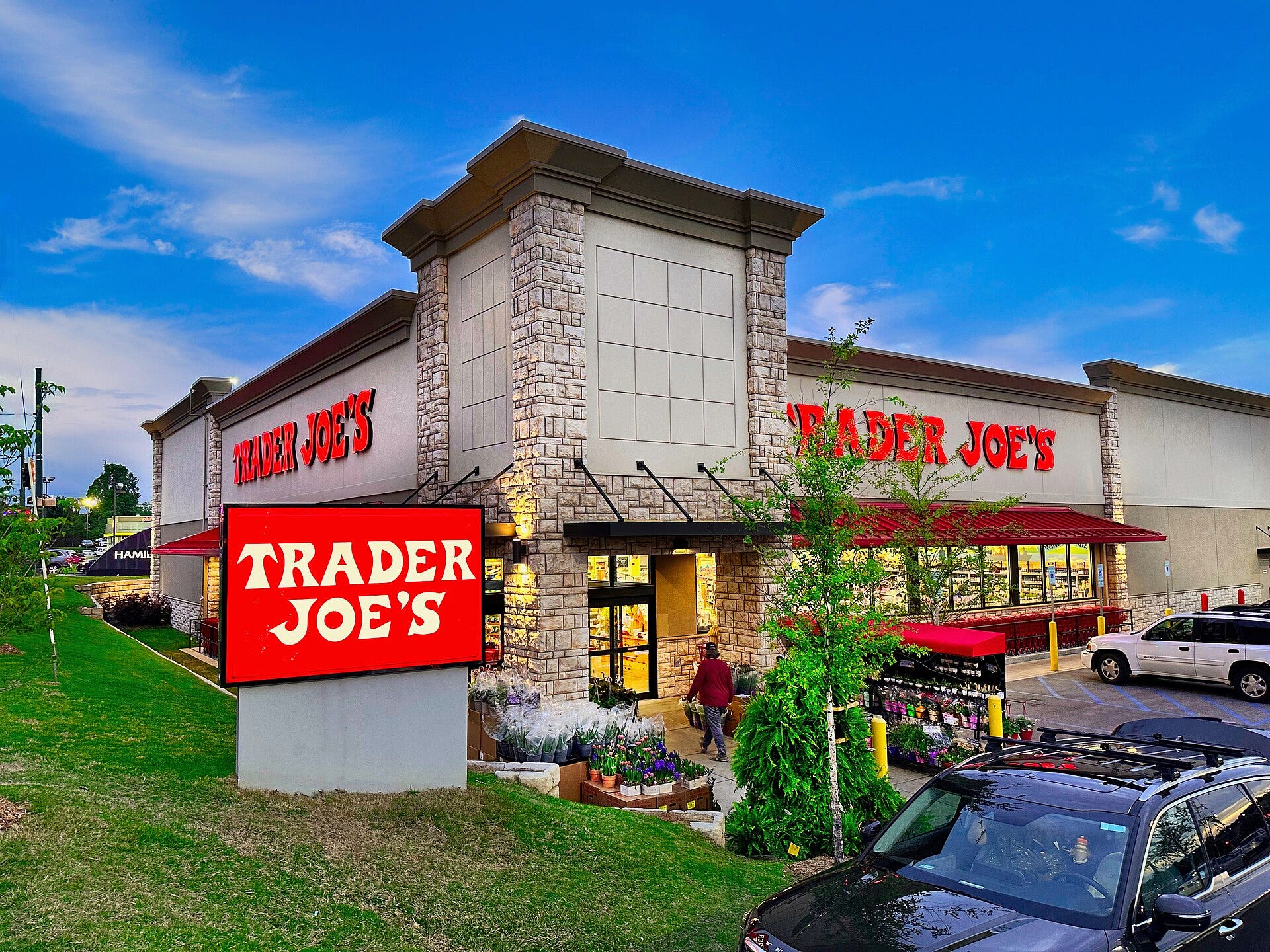
This place, with its cheap abundance of plastic wrapped dark chocolate covered pistachios and pomegranate knock off Pop-Tarts, with its entirely too-cheery staff, is the apotheosis of urbanite American culture. It was also embarrassingly high up on my itinerary when my boyfriend finally took his first trip to the States with me last fall. And maybe for these reasons, while waiting in the check-out line, overwhelmed and confused, he convinced me to let him buy me one of the classic Trader Joe’s canvas totes.
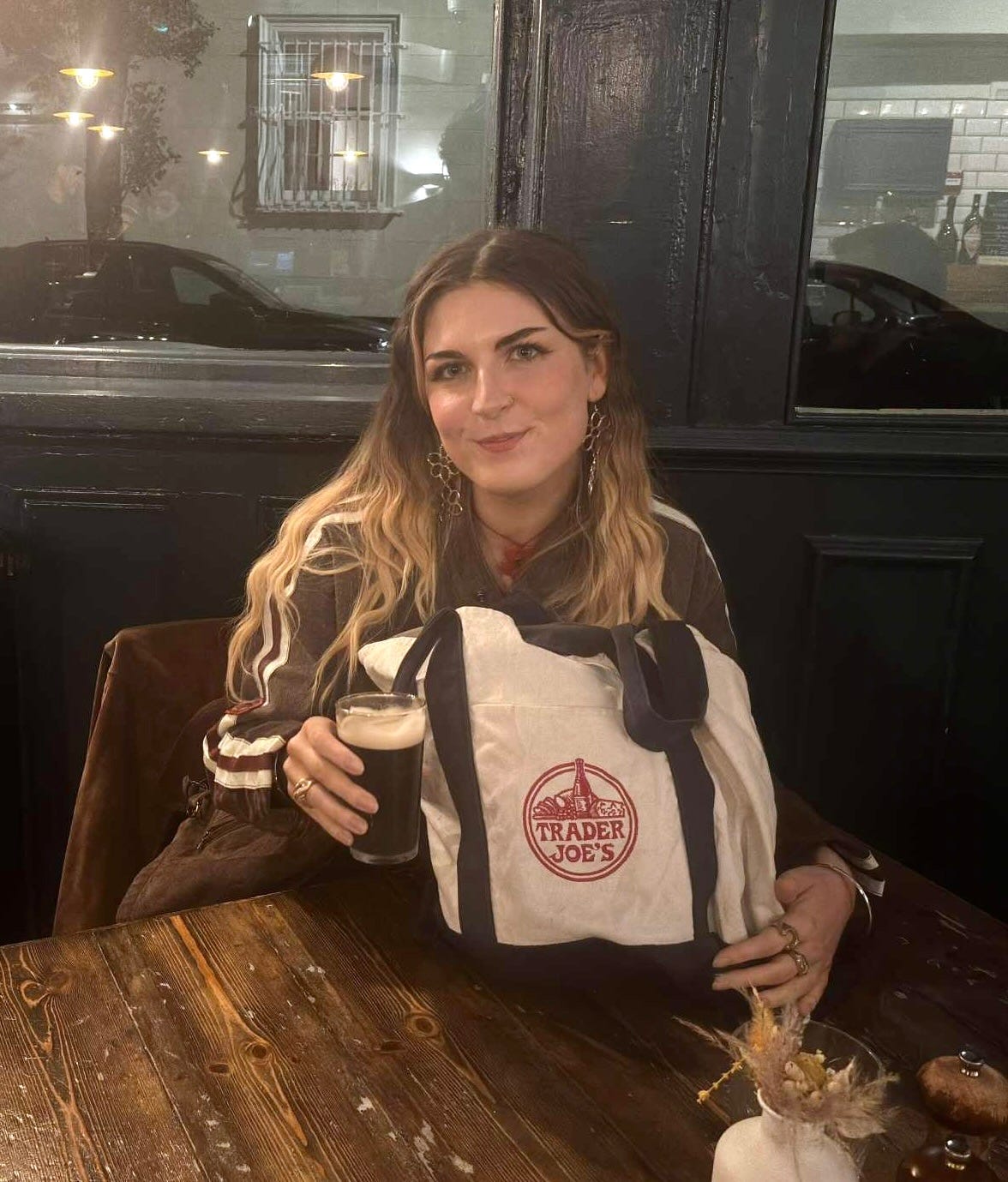
Even though Trader Joe’s has no UK locations, back home in London, I would occasionally see someone else carrying the same bag. It was nice to see another like-minded American out in the wild, or so my bias told me. I assumed that as expats they were probably left-leaning, and we’d share a knowing, albeit weary smile.
Lately though, I have been seeing three or more TJ’s bags every time I leave the house. There simply couldn’t be this many liberal Americans who have fled to London, right? My queer friends lament that, due to the mainstreaming of wearing a carabiner on your belt loop, they can no longer identify their community by them. I can no longer identify other progressive Americans abroad. Though perhaps, that’s never what this tote bag meant in the first place.
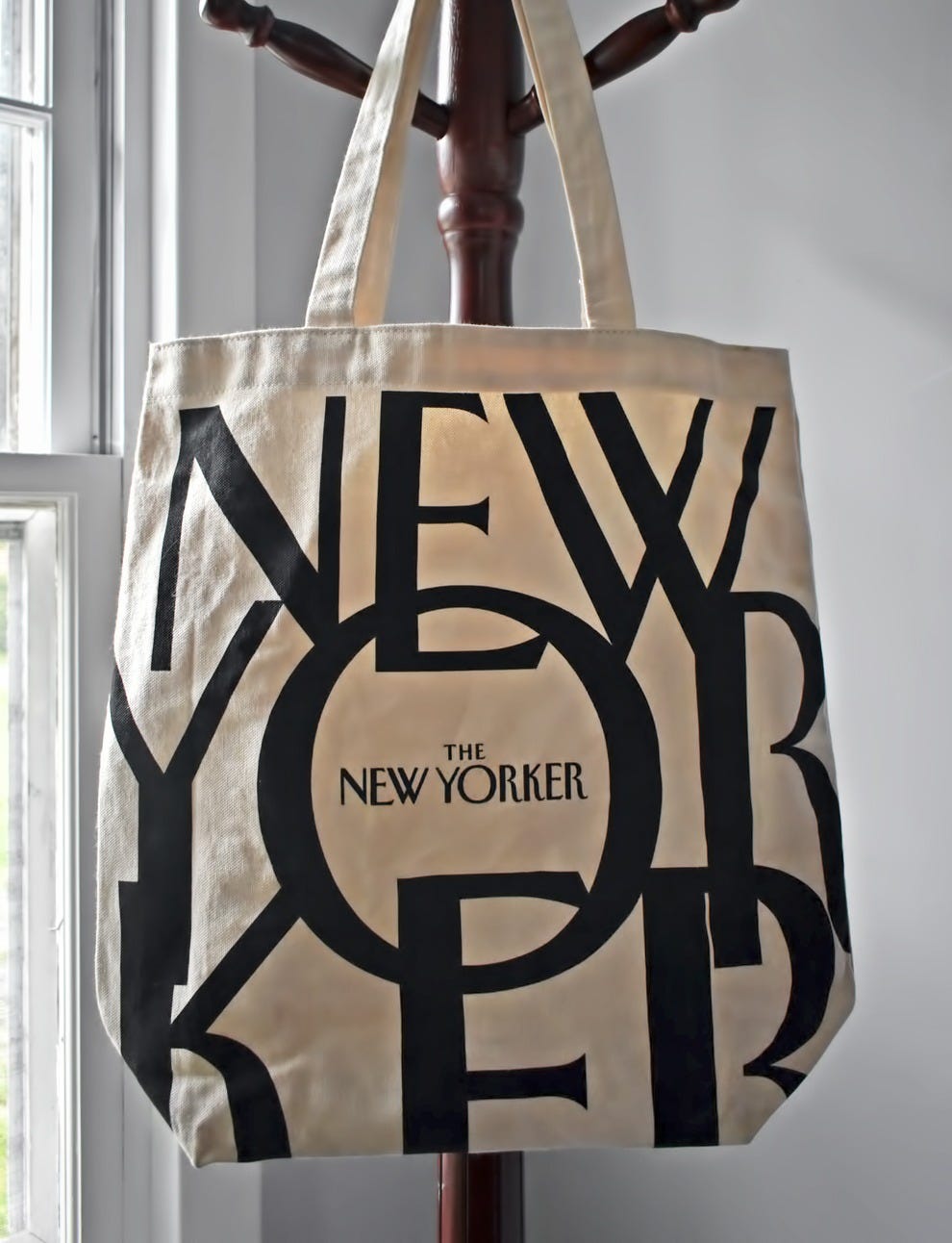
Tote Bags, generally, have become odd, often contradictory symbols — for lifestyles, for aspirations, for patronage. They’ve been a sign of liberal goodness since The Strand Bookstore released its first edition in 1980, and it quickly became a status symbol that separated the real readers from the posers. When the New Yorker started offering a tote bag as a freebie in 2014, its ubiquity as the go-to subscriber gift was cemented. Totes became banners of lefty values (I read! I watch films! I donate to radio stations!), and as the bags’ materials got flimsier and flimsier, they increasingly served as little more than (literal) canvases for statements. Branded totes have the power to project our identities, interests, and political stances in overt ways that other accessories simply cannot. Tote bags have become messages when, ironically, they used to be a medium.
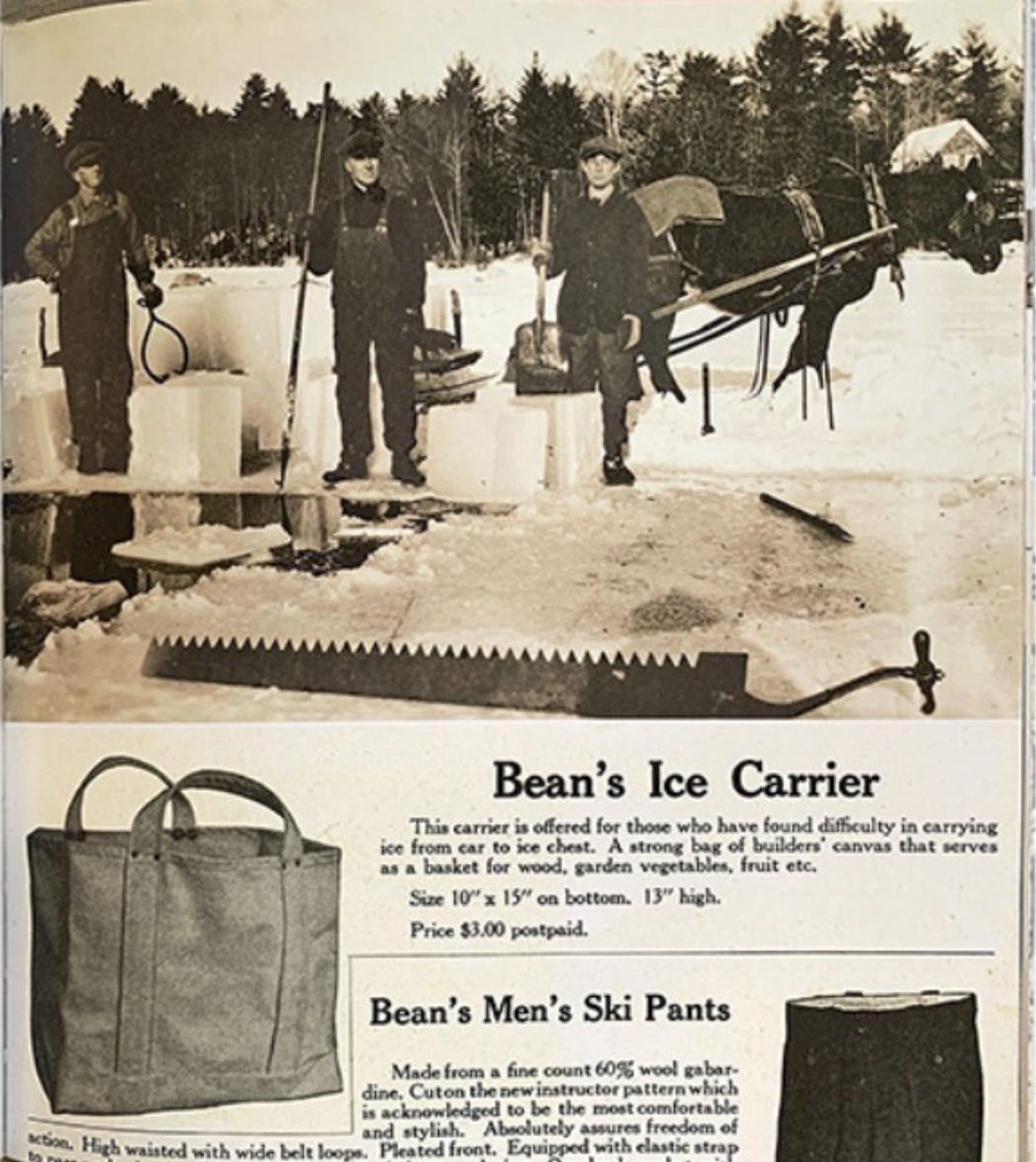
The first iteration of the tote bag as we know it is often said to be the L.L. Bean Ice Carrier. It was built from sturdy canvas, unassuming and reliable, with a deep body and short straps made for hauling ice. It borrowed features from sailors’ burlap and Indian gunny sacks, traditionally used to transport goods like grains and potatoes. And it resembles a bag I know well. An old and dusty, but sturdy one that my grandparents use to carry firewood from the basement upstairs to the hearth.
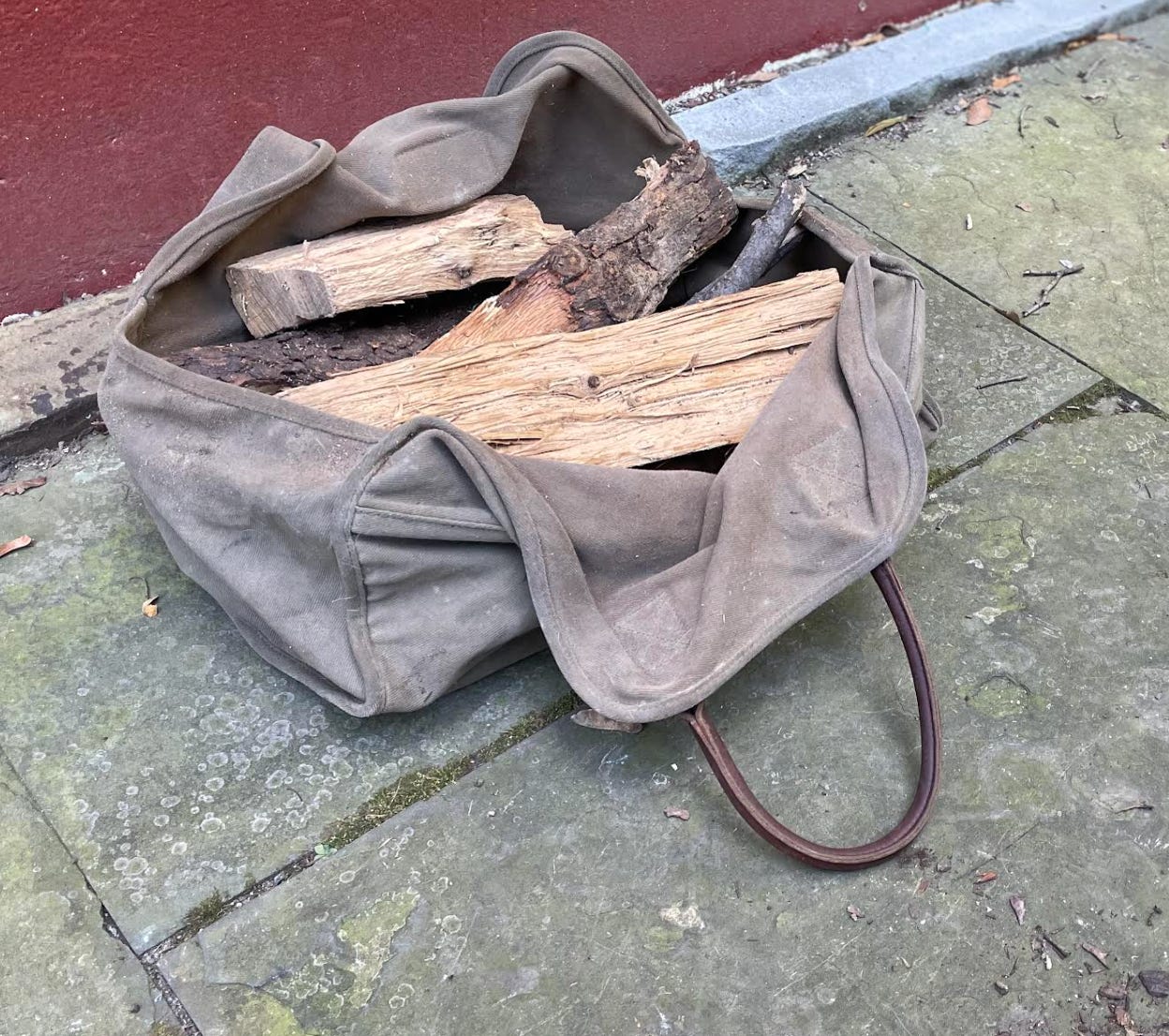
The TJ’s tote bag is strikingly similar to its hearty all-American L.L. Bean predecessor. In fact, these totes are almost identical in their visual construction, despite the 35% polyester makeup of the former. And while the ancestral L.L. Bean Ice Carrier only transported products, now the TJ’s totes are the product.
The TJ’s tote is, as far as I can tell, The It bag of 2025. And not just in London — the trend has recently been reported as far away as South Korea. These bags clearly mean something. And I do have a few theories for what TJ’s tote carriers are hoping to signal:
That they are shopping “small.”
While it is categorically untrue that TJ’s is a small or independent business, small-ness and independent-ness are aesthetic choices the chain actively makes. They dedicate resources to hand-written signage, use packaging that looks like it was designed by a circus mouse, and train cashiers to make you feel like you are single-handedly keeping them afloat by buying Everything But The Bagel Seasoning and a slab of Toscano Cheese with Black Pepper (my boyfriend’s purchase of choice). These tactics enable them to keep hold of the farmer’s market crowd. TJ’s is not Whole Foods. Though this hasn’t held them back from getting embroiled in any number of union-busting scandals.
That they are low maintenance and/or too engaged in intellectual activities to care about fashion.
Ironically, in the UK, the bags often sell for more than 10 times their face value on resale sites like Depop.
This one’s UK specific: they’re signaling that they are well travelled and in -the -know enough to carry a bag from a foreign – but not too foreign – grocery store.
When I make assumptions about the reasons that people carry tote bags, maligning them for being pretentious or falsely intellectual, I think of the cliché “every accusation is an admission.” So here’s the admission. I’ve been a tote bag devotee for most of my life. As a teenager, I carried a (much more flimsy) Rough Trade Records tote bag to school. Its straps were constantly on the verge of snapping due to it not being made to carry so many textbooks, and it would have made much more sense for me to carry a backpack. Beyond looking for TJ’s bags on the streets of London, I’ve always been trying to find like minded peers, those who appreciate the same art that I do, hold the same beliefs, perhaps even enjoy the same niche snacks. This is what tote bags allow us to do. Carrying a generic backpack may have meant that I never met some of my most treasured friends.
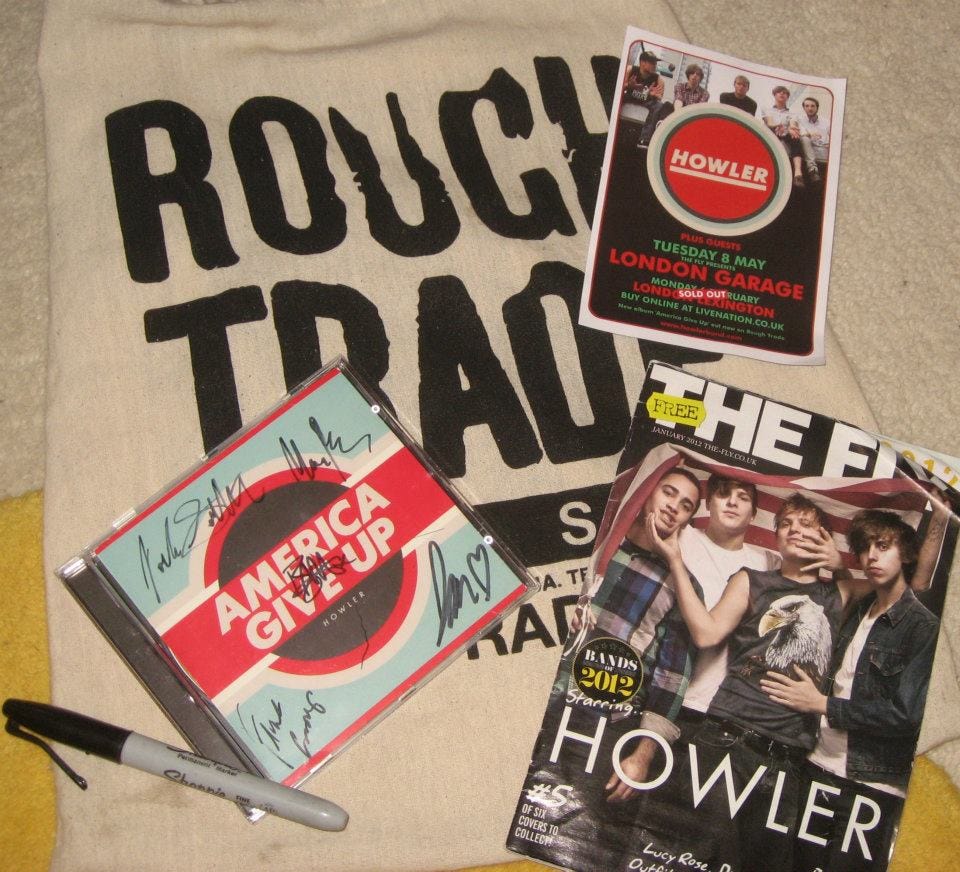
The appeal of the branded tote is entirely different from a designer purse. It’s a display of cultural capital, more than a display of monetary wealth. Or at least, when I was a teen, that’s what the tote bag meant to me. A bag from Daunt Books used to mean that you read obscure poetry in translation. And the value of the MUBI tote bag was to signify that you enjoy the Czechoslovak New Wave and aren’t afraid of subtitles. These passions lean coastal elite, and track with a segment of the population who are becoming increasingly anti-capitalist and anti-consumerism.
I think about these tote bags’ indication of progressive values and I wonder if the lack of luxury in their design is almost an effort to excuse the carrier from consumer culture. Tote bags work within the subconscious assumption that they are outside of trends —never bought but rather received. You “end up” with tote bags, as though they magically appear. They come as subscription gifts to liberal publications, they are freebies at events, and so the wearer is not participating in the capitalist game. Or, if tote bags are purchased, they are bought for virtuous earth-saving reasons, and to carry groceries rather than frivolous impulse-buys. And yet, with the amount of these bags that we have come to own, they have become waste after all. They have become unprecious trash. And somehow this one, the TJ’s tote, rose above the frey and entered into the fashion trend cycle in earnest.
Unlike Rough Trade or MUBI, Trader Joe’s is not a nonprofit or an art institution that I admire — I shouldn’t really have any skin in the game. And yet I wondered why I was feeling so judgy and possessive about …a grocery store? Over two decades ago, Naomi Klein wrote that “the products that will flourish in the future will be the ones presented not as ‘commodities’ but as concepts: the brand as an experience, as lifestyle.” Was this the case? Was I laying my heart out for a brand-as-lifestyle and did other people feel the same? Maybe we were all actually capable of connecting as though we were all carrying MUBI totes. Or maybe my snide assumptions about TJ’s toting Londoners were actually true. There was only one way to find out. So I gathered my courage and asked.
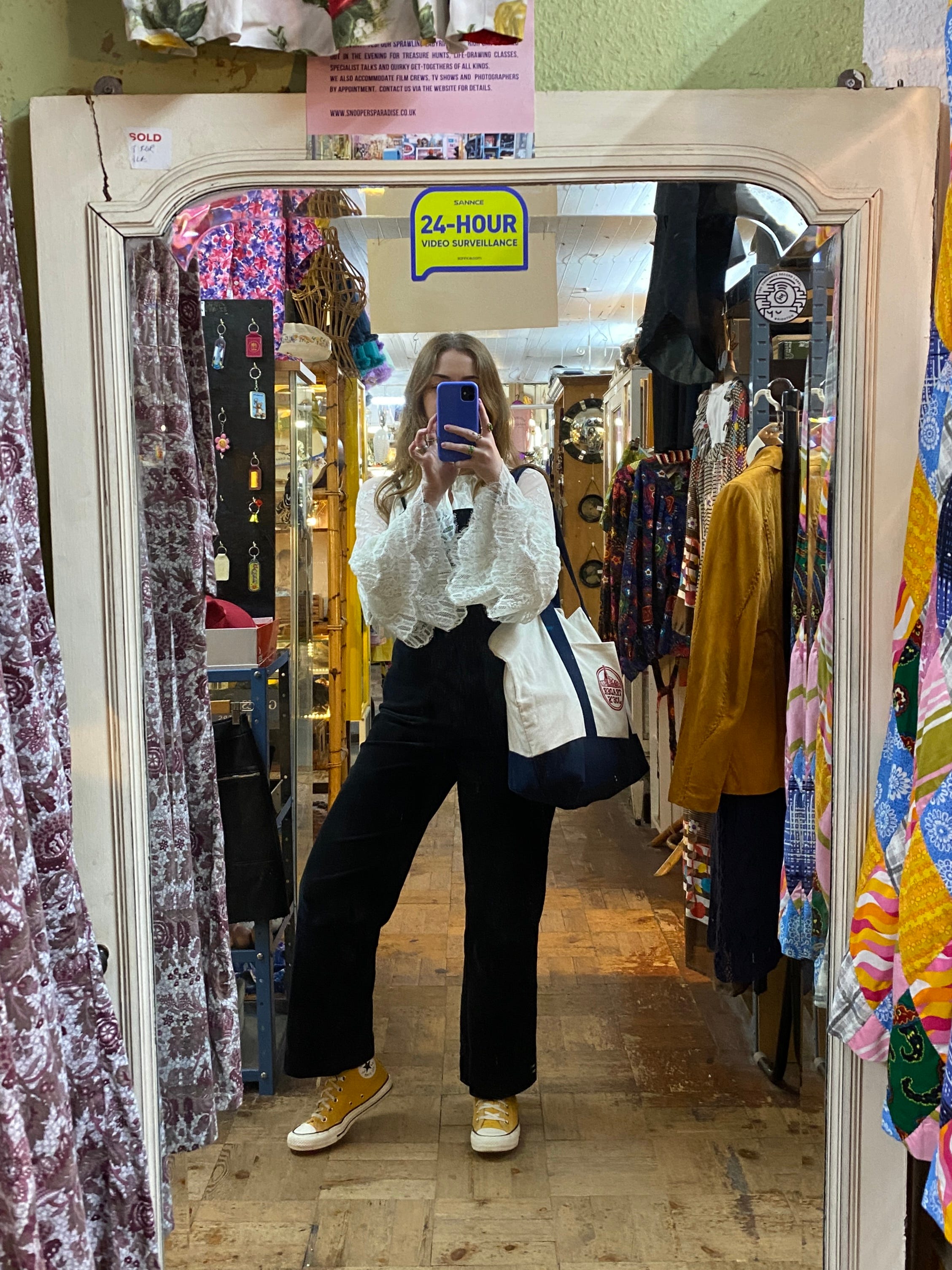
Katy, a Londoner who purchased her bag around the same time as me, says:
I didn’t think too much about what it said about me until I was back in London, and started seeing so many around town! That aspect has put me off using it a tad…but it’s such a decently made bag with a lot of space for stuff so I can’t resist using it. I assume most people who use a TJ’s tote are quite liberal and cultured as they are going out of their way to use a reusable bag, and it being from a store that originated in California…they’d therefore have to be a bit in the know and were somehow able to get one. On the other hand, when I see someone with the TJ’s tote bag I do subconsciously wonder if they did truly buy it somewhere in America or off Vinted because they needed the hip new bag. Not that it would be so awful if they did but it does make you think would American people be so excited to buy a Marks & Spencer tote bag off Depop to use in the middle of Idaho?
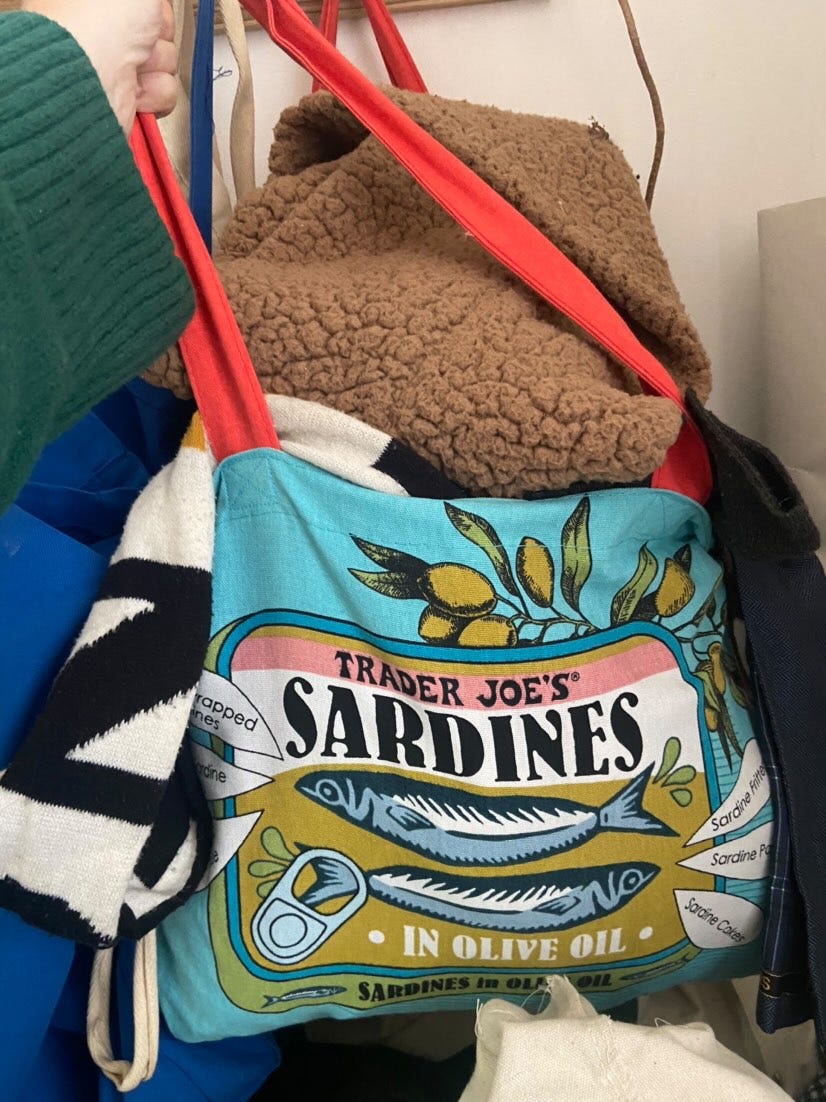
Jenna, acquired hers through a little bit of stolen valour: “It was a Christmas gift from my partner’s sister, that now we both use.” It’s also not the traditional tote but a limited edition one featuring a “sweet sardine can” that “gets [her] in the mood to put nice food in it.” She says:
I like that it’s a gift, and I remember the fact that my partner’s sister chose it for him when I use it. Also, the fact I’m not that ‘attached’ to it (neither is my partner) means I don’t worry about taking it to the supermarket: other tote bags that I love a lot I kind of avoid using for domestic tasks, in case I start to associate it with that task alone.
I would assume [people wearing them] like food, they are likely middle-class or maybe a student. It’s definitely not a super political bag, but maybe TJ’s for me has a slight association with more left wing politics/general open-mindedness?
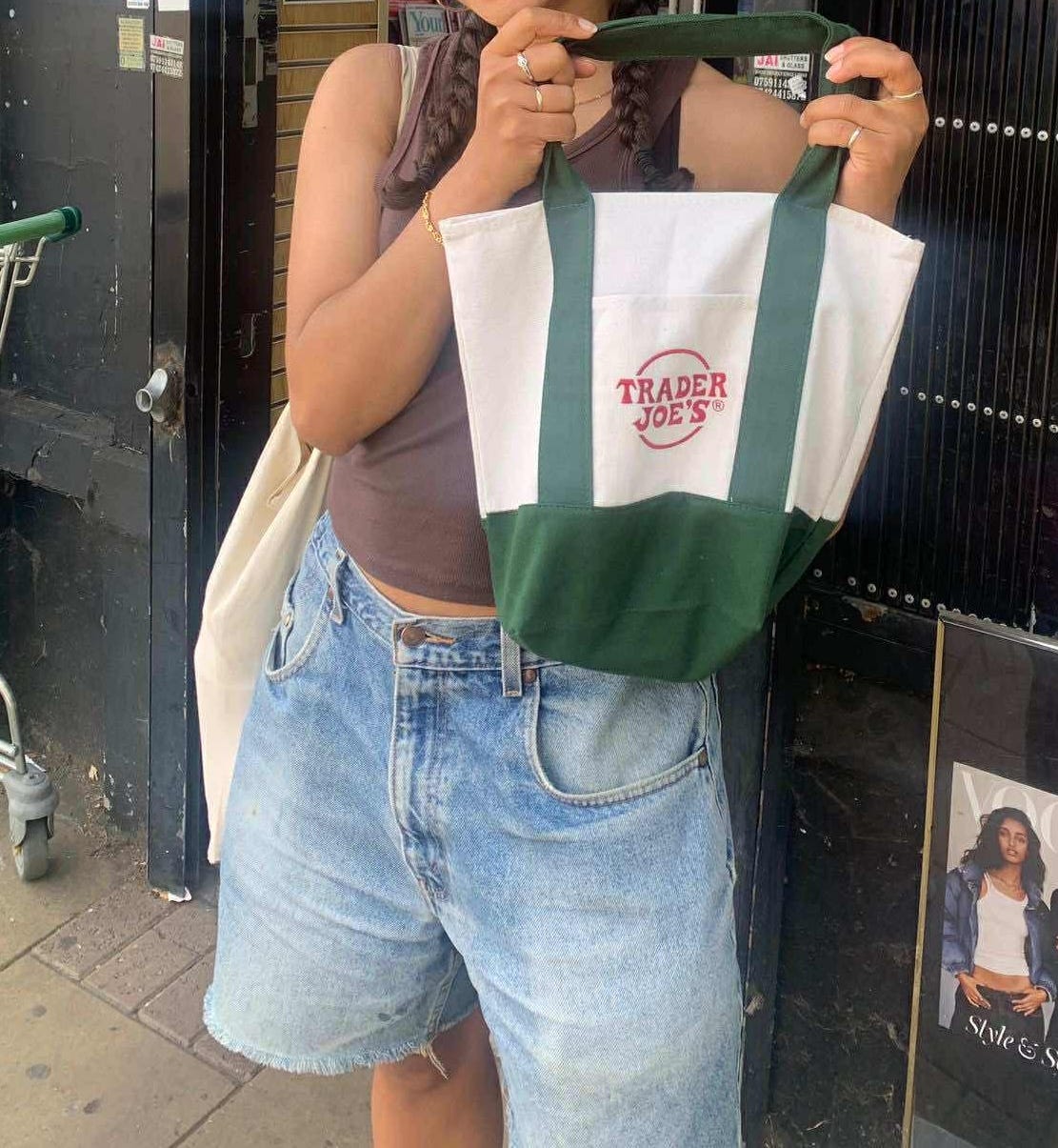
Kashi (life-long Londoner and also, Canadian) has one of the much coveted minis (I don’t even have time to explore this whole other trend with you), one with green detailing.
“My partner’s mum bought it for me and she also bought one for my sister and my best friend,” she says, though theirs are of the yellow variety. She likes it for practical reasons, because it’s “really good quality and feels durable.” The mini size is “perfect for tinnies [in Australia and the UK this means cans of beer or cocktails] in the park.” When I ask what the tote bag says about her, she says:
To be honest, I don’t think it says anything about me in terms of my personal style. However, TJ’s is very lib, almost champagne socialist coded (in terms of the American national imaginary) so I think it does subtly say something about my political leanings…it’s definitely part of the reason I don’t reach for it that much. I live in London so when I see someone with a TJ’s tote I spend a lot of time trying to guess how they bought it. Did they visit the states? Is it a very expensive dupe off Etsy? Is their partner also American and did their partner’s mum also buy it for them?
It seems that, like all trends, the TJ’s bag is becoming a bit too popular, and a bit less desirable. Like when your favourite underground band goes mainstream. The value of the tote lies in its scarcity– in the fact that only those in the know, those who really read poetry or watch auteur cinema or buy private label produce, will understand what it signifies about the wearer. Of course, some people will keep using TJ’s bags because they think the design is particularly cute, or because it’s practical, others will move on. Think about it — what happened to your New Yorker tote bag, once everyone got one? Mine now languishes in the back of my sister’s wardrobe.
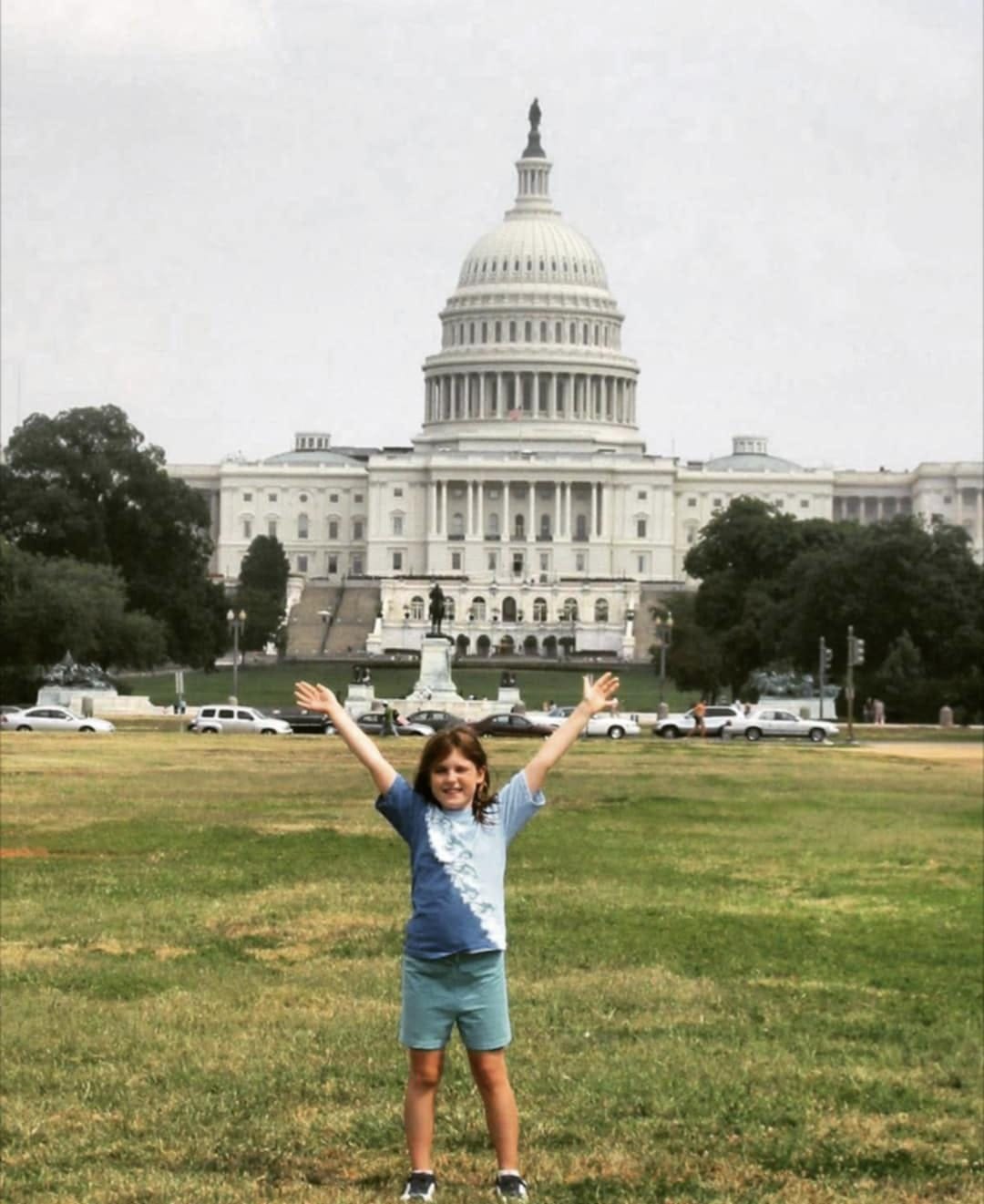
But I have no plans to stop using my TJ’s bag. I think it has something to do with how I got it in the first place, on that trip to show my boyfriend this strange place I am technically from. TJ’s is so American. It’s as American as a peach stall on the highway in the heat of summer. But it’s also such a part of my America, peppering the memories of the limited time I’ve gotten to spend there. When I studied in California, it was the only grocery store that I could access on foot. And, it’s a regular staple of trips back to see my family in DC — it’s the first place I go to buy root beer float pieces for my grandpa.
Maybe this sounds irrational, but I feel sentimental about this place. TJ’s, yes. But also the United States. And so, I feel protective of the TJ’s tote. It’s because I feel protective of a country that is falling apart in real time — to the glee of many of the people who are carrying said tote in London. The tote is a reminder of all of the summers that I spent padding down the blazing pavements of Takoma or walking a large dog down the dusty trails of the Potomac Billy Goat Trail. Much like the penny that I squashed at the Air and Space Museum at seven, this tote is a souvenir of a part of America that I still love.
 | A guest post by
|
In January I was evacuated from my posting in the DR Congo with very little notice and ended up in temporary corporate housing in DC. I was staying within walking distance of a Trader Joes and a Whole Foods, which made the situation a little better. The TJ's tote was on of my first purchases in America, not because it was trendy (I really don't think it is a thing in the US), but because it is a great urban grocery schlepper. It is a sturdy bag that holds a ton and fits well over a shoulder, it is washable, and doesn't feel like it is on the brink of failure if overloaded. If you have one on each shoulder, you can haul a significant amount of groceries for several blocks with confidence. If you find yourself at Trader Joes checking out with more than the one thing you stopped in for (always), the bag is under $5 so it is easy to rationalize buying another.
I have amassed quite a collection of grocery chain tote bags from around the world. I worked in international development, so was usually living in places where it was hard to get a variety of things, and food shopping was always an important part of any vacation. Grocery totes are cheap souvenirs that aren't precious so you end up using them a lot and being reminded of good times.
My TJs tote doesn't remind of particularly good times, but I know of several people who were fired from USAID alongside me who are now working at TJs to make ends meet. They all say that they enjoy having a low stress job where they are treated with respect, and would rather stay there than go back to working for the current administration. Instead of reminding me of far flung travels, my tote makes me think of a safe landing space for former colleagues.
I would argue that, from an engineering perspective, the TJ's tote is far superior to other totes, for two reasons:
1. The straps go all the way to the bottom of the bag, holding weight from the bottom, eliminating the usual tote bag stress point between the bag and the stitched-on straps.
2. Unlike most grocery bags, it's wider than it is long, so you have horizontal capacity without the top items crushing the bottom items. And because it's slightly rounded at the bottom, there is more support for the horizontal carrying--it doesn't bulge out the way a soft rectangle does.
Source: I am an American who lives in 15 minutes walking distance to a Trader Joe's.