
Toile de Jouy
From pastoral to provocative, the story of France's most evocative fabric


Hi! I’ve been heads down working on the next season of the show, coming out this fall (eep)!
In the meantime, if you happen to be in Times Square this week by the TKTS booth, you can catch a glimpse of Articles of Interest! IT FLIES BY SO QUICKLY
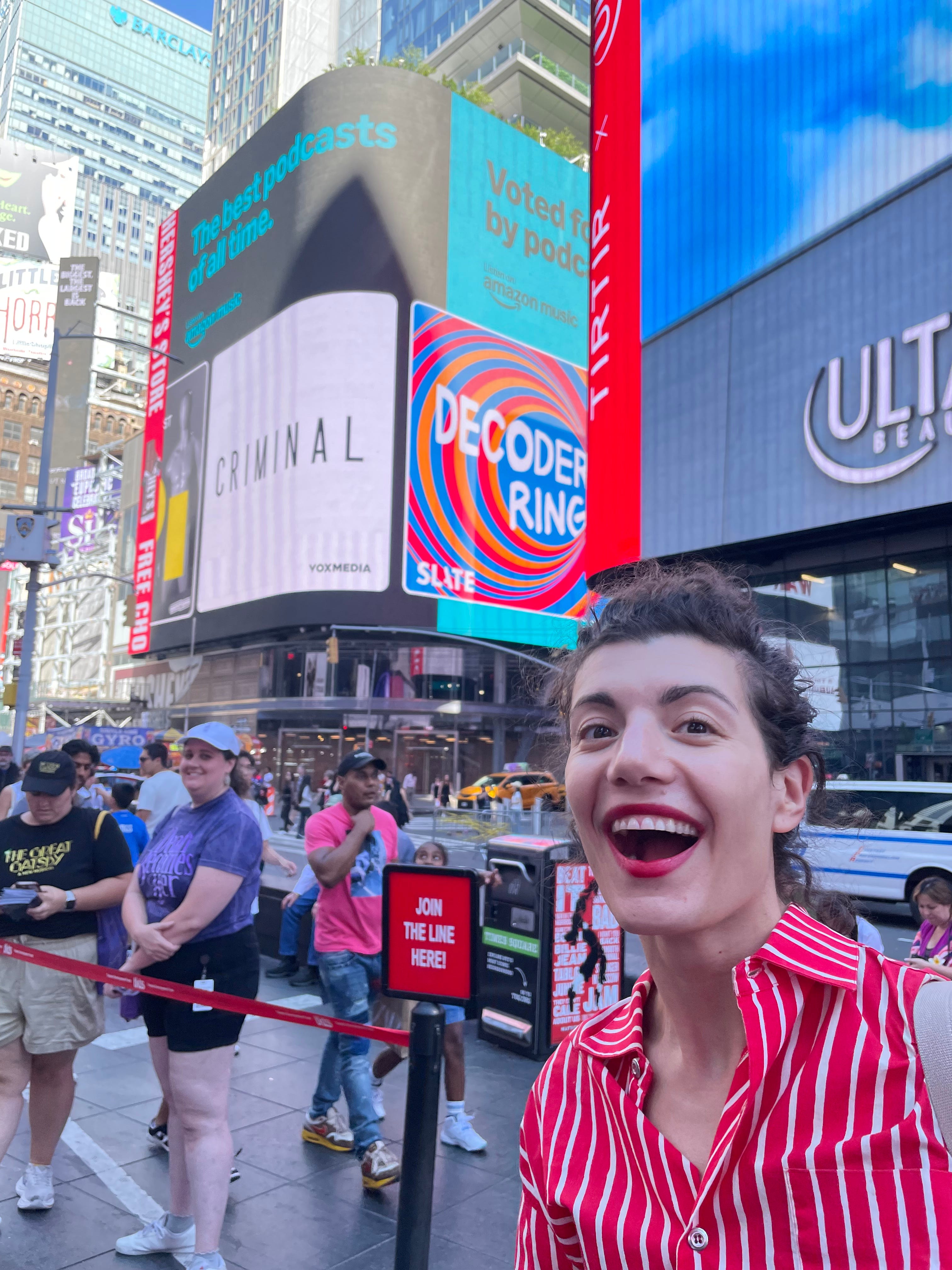
MY FRIEND ELEANOR AND I COULD BARELY CAPTURE IT
But it was it was there! I saw it briefly! It wasn’t a dream! (Congratulations also to Criminal and Decoder Ring!)
Ok. I didn’t just come to brag about my less-than-two seconds of fame. I came to say that while I’m in hermit mode, I’ve commissioned and edited an extremely killer lineup of guest essays for the substack. These are writers who are able to answer fashion questions that I can’t, in ways that are more visual than the podcast.
The following is a delectable little treat from the Paris-based writer and sewist Hannah Steinkopf-Frank, who did some true boots-on-the-ground reporting to get the story behind toile. I’ve always wanted to know why this pattern is so popular and why I see it everywhere. The reasons are why better than I could have imagined. Profitez-en bien!
~Avery
A whole story told on one piece of fabric: This is the promise of toile de Jouy.
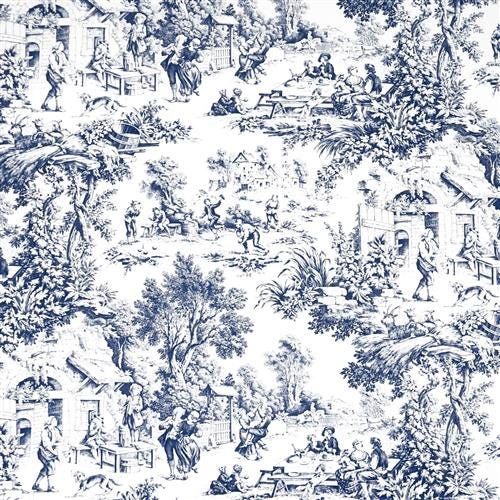
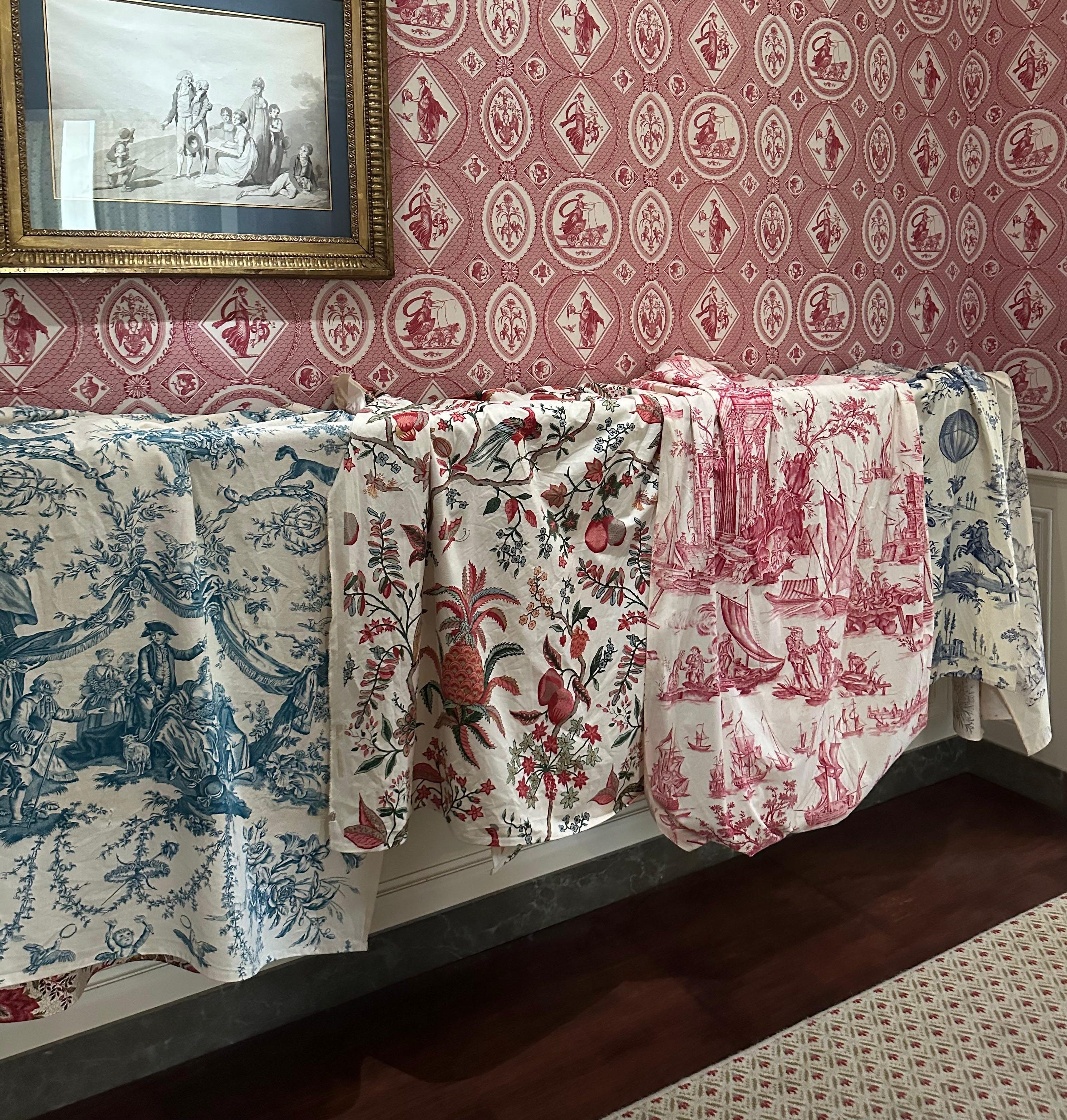
Toile, as it’s often shortened to in English, is a decorative material dating from the mid-18th century that features detailed scenes of pastoral life or other fantasies repeated on a white background. But even more mesmerizing than the Rococo designs of shepherds, maidens and animals galore displayed on voluminous dresses, accessories and wallpaper is toile’s longevity.

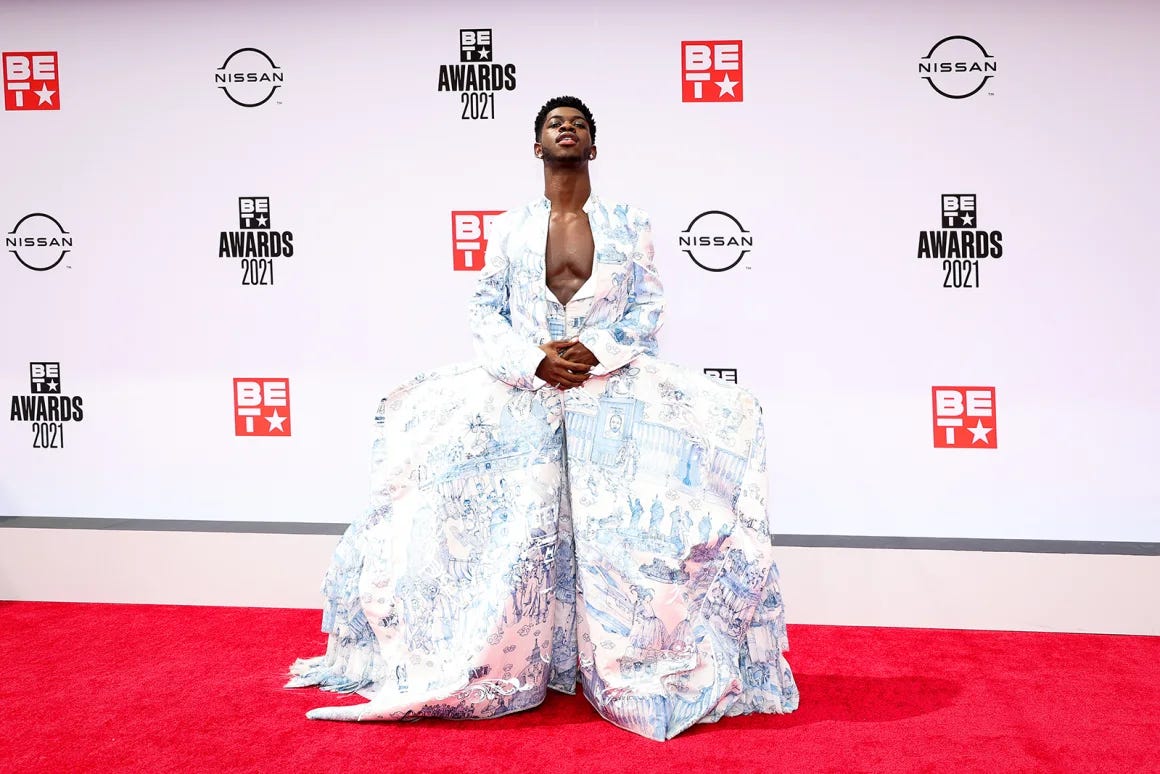
The style continues to be a creative inspiration for designers who take it in increasingly creative directions, like Rachel Antonoff’s “Gilmore Girls,” “Sex and the City” and “Sopranos” collections; Timorous Beasties’s toiles of the beauty and roughness of major cities; and Andrea Grossi’s toiles featuring brand logos (McDonald’s, Netflix and Nike) mixed with traditional tattoo designs, most notably worn by Little Nas X. Within more traditional fashion houses, toiles have been seen in recent collections from Chloé, Dior and Oscar de la Renta.
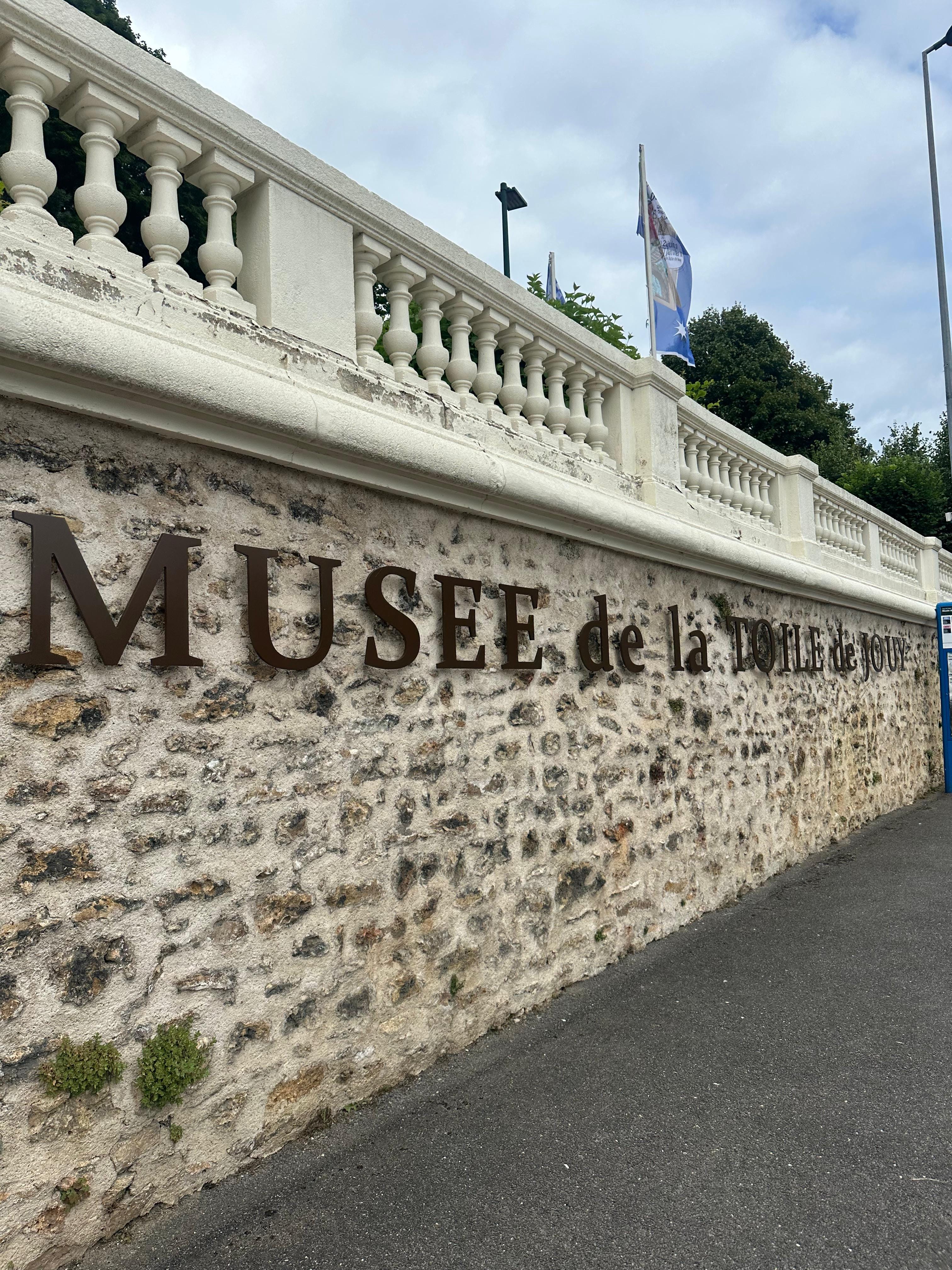
Why do these seemingly old-fashioned (and just a little bit stuffy) images have such an enduring appeal? To gain a greater understanding of toile, I took two regional trains from my home in Paris to the Musée de la Toile de Jouy in the namesake town of Jouy-en-Josas.
The museum was opened in 1977 and is, appropriately, housed in a château.
Camille Moreau, who’s in charge of collections and preservation, was my guide through the collection. The museum had a number of rooms reconstructed to look like the home of Christophe-Philippe Oberkampf, the German-born engraver and printer who built up a toile empire in the latter half of the 1700s and into the 19th century.
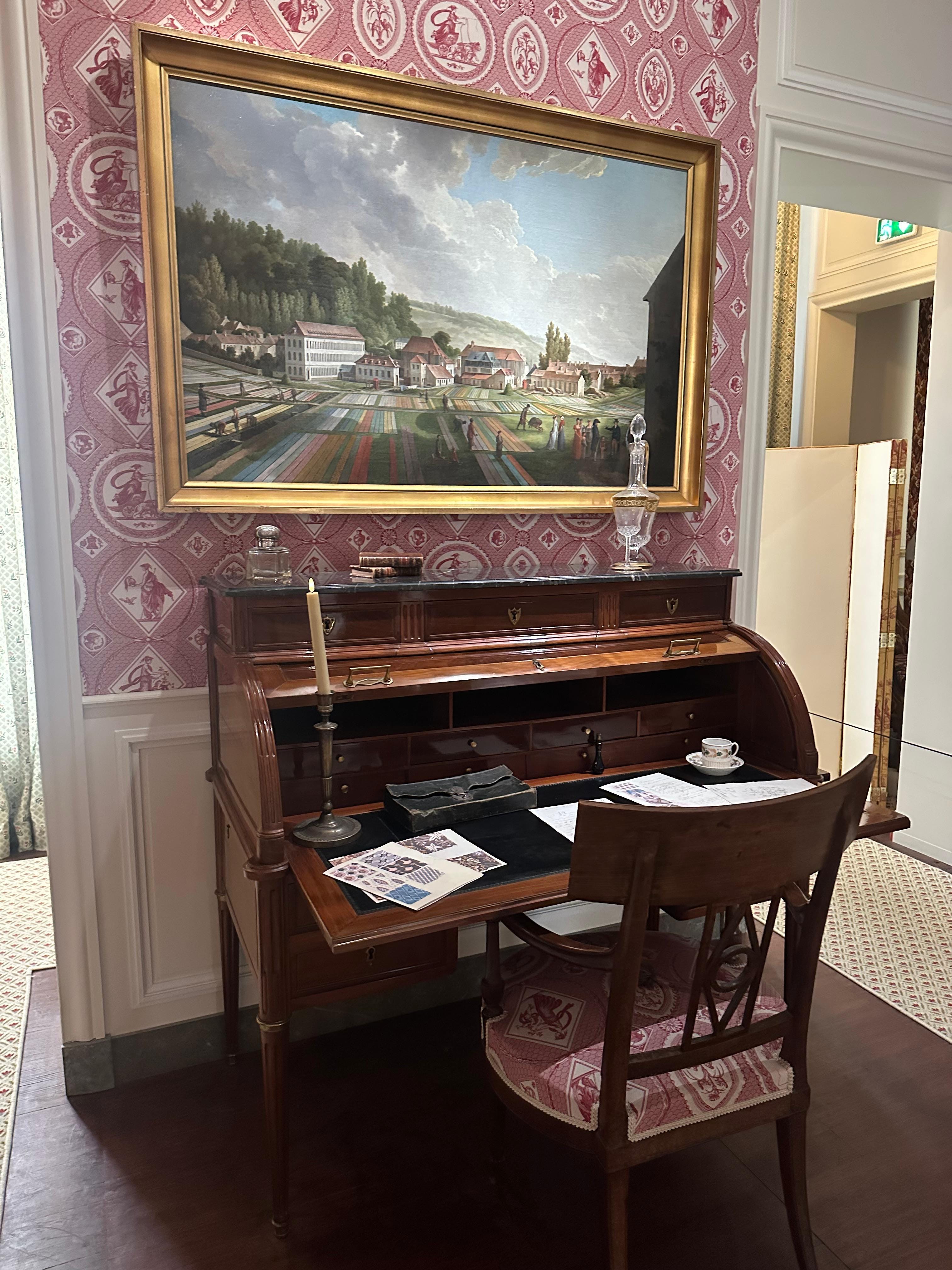
Oberkampf took advantage of the fact that Louis XIV had instituted a broad ban on imported fabrics, so that French textiles could reign supreme. This eliminated the competition from popular Indian textiles printed with fauna and flora motifs; the knock-off versions manufactured in Europe became known as Indiennes.
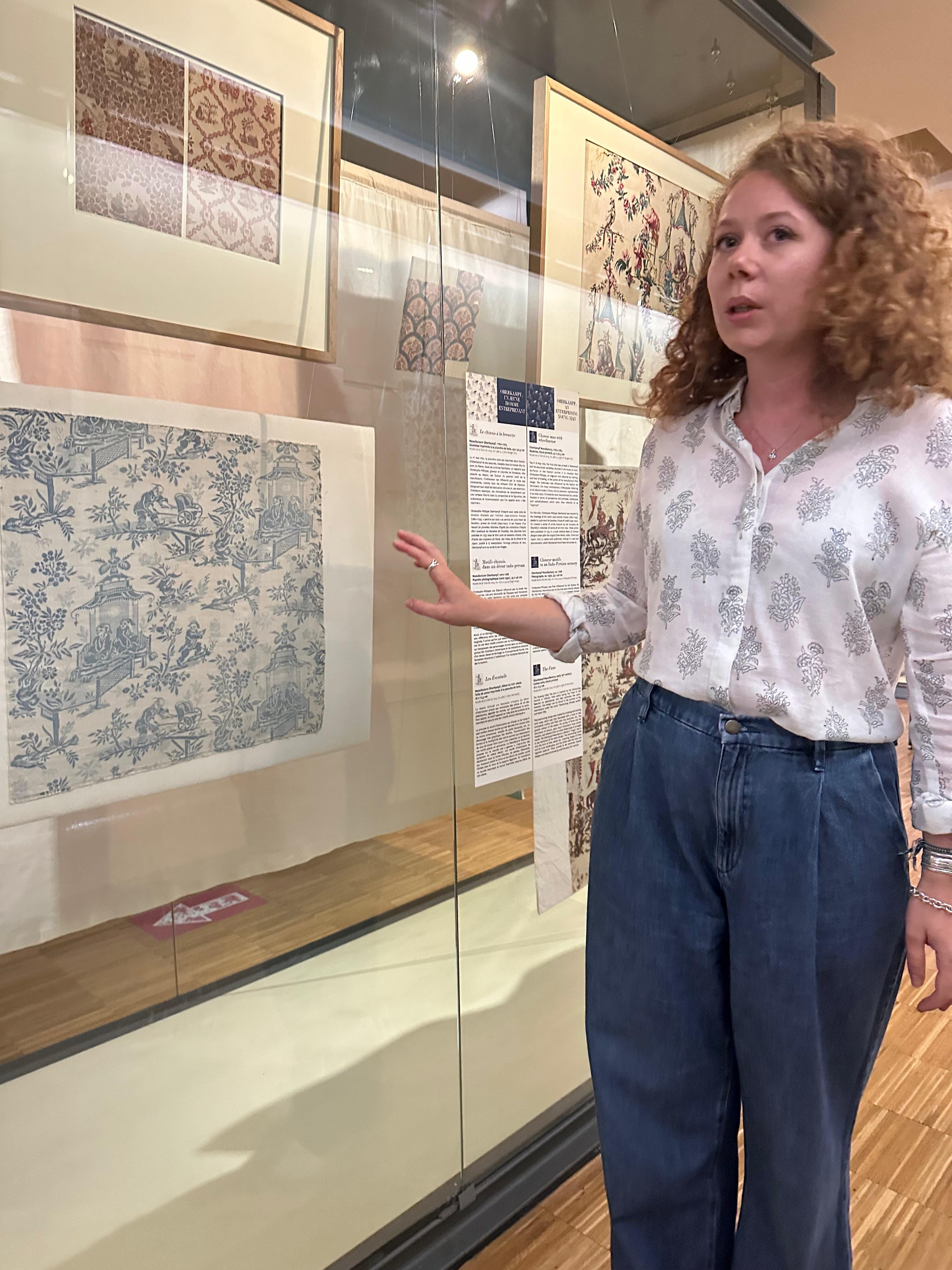
Moreau explained there were three elements for Oberkampf’s success (he ran at one point the third largest business in France): technical innovation, entrepreneurial strategy and a focus on design: “He always emphasized and placed great importance on the artistic quality of his productions. That is another element that makes Jouy fabrics so strong today, why we still talk about them today,” Moreau told me. This town became renowned for quality, even in the 18th century. “Bear in mind that at that time, Jouy wasn't the only place where printed fabrics were made. There were hundreds of manufacturers all over France, and they were widely copied.”
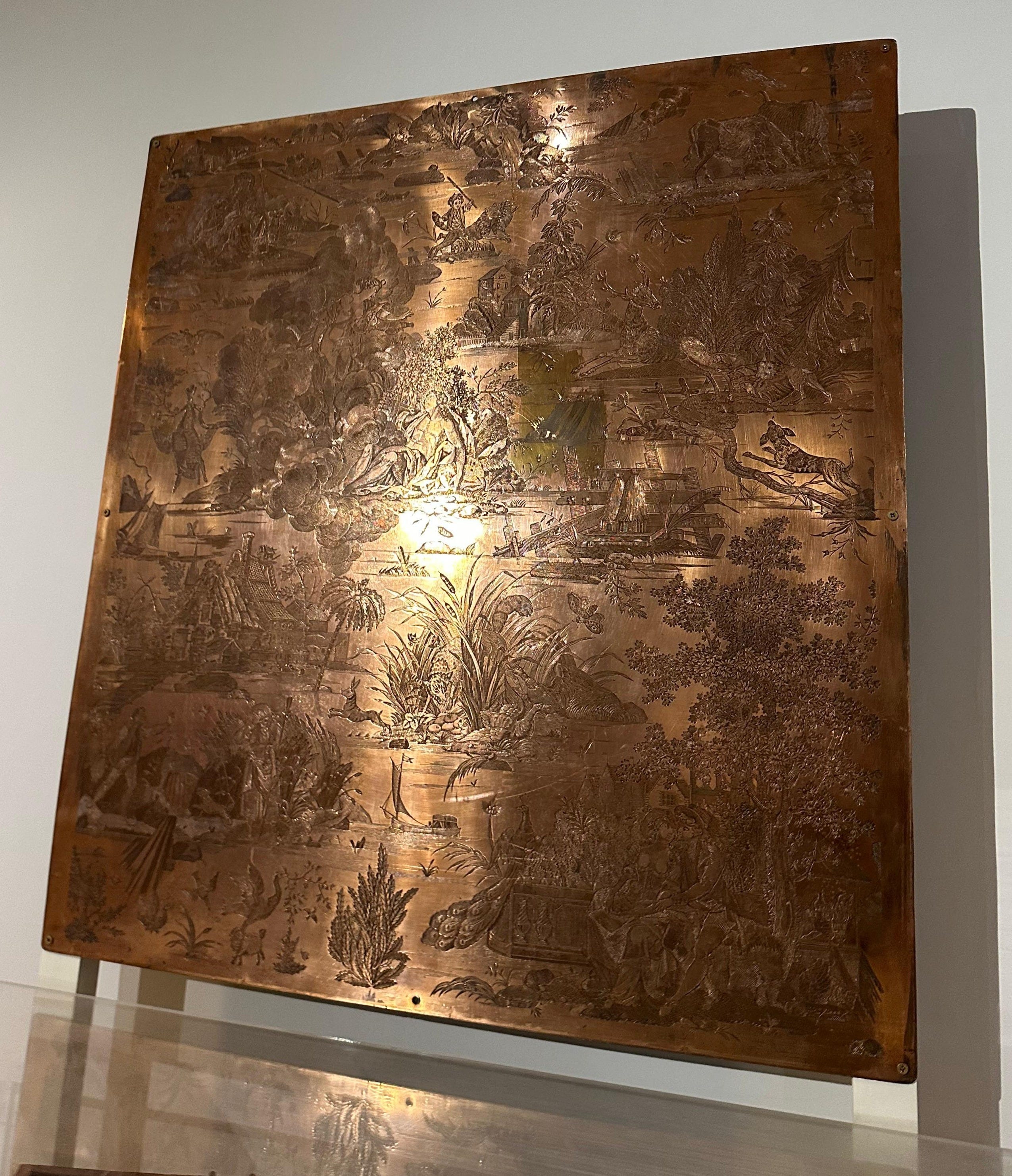
Oberkampf began to work with a small team, printing Indiennes by using wooden boards to fix color on cotton, a technique he adopted from Asian fabric manufacturers. Over time, this process expanded to copper plates, and then to rolls, which allowed for not only significantly quicker production, but also more complicated designs. A combination of the three techniques led to the famous toile de Jouy, literally meaning “cloth from Jouy.” So it’s kind of funny that the English shorthand for this distinctive pattern only means the indistinct part of it: “cloth.”
From 1760 to 1843, Oberkampf and then his successor produced some 30,000 designs, of which only around a hundred featured the human figures now typical of toile scenes. The museum traces how, despite this relatively small number of designs, toiles became a perennial representative of French savoir-faire. This was partially thanks to Christian Dior: The small boutique he set up in 1947 at the base of his Paris fashion house was decorated in toile de Jouy (Dior’s use of the fabric has never halted, most recently with its trendy book totes).

Today, part of the museum's core mission is to highlight the full range of Manufacture Oberkampf’s fabrics as toile de Jouy, beyond the ones featuring human figures. As Moreau explained, Oberkampf made a significant amount of money from “Bonnes Herbes,” floral prints on darker fabric that “allowed women to have outfits in bright colors that didn't get too dirty (...) in a fabric that was always washable and breathable.”
Louis XVI gave Oberkampf the title of royal manufacturer in 1783, and the fabric from Jouy was championed by none other than Marie Antoinette; a recent renovation of her Versailles private chambers prominently showcases the Great Pineapple print. Many of the still-iconic toiles were designed by painter Jean-Baptiste Huet, who Moreau told me had a particular penchant for drawing animals. Some of his famous works include “Les Delices des Quatre Saisons,” depicting the four seasons, “Offering to Love” (of course featuring Cupid).

Any existing toile was inherently popular: only toiles that were certain to have a large print run were produced, as the labor-intensive process required some fifteen repeated steps, depending on how many colors there were. So it might seem surprising that there would be interest in a meta toile showing the factory worker’s process of making the material.

And yet, this toile-about-toile highlights the fact that, despite the overarching penchant for the romantic and dreamy, toiles were often connected to the tangible events of their time. These included the early adventures in air balloon flights as well as political developments.
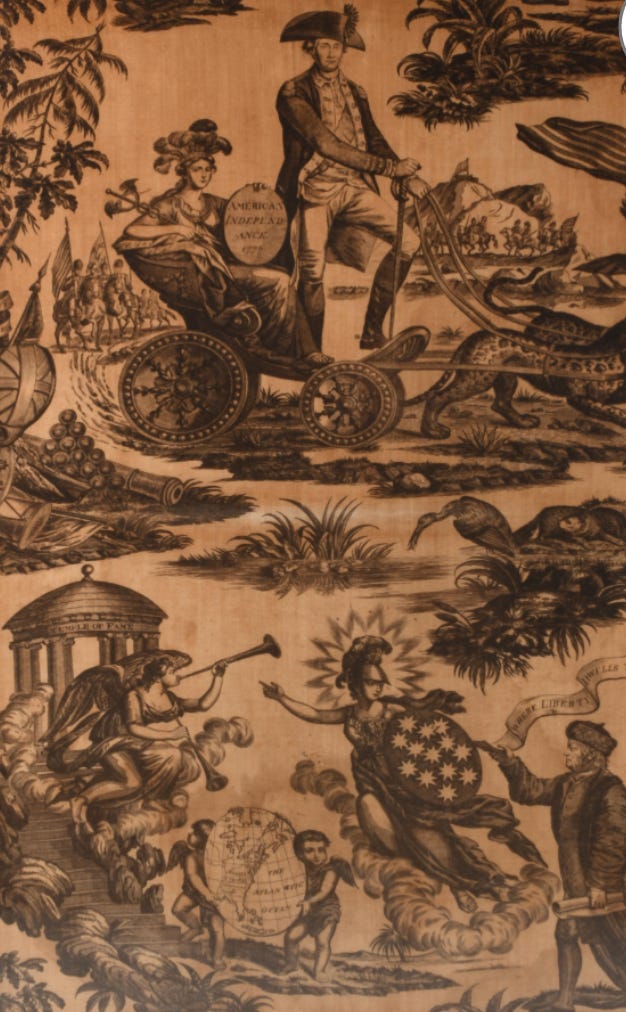
Oberkampf came out of the French Revolution unscathed and even had Huet design a toile showcasing the Fête de la Fédération, the national holiday honoring harmony in the country following the revolution. (In the US, it’s often wrongly equated with the storming of the Bastille.) Perhaps surprisingly, toiles also proved popular across the Atlantic, with colonialists honoring the birth of the United States. “Apotheosis Of George Washington & Benjamin Franklin” includes the first American president riding a leopard-drawn chariot, with his fellow Founding Father holding a banner reading “Where liberty dwells there is my country.”
As much as toile appropriated an idea of the rural lifestyle, it also appropriated foreign cultures, as seen in “Le Chinois à la Brouette” (“Chinese Man with a Barrow”), the first design printed using the wooden block technique. There was also Huet’s “Les Quatre Parties du Monde” (“The Four Continents”), one of a number of toiles that exoticized Asian, Middle Eastern and African cultures. This trend could be particularly harmful when considering how directly exploited these continents often were in the history of trade, including in fabric. The debate over the slave trade in Europe even became the subject of a toile by Frédéric Etienne Joseph Feldtrappe, which contrasted the kindness of an African ministering to a shipwrecked family from Europe and the violence of enslavement.

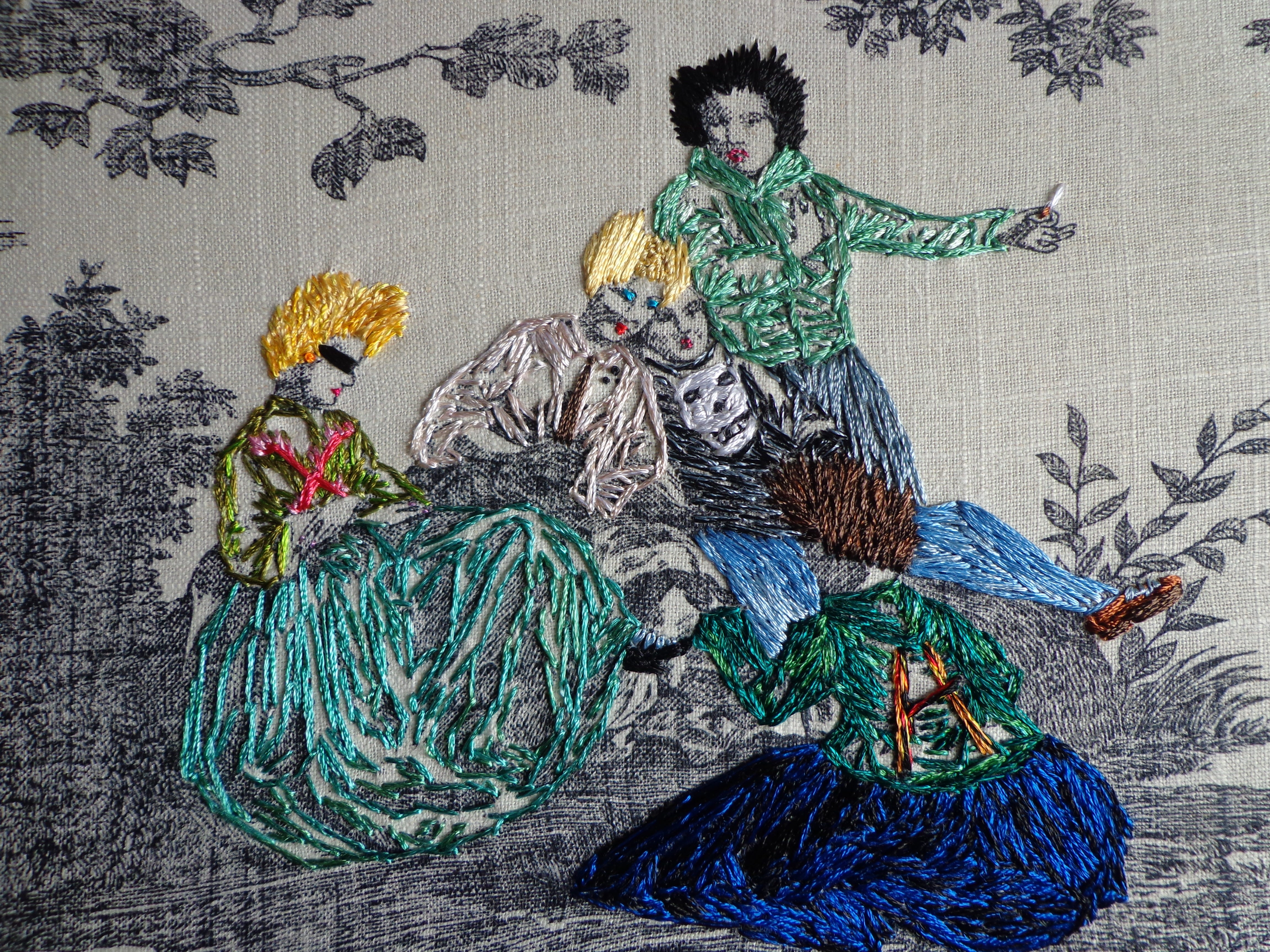
It is perhaps toile’s historic stuffiness, its Francophilic frame of history, that makes it so fun to mess with. “It has a narrative quality that's there if you want it to be. That's very important for people. There's a story there,” embroidery artist Richard Saja told me. “That's what I do with my work: change the narrative and draw out alternative stories in the toile de Jouy."
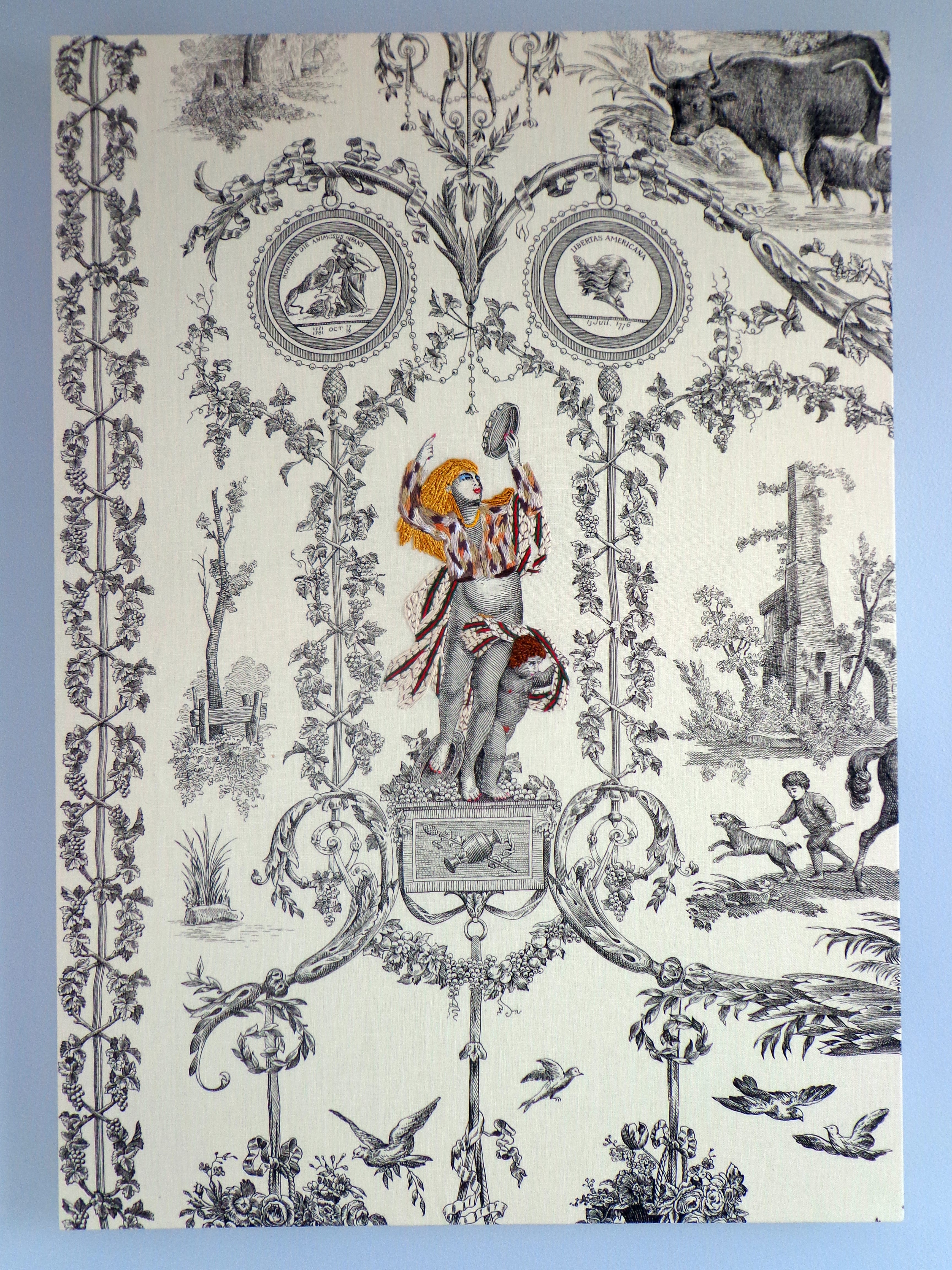
Saja has made a decades-long career out of warping toiles with thread. His designs not only inject color into the monotone fabric but also humor and social commentary: In his hands, a traditional toile becomes a template to honor different iterations of punk culture, from Vivienne Westwood (who herself designed with toile) to goth to gutter punks, or address the current political landscape under Donald Trump by turning toile figures into clowns. “It's very easy to decorate with, to add a little bit of punch; the pattern, although it can be very complicated, is still somehow anonymous,” Saja explained to me.
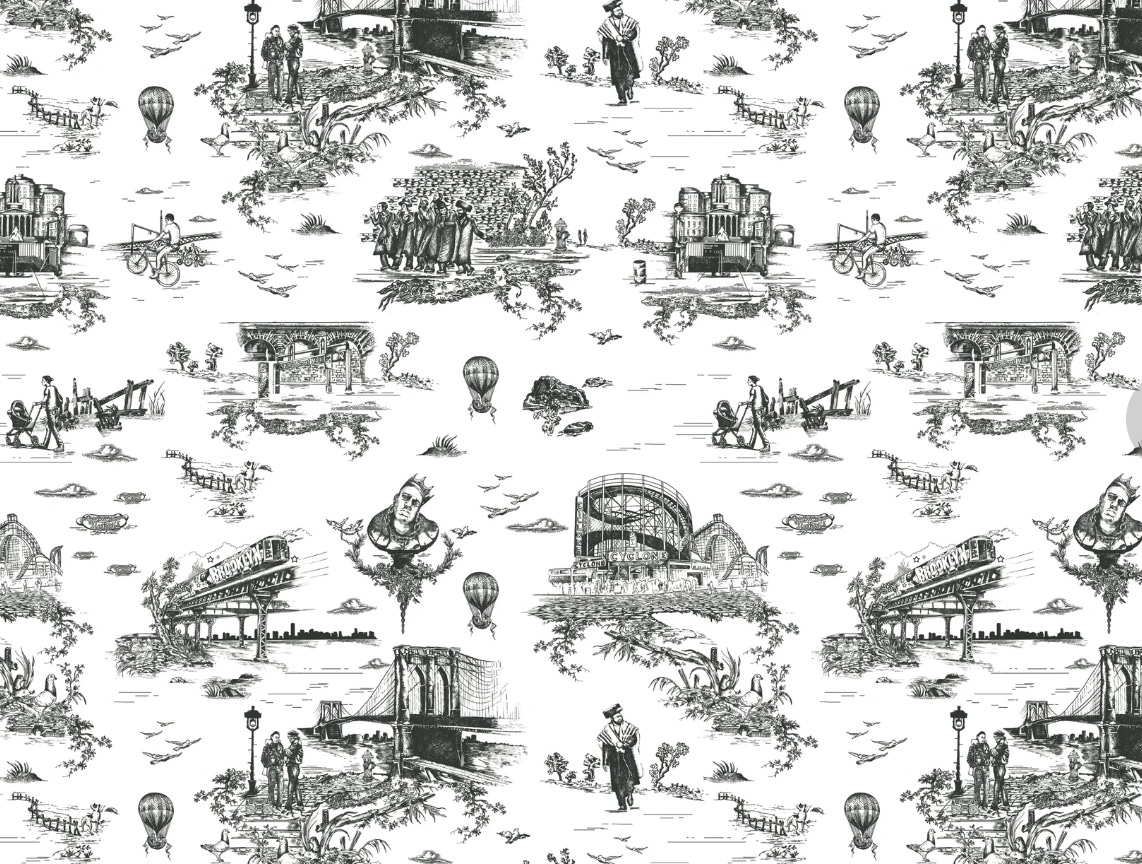
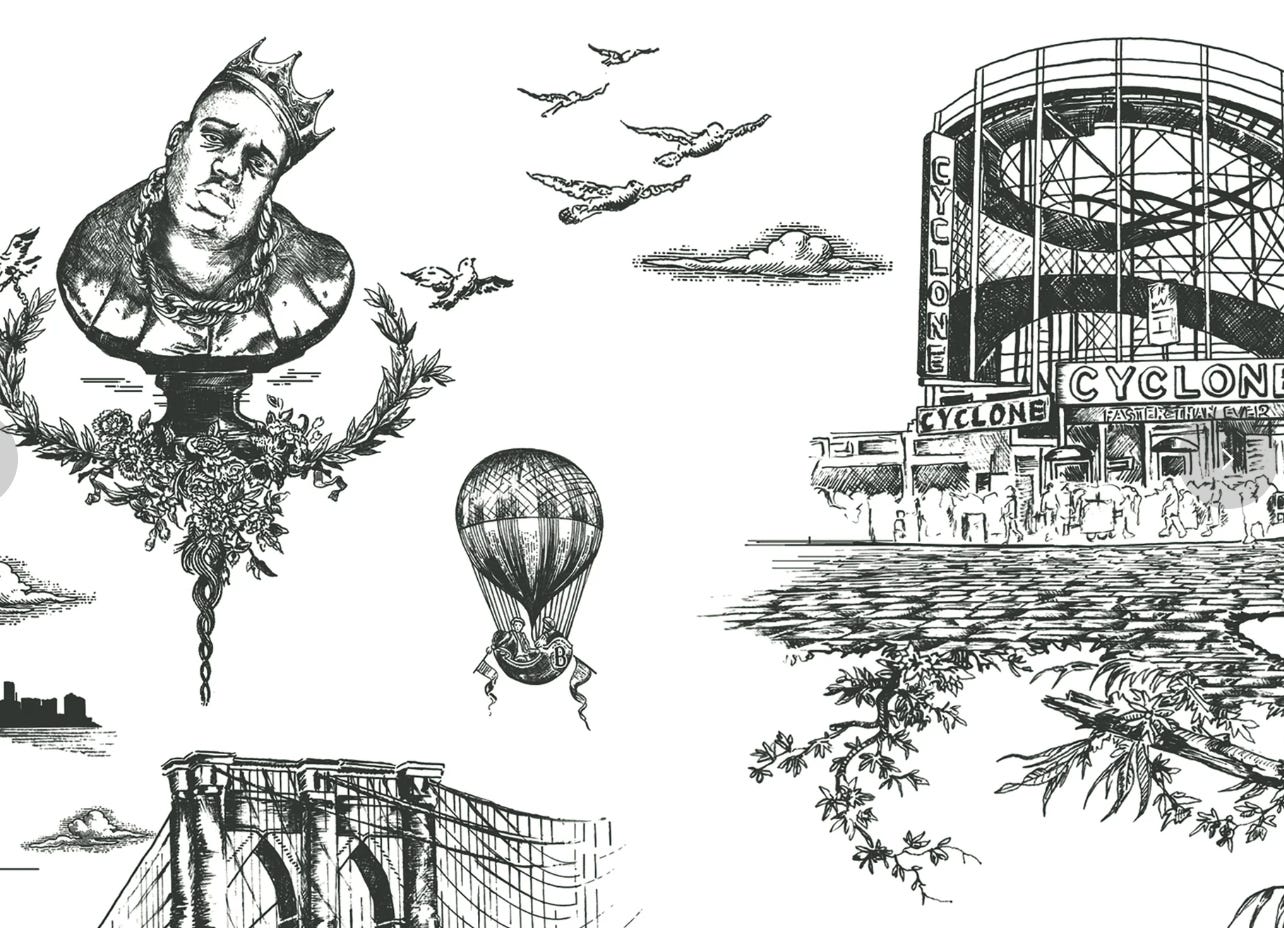
What keeps reinterpretations of toile fresh is exactly this appropriation or distortion of the images it evokes, whether in Saja’s work or a popular 2012 collaboration between Beastie Boy Mike Diamond and wallpaper company Flavor Paper. This Brooklyn design features Coney Island, Hassidic Jews and of course the Notorious B.I.G. Flavor Paper has gone on to do city toiles for Austin, Los Angeles and New Orleans.
I myself decided to give my own interpretation to toile after my sister, a semi-professional thrifter, found me a few yards of a vintage toile by British designer Laura Ashley, called “Ronde Villageoise” (“Village Round Dance”); Moreau graciously explained to me that it’s a modern motif inspired by toiles, notably “Scènes Flamandes” (“Flemish Scenes”) from around 1797.
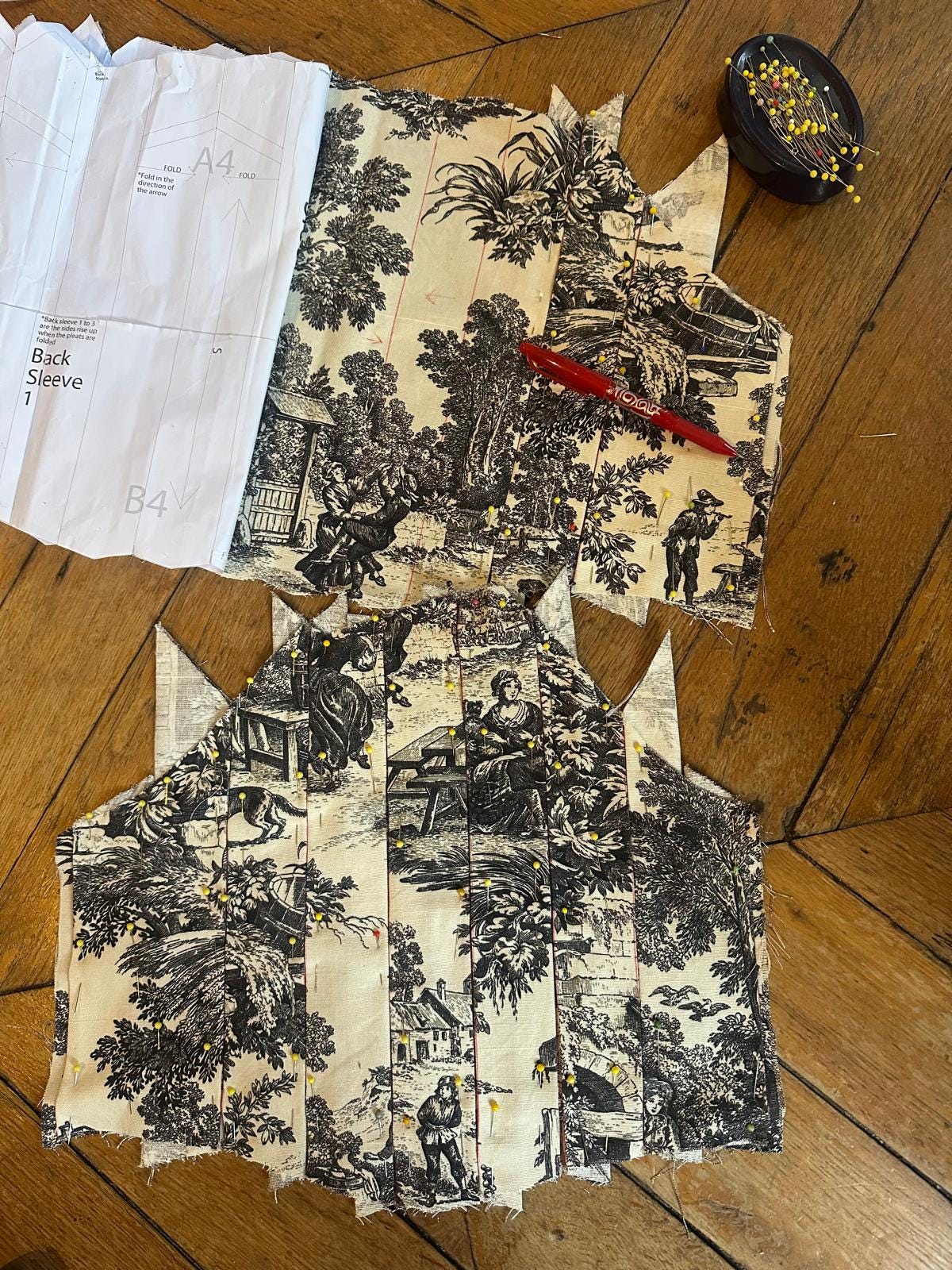
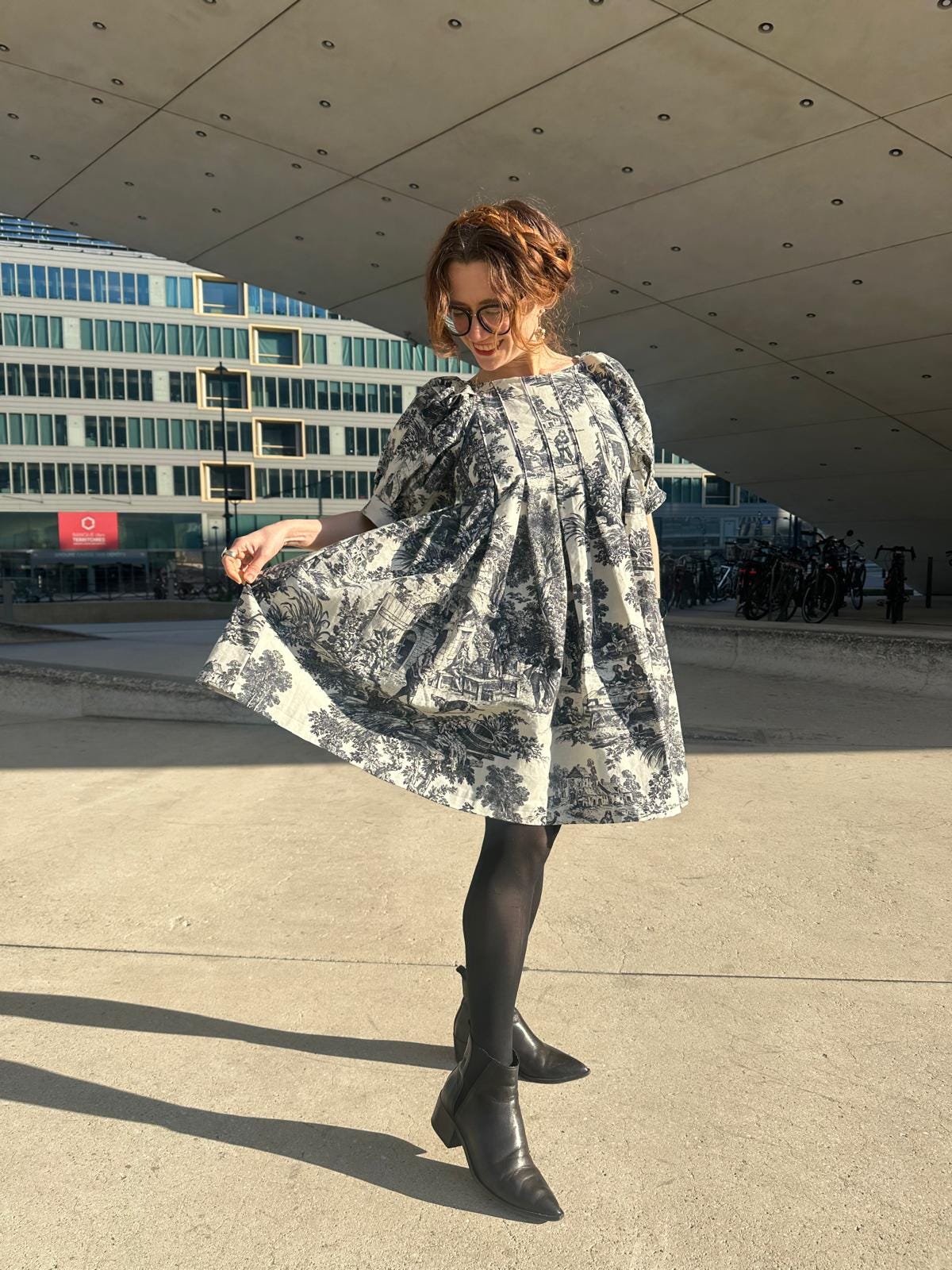
I had enough toile to make two dresses, one with a pleated pattern from Chicago-based company Naminami Dress Maker. I felt the flowy shape and puffy sleeves worked well with the fabric’s romanticism.
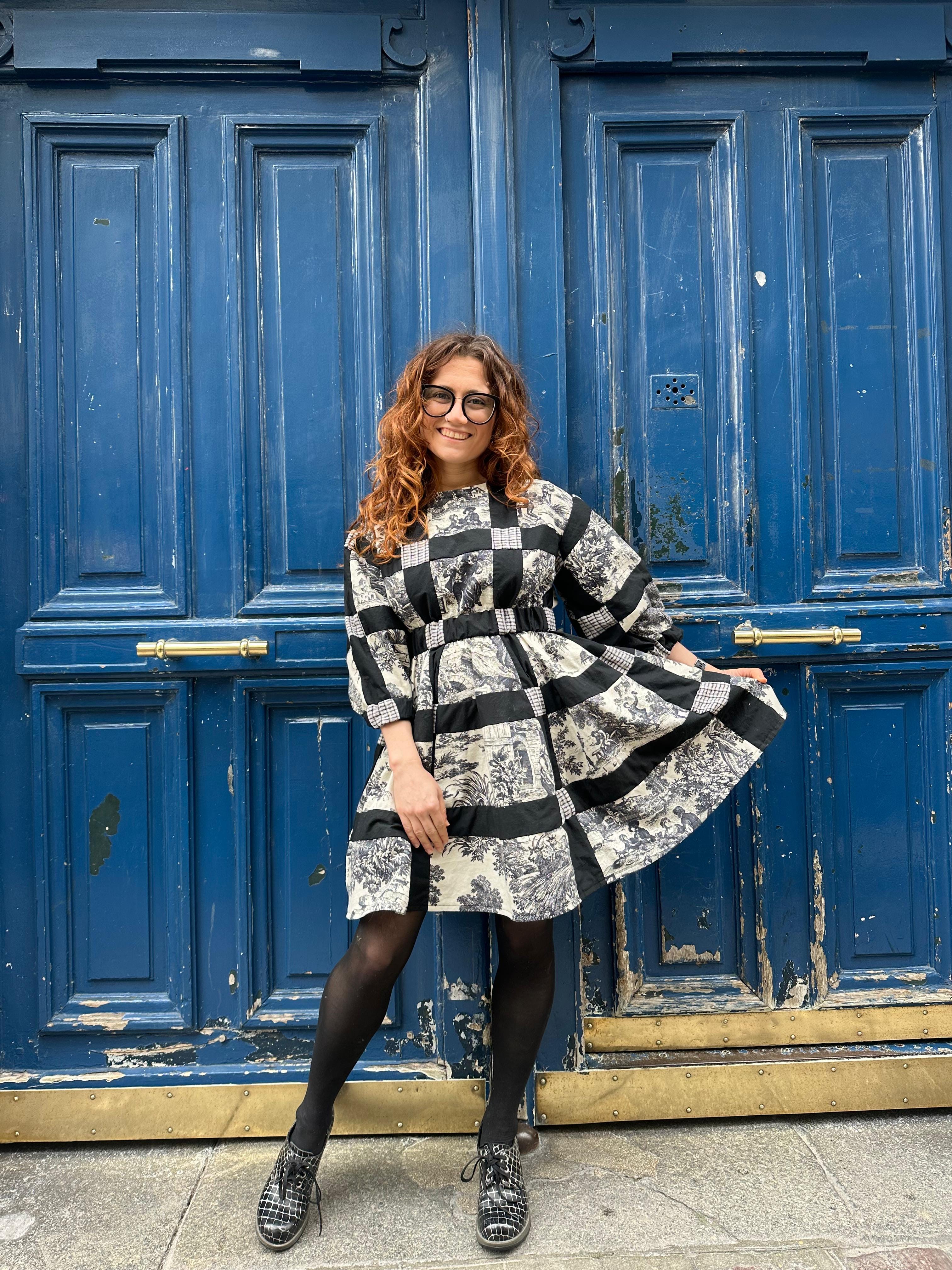
For the second dress, I used a pattern by innovative British brand ROBERTS | WOOD, known for its high-fashion patchwork designs. I framed different scenes from the toile with black fabric to showcase the interactions taking place, whether it be a couple dancing or a whistler watching a sports game. While working on this garment in particular, I found myself captivated by the world of the toile, wanting to know where the story would go next. Given that toile’s popularity seems far from waning, I have no doubt it will continue to evolve.
Thank you so much, Hannah Steinkopf-Frank for being our American in Paris! Follow her substack for more of her writing (and, of course, sewing).
And thank you, dear supporters, for allowing me to pay for fashion journalism.
 | A guest post by
|
For anyone else who saw the name "Oberkampf" and thought "I wonder if that is related to Oberkampf Station on the Paris Métro," I did a little Googling—and yes, Rue Oberkampf and Oberkampf Station in the 11th arrondissement are both named after this textile entrepreneur!
The author looks like she has so much fun with her clothes! I love to see people making art and being happy doing it. We need this more these days.