
Retail Therapy
Fashion and Psychoanalysis

Once, in a past episode, a guest mentioned what I thought was a general truism: that corsets were painful and unhealthy. A number of listeners wrote in to correct me, saying that that was inaccurate- that corsets were only painful if there were fitted improperly.
Intuitively, I had a very hard time believing this, simply because… I dunno… would you like to walk around in a corset? It doesn’t seem like a comfy thing to wear. But shame on me! I have done this work long enough to know that fashion history is weird enough not to amount to corset= bad. Clothing is not simply a matter of comfort or practicality.
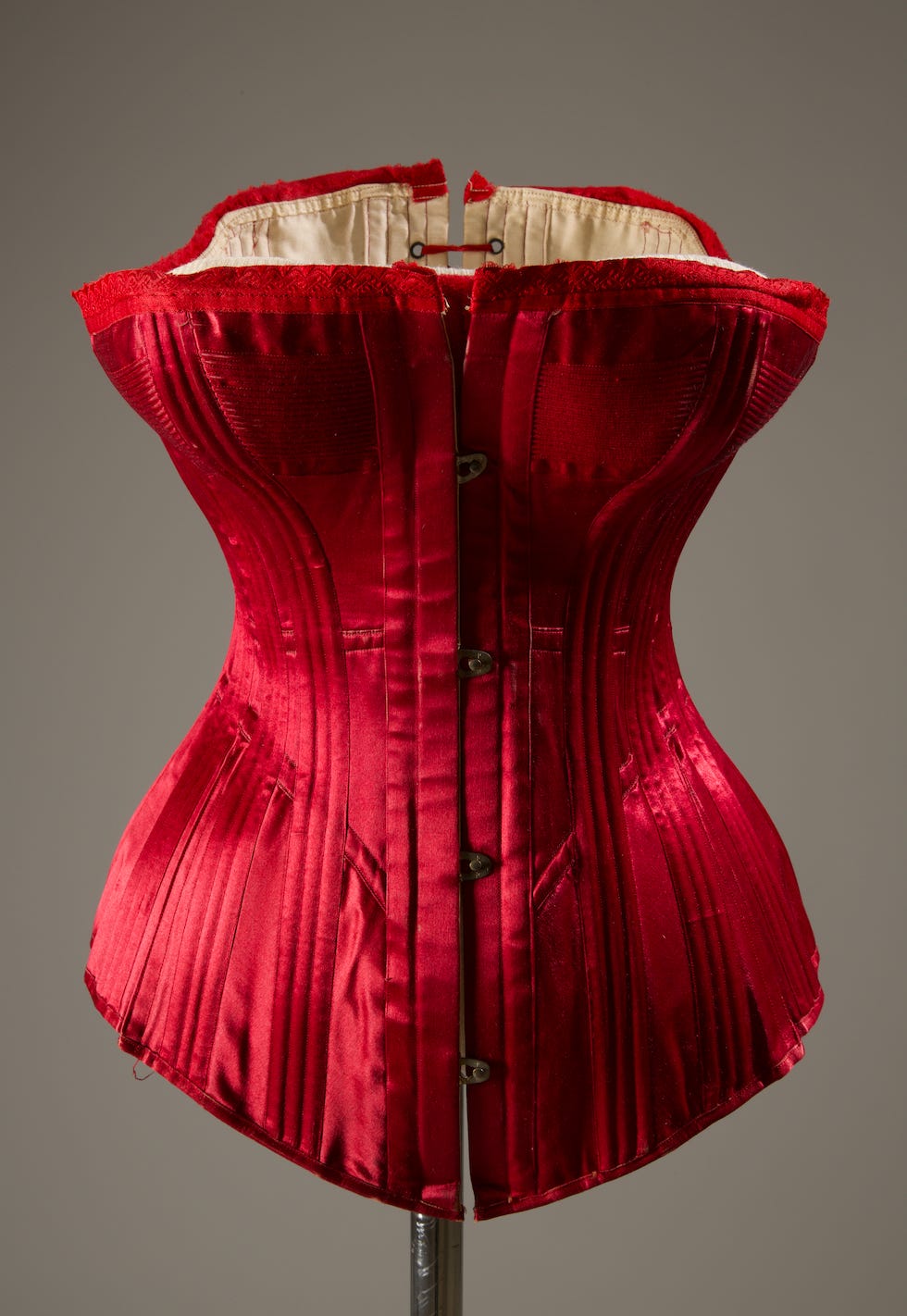
“Why do women wear, for four hundred years, this garment, which forced the body into a caricature of the female torso?” Dr. Valerie Steele smiled. “You know there were lots of sociological reasons why women were being forced to be respectable and yet also sexually attractive. But were there also some psychological reasons? Was there any pleasure at all that women were getting in this?”
These are the questions that very few costume historians, outside of Dr. Steele, have ventured to ask. Dr. Valerie Steele is the director and chief curator of The Museum at the Fashion Institute of Technology (and a personal hero of mine) and she has spent the last five years cultivating the masterful exhibition Dress Dreams and Desire, to actually take stock of the role that Freudian psychology plays in clothing.
This exhibit is so good. If you’re anywhere near New York City, run to it. Going to the press preview of this show was the highlight of my New York Fashion Week. Not that I did anything much, I am mostly indoors on protools working on the next season, but I really had to make an exception for this. I couldn’t resist a tour from Dr. Steele.
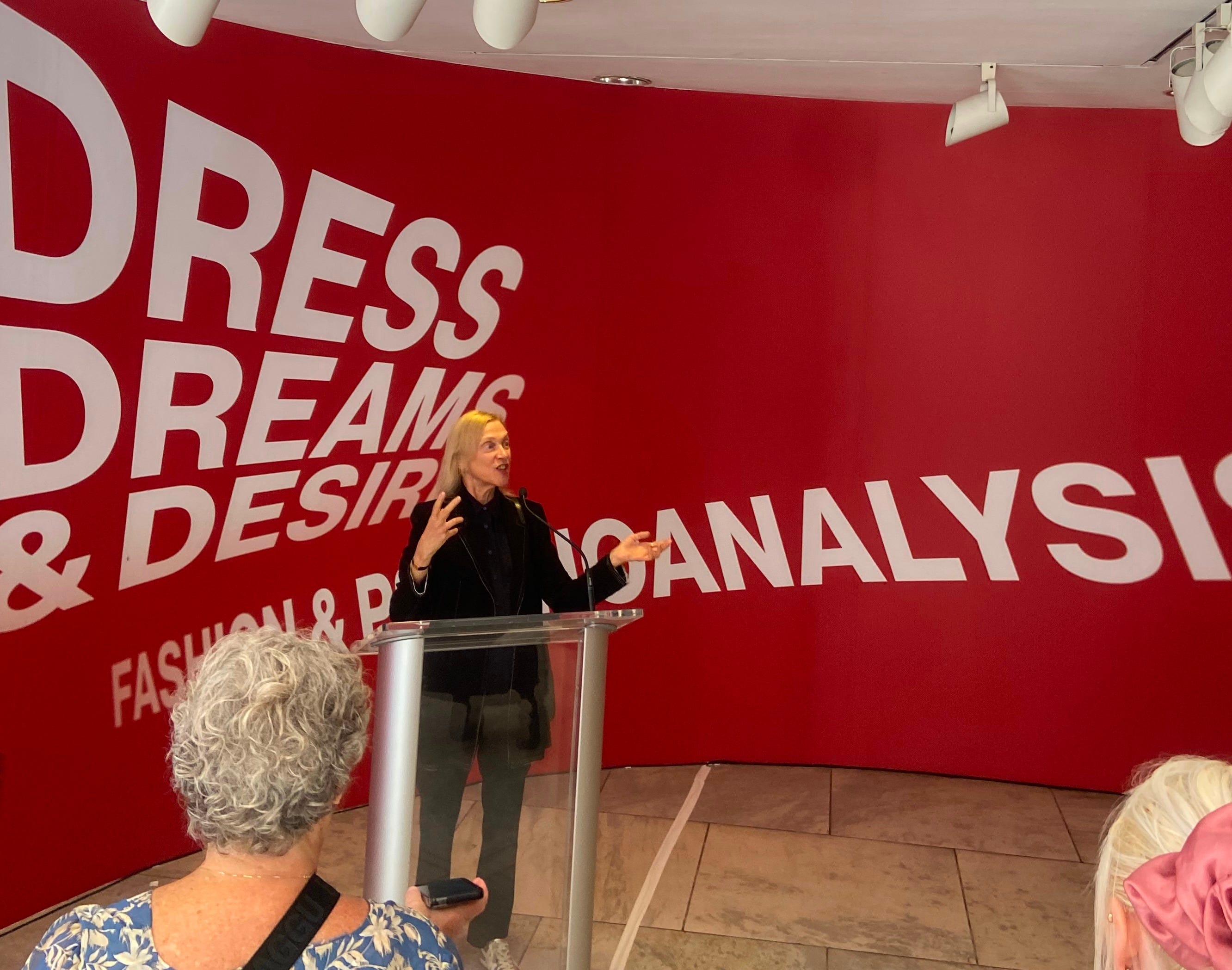
Of course, Sigmund Freud got a lot wrong. A lot a lot wrong. And please know, Dr. Steele herself is no Freud acolyte. “There's no reason to think that there aren't tons of mistakes in this,” Steele learned from her former professor, noted Freud Scholar Peter Gay. “There might be a few good ideas, but they're also mixed in with a lot of mistakes.” Penis Envy- not a great idea. The idea that gay men failed to go through the Oedipus complex- not a great idea. And yet, Freudian concepts have entered common parlance. “You talk about ‘you're very defensive about that,’ Don't you think? ‘You're projecting,’ you're using all kinds of ideas that come out of psychoanalysis,” Dr. Steele argues, “And certainly fashion designers also think about Freud.”
The “psychology” of fashion generally tends to get flattened into “clothing makes us feel good about ourselves.” When that’s clearly not the case at all. If anything, shopping for clothing is a rich and layered source of anxiety. Figuring out what to wear is a proxy for all sorts of fears about belonging, social cues, status, money, coolness, bodies… on and on. There is much to unpack in there. Psychiatrists themselves are not immune to fashion anxieties– a major donor to the FIT museum was a psychiatrist who suffered from a severe shopping addiction and “ gave us fabulous high fashion clothes that were unworn and still had the tag,” Steele laughed,” and we kept hoping she would never be cured.”

As stressful and burdensome as clothing can be, there’s a reason why they call it “retail therapy.” The psychoanalyst Melanie Klein wrote about how shopping was a method of restoring agency, of projecting ideals and hopes onto a sacred object: this shirt will make me happy, this dress will get me a boyfriend. “It'll be like a transformational object, the object of desire that will make things good for them,” Steele says. “I think that is what a lot of fashion is about, hopes and dreams, aspirations, which they hope they get in the right piece of clothing.” Clothes become holy totems that we can put upon ourselves. But, in Dr. Steele’s words, “it tends to have only a temporary effect before you wanna go out and get another thing.” Perhaps this means retail therapy is only slightly less effective than talk therapy, which, by Freud’s definition, was supposed to bring you to a level of “ordinary unhappiness.”
Sigmund Freud himself didn’t spill much ink over clothing. “If you go through the twenty-three volumes of Freud’s collected work as I have,” Dr. Steele proclaims, “you'll find that there are about a total of three pages on fashion.He just didn't write about it a lot at all.”This is, she winks, something that he might have repressed.

Upon entering the gallery, there’s a suit worn by Sigmund Freud himself: a dapper three piece number, the kind that could be worn by any well-dressed student in Paris in 1885. Next to Sigmund’s suit, is an elaborate fringed and beaded dress belonging to his wife, Martha.
Over the course of their four year engagement, while Sigmund was in Paris and Martha was home in Vienna, the couple kept up a lively correspondence. “If you read his letters to Martha when they're separated,” Steele says, “he talks a lot about fashion.”
Apparently, Freud constantly wrote about some frock coat he needs, or a top hat he covets, or a silver watch he thinks will make him look civilized, or an expensive tailor he’ll have to pay in installments. “He goes on and on and on,” Steele says. The irony being, of course, “he never analyzed his ideas about fashion and he never analyzed his anxieties about shopping.”
Perhaps, like so many men of his day, Freud assumed that clothing was not a part of a man’s domain, since he was part of the generation who had adopted English-style business suits. They were participating in a modern international style movement, focused on function more than self expression (supposedly). Women, Freud believed, were prone to “passive exhibitionism” and longed to show off their bodies in the form of fashion. Women were the population who were supposed to engage in frivolous and fancy dress, and Freud encouraged Martha to buy clothes (and he fantasized that when he was rich and famous he would fill his wife’s closet with beautiful gowns).
Freud theorized that fashion was a socially acceptable place for women to exhibit their arms and legs and, into the 1930s, their backs. Although it’s said that “erogenous zones” shift over time, Steele argues that the constant erotic centers of the human body are the skin, the eye, and the brain. “Because as Freud said, human sexuality is different than any other animal,” says Steele. “We don't go into heat and mate. It's a psycho-sexuality. And so it's always going to involve fears, fantasies, anxieties. And it will be individual to each person.”

Clothes reveal, hide, protect and comfort. They interplay with the skin and eye and mind. So much of how we clothe our bodies is shaped by how we were raised and what strange lusts and dreams are sloshing around inside us, but there’s also a raw psychology in armor of clothing: in how we use it to create a protective shell. After all, the fetish of looking comes with the anxiety of being looked at.
“When I was young, I used to think of fashion primarily in terms of sexuality and gender and identity,” Dr. Steele shared. “And as I got older and read more and more of these psychoanalysts, I started to see there was also something very much about protecting yourself from feeling vulnerable.” In a world that is both hungry for new content, yet painfully cruel and indifferent, “What fashion exposes simultaneously is our vulnerability about being seen and not being seen.”
In this way, the simplest and most overt aspect of fashion psychology comes from who we choose to look at. Fashion mirrors relationships. We dress in the style of someone we seek to emulate, someone whose values we like. “Those psychoanalysts who deal with teenagers talk a lot about how they identify with their peers and it shows in their clothes,” Steele says. “There are little gangs of cliques that dress one way or the other.” Clothing is the way to show belonging, affiliation, age, desires, interests, gender, and values. All of which are subject to shifts and changes over time.
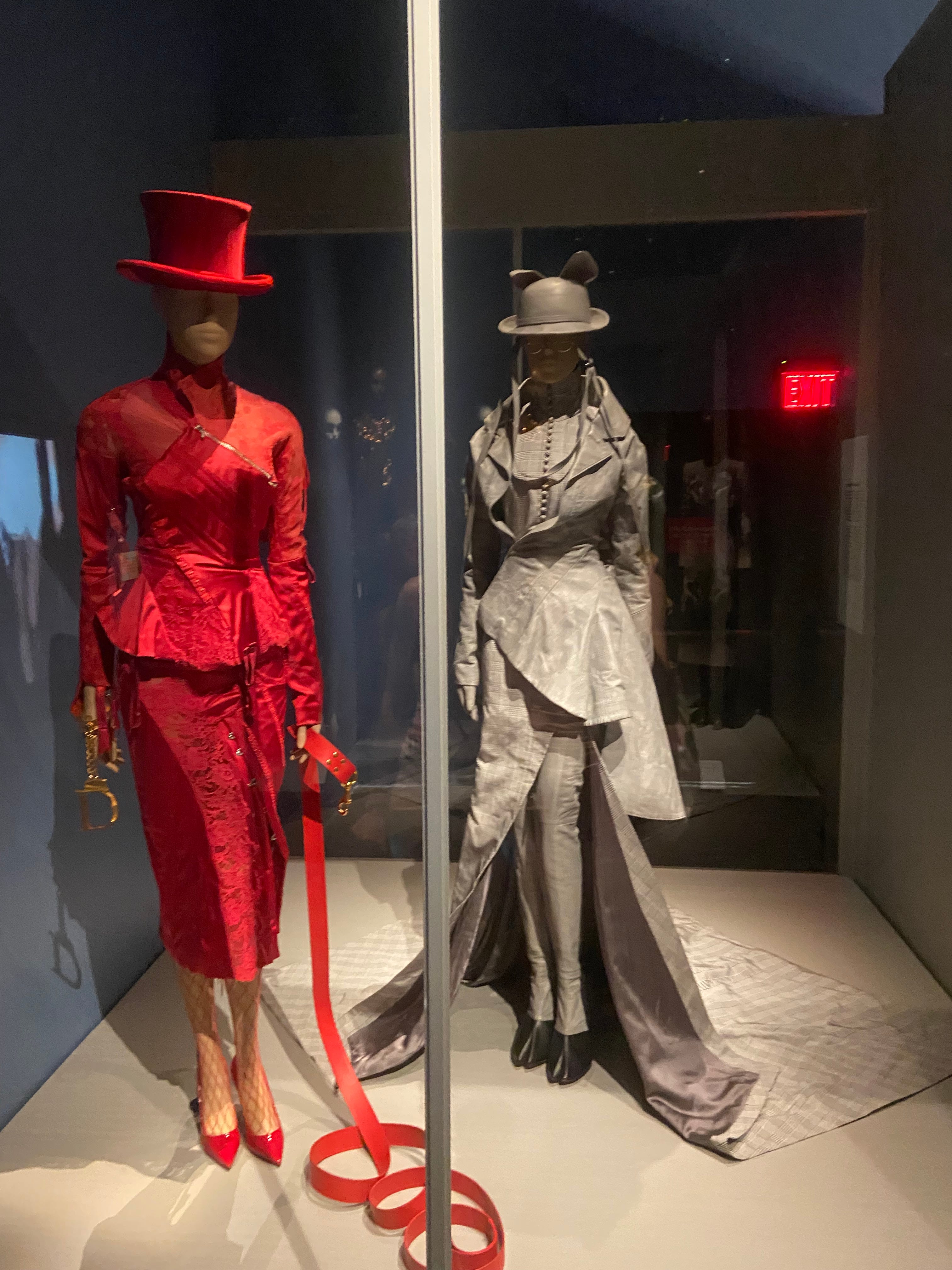
In fact, the psychoanalytic process itself leads to a style change. “Sometimes psychoanalysts, often women, will talk about how one patient will start to dress like them,” Steele told me. “And they'll go, ‘okay, she's going through a stage, she's identifying with me. This is part of the transference. And so she's dressing like me. And then she'll reject that and go into something else.’ So I think that some analysts are attuned to relationality and how it works with fashion.”
Dr. Steele hasn’t ever been subject to Analysis herself, and neither have I. We’ve each done therapy, sure. But when asked by the famous psychoanalyst Adam Philips if she would ever see a psychoanalyst, Dr. Steele proclaimed “dear God, no! Some things are better left buried!” Perhaps I would try it one day, although I agree, there’s something that feels scary about romping around up there in the mind. The fun thing about clothing is that it’s so of the body. The physical nature of it makes it easy to analyze. It's right there on the skin. It’s tangible. Look at it. Try it to guess what it means. Interpret it like a dream. You might make some mistakes but whatever fuck it. Clothing is a surface level inroads to the psyche. Which could never fully be unclothed anyway.

I find corsets pretty comfortable, myself. Like a weighted blanket. Of course, I don't tightlace or wear the crazy rich people styles -- but if you've worn historically inspired fashion, you'd know that those long skirts are heavy! Corsets comfortably redistribute that weight and provide INCREDIBLE breast support.
I know these things aren't talked about much, because corsets seem to be mostly something that skinny alt girls with no boobs wear with their jeans and miniskirts, but they really were what made the long, insulating layers of natural fibered fabrics of the time practical to wear without digging in at the waist. (and I'm a sucker for long, heavy skirts -- so corsets it is!)
Obviously, the short stays/empire waist combo of the regency era was like the modern era, where the pressure rested on the shoulders and not the hips, but I just happen to prefer carrying the weight on my hips over my shoulders.
Thank you as always! I greatly admire your work! I wish people talked more about the important differences between corsets and stays. Stays, unlike corsets, weren't meant to push your waist -- and your organs -- one way or the other. Stays were much more supportive. Women who work in costume at the Colonial Williamsburg Foundation tell me they love their stays! And pioneer women relied on their stays to help protect their backs while they were ploughing! I think the story of stays is not told often enough.