
JEWESS
Judaism, But Make It Fashion


It is a weird time to be white and Jewish in America right now. I feel like I have a bunch of different voices screaming from inside me all the time that I don’t quite know how to process.
That’s why I’m so grateful that my friend, Brooklyn-based artist Danielle Durchslag is using fashion to work through questions of identity, history, and belonging. Not to mention, her work is also fun and campy in a way that feels appropriately semitic.
Danielle’s been kind enough to take the time to walk us through her work and her process, ahead of her upcoming solo show. What a treat.
Take it away, Danielle:
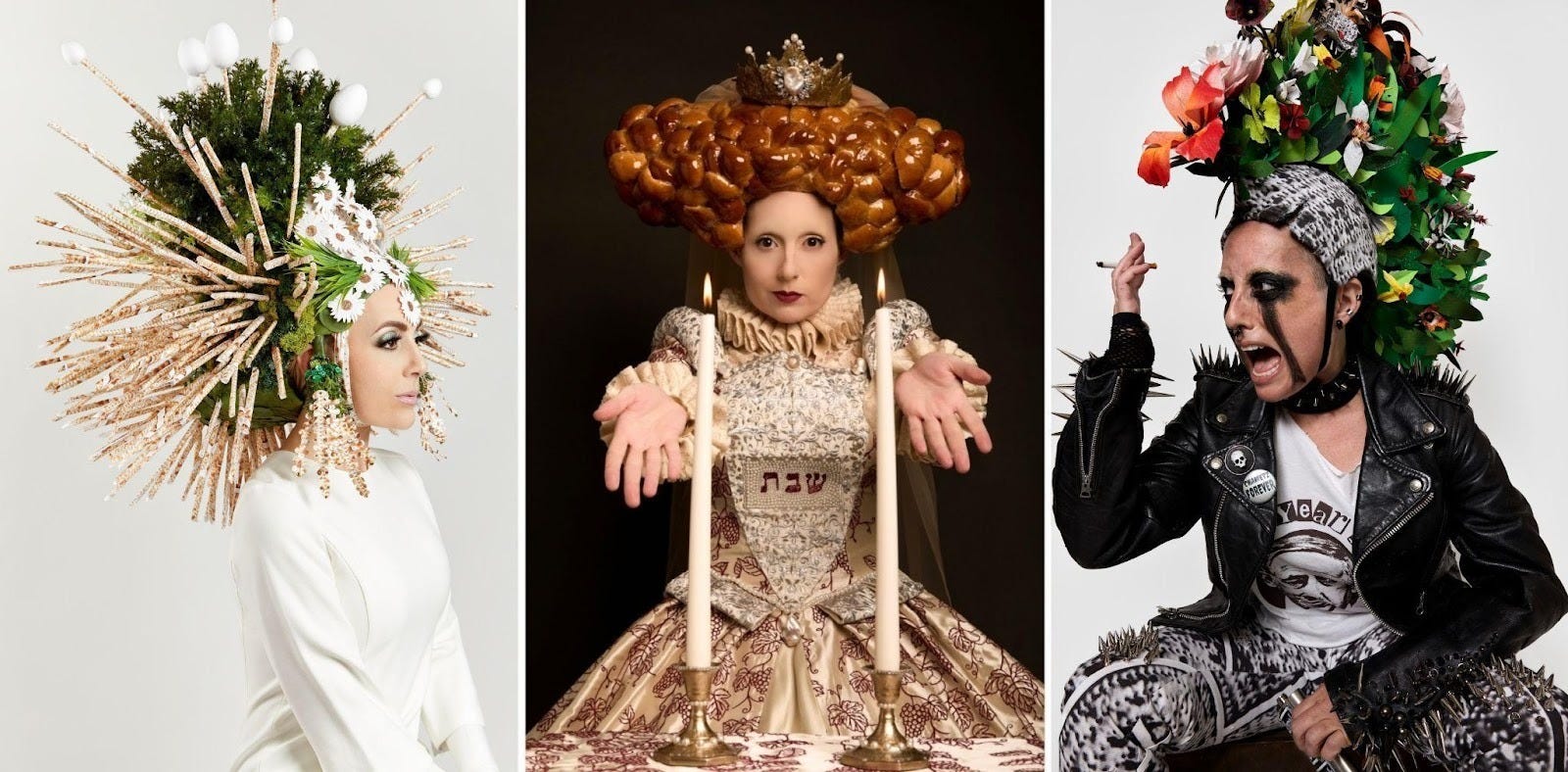
Jews and clothing are inextricably bound; but we usually see that relationship through images of overworked 19th century immigrants bent over sewing machines. This narrative, of garment workers on the Lower East Side, emphasizes Jewish American poverty and “otherness,” while ignoring the issues of class, whiteness and assimilation rooted in the way we, as Ashkenazi Jews, have come to dress. It’s also woefully, aggressively, non-fabulous.
As an artist, I’ve decided to change this. Inspired by Jewish ritual and fashion history, I design costumes and embody characters of my invention with distinct, at times oppositional approaches to contemporary Ashkenazi identity. Collectively, these characters tell the story of Jewish life and disagreement, but through a joyful, feminist, fashion-focused lens.
I first began this endeavor, oddly enough, on Easter. At the 2022 NYC Easter Bonnet Parade, I witnessed a dynamic, buoyant celebration of chapeaus of all kinds, from traditional Easter bonnets to beautiful, surprising head coverings with themes completely outside the holiday. Paradegoers showed up wearing original headgear of all shapes and colors, personal expressions engaging with politics, fashion history, and identity.
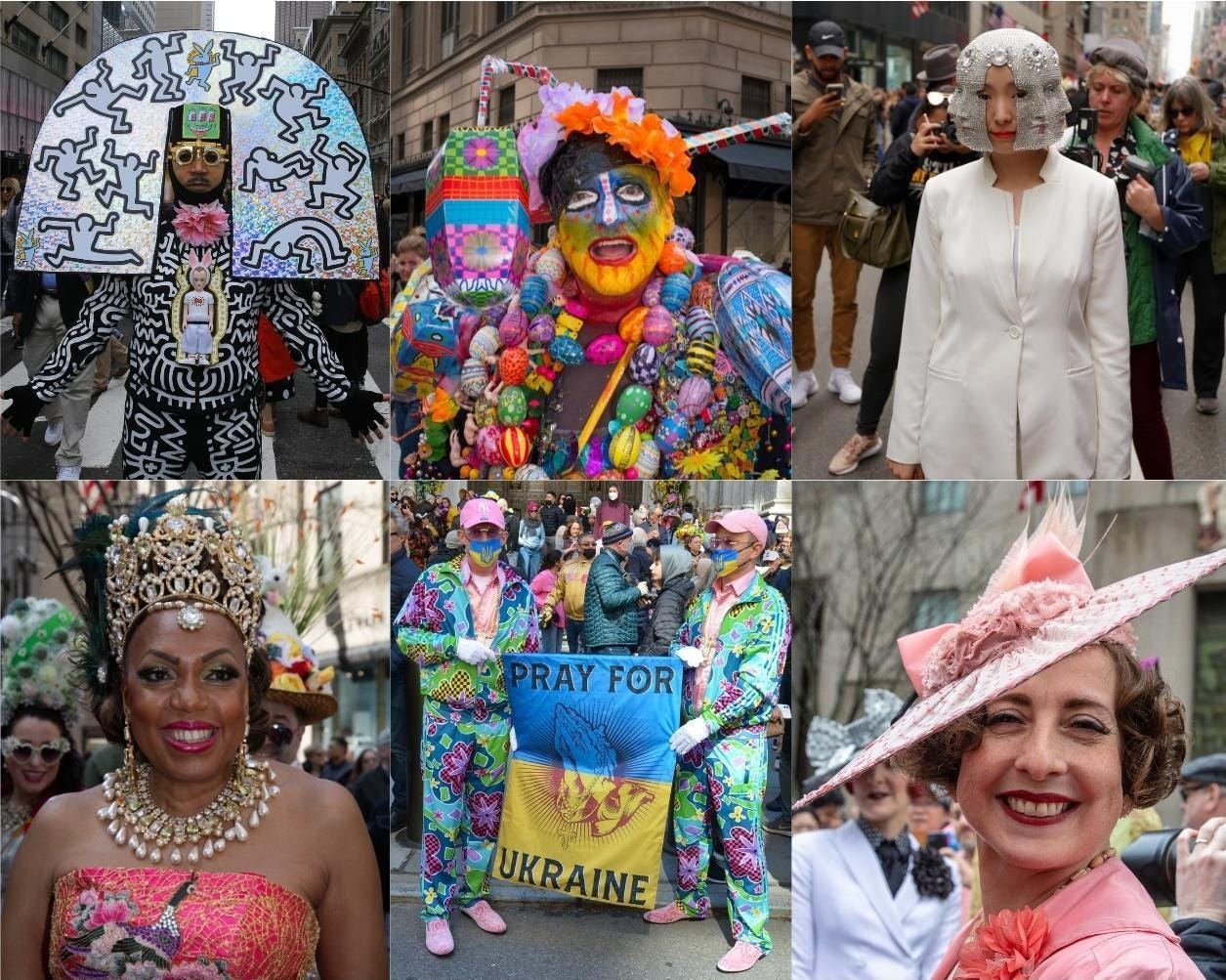
That day on 5th Avenue, I immediately knew I’d return the next year, wearing an ambitious headpiece of my own.
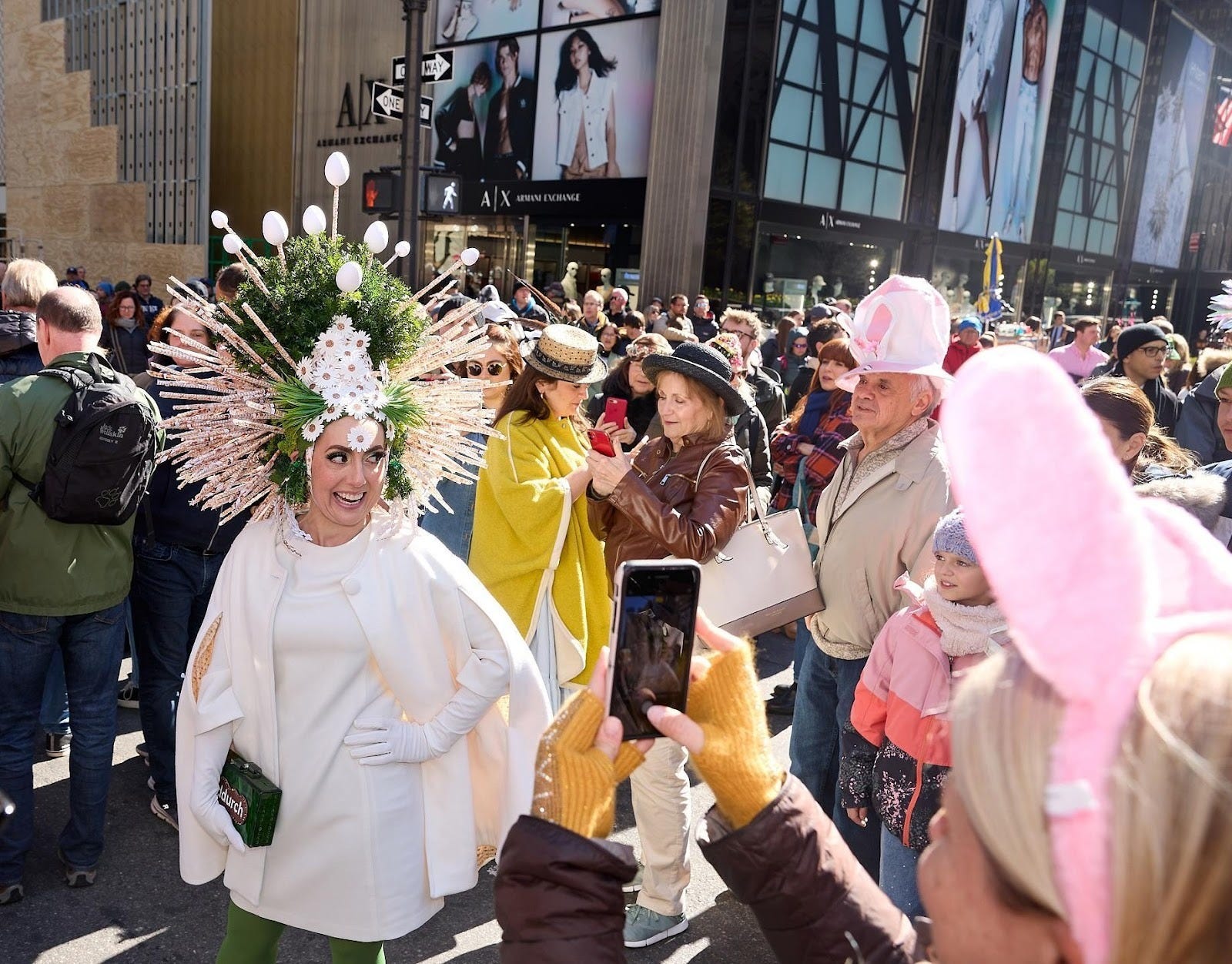
This party of a hat does more than meets the eye. In addition to its striking looks, it also serves as a commentary on “passing” in Ashkenazi life, and my personal tribute to that most glamorous, Caucasian, and hat-loving of Jews, Elizabeth Taylor.
Taylor converted to marry the singer Eddie Fisher, a faith she kept after the union quickly fell apart. Less than a decade later, she starred in a movie called BOOM! which features my favorite clothing item ever of hers: an iconic white tower atop her head designed by Alexandre of Paris. The film stinks, but the hat, as you can see, is divine:
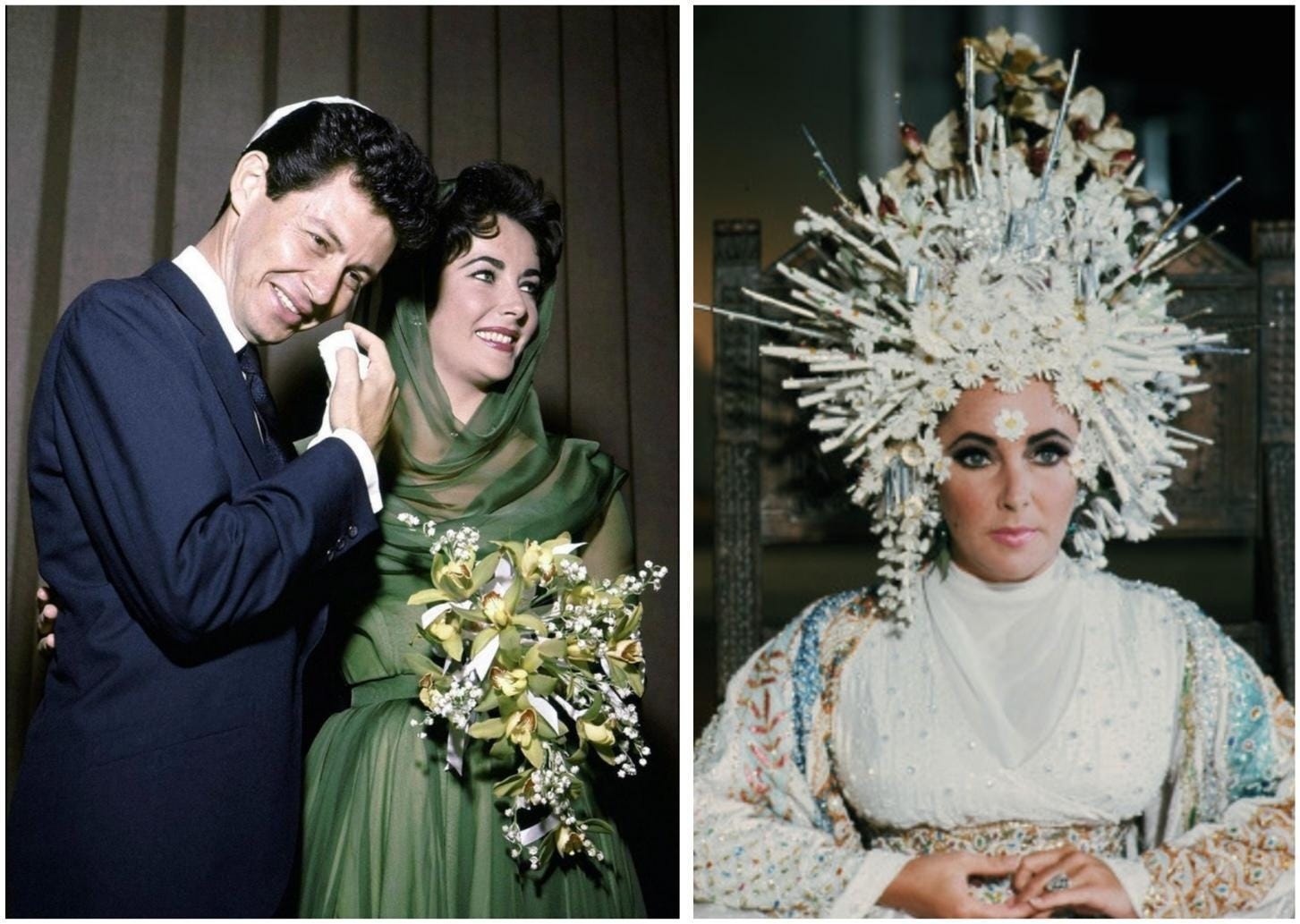
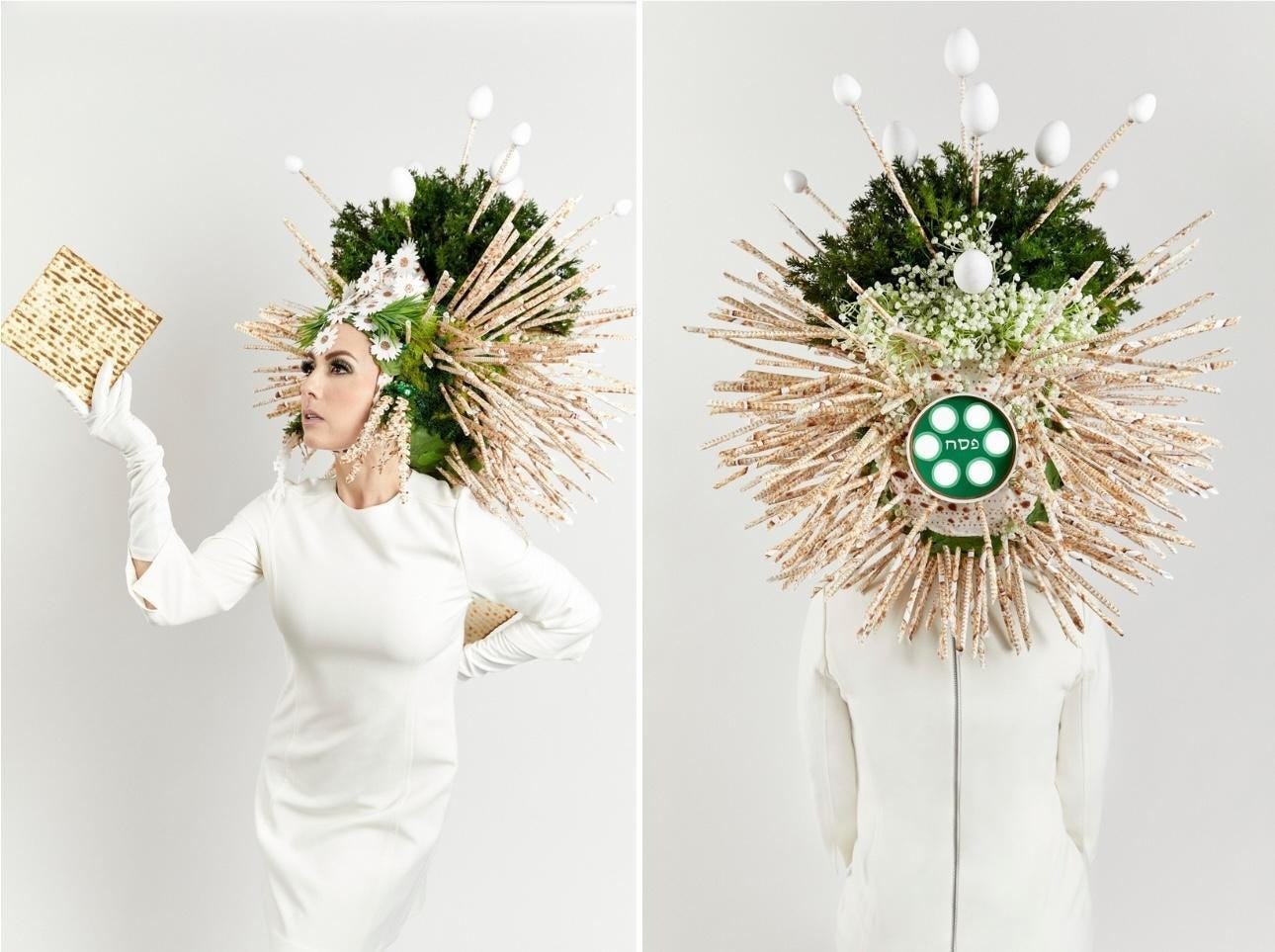
Over the course of 12 months, I constructed my tribute hat / costume, titled Taylor Bonnet. My headpiece appears deceptively similar to the one in BOOM! , but if you look closely, you can see it’s actually a celebration of Passover, made with matza wrapping paper, fake parsley, and many fabric eggs; all facsimiles of Seder table items. Knowing Passover, like Easter, celebrates spring, and the Last Supper was a Seder, this Pesach headpiece made for an ideal Easter Bonnet.
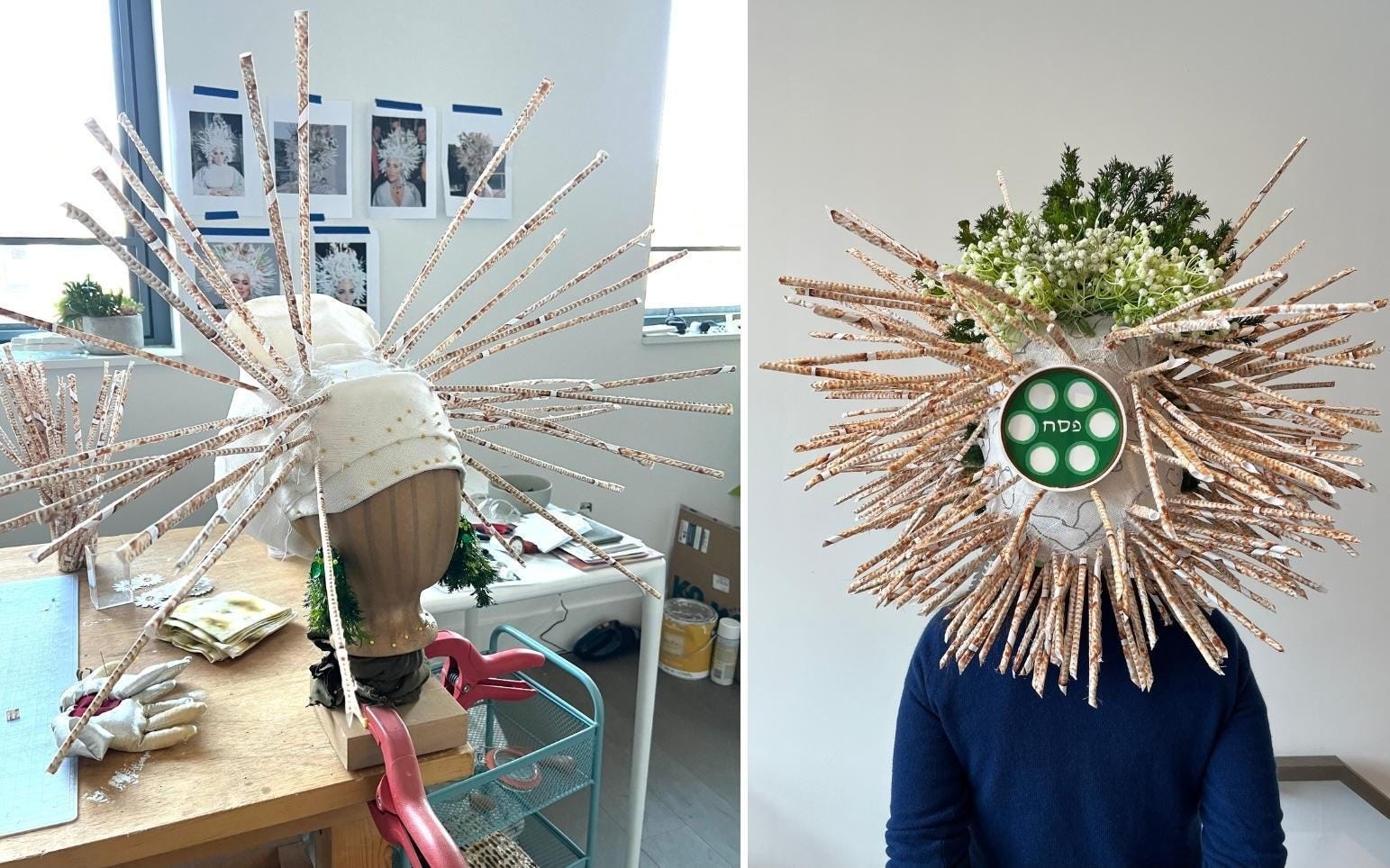
Over those months in the studio, to my surprise, I got to know the woman meant for this hat: someone unlike me, with elements of Taylor. A popular “non-political” Ashkenazi socialite, living on the Upper East Side, proudly Jewish but not very religious. A devotee to WASP aesthetics, she avoids challenging topics in Jewish life, especially the Israel / Palestine discourse, and never examines her personal privilege.
I attended the next Easter parade in 2023 as her, in character. Acting like the parade’s annual host, I happily posed for, and with, giddy locals and tourists for hours. That joyful experience illustrated the power of clothing as a vehicle to access distinct perspectives and explore thorny aspects of Jewish life. I’ve been making clothing-centered work ever since.
For my next character, I turned to another Elizabeth: Queen Elizabeth I of England. Typical of the era’s anti-Semitism, Elizabeth officially banned Jews from her realm, though she never expelled the tiny community of Sephardic Jews who’d fled the Spanish and Portuguese Inquisition, only 80 or 90 people, secretly living in her kingdom.
Queen Elizabeth’s grandeur reminded me of the most famous queen in Jewish life, The Sabbath Queen. This invisible, holy entity supposedly visits Shabbat tables on Friday nights to begin the holiday; all the fine china, candlesticks, and challah set out each week honor her.
Nothing about Queen Elizabeth I closely tethers her to Jewishness, really, until, that is, you examine her sleeves. I only realized the visual connection between these two queens while looking at this famed portrait, from around 1575:
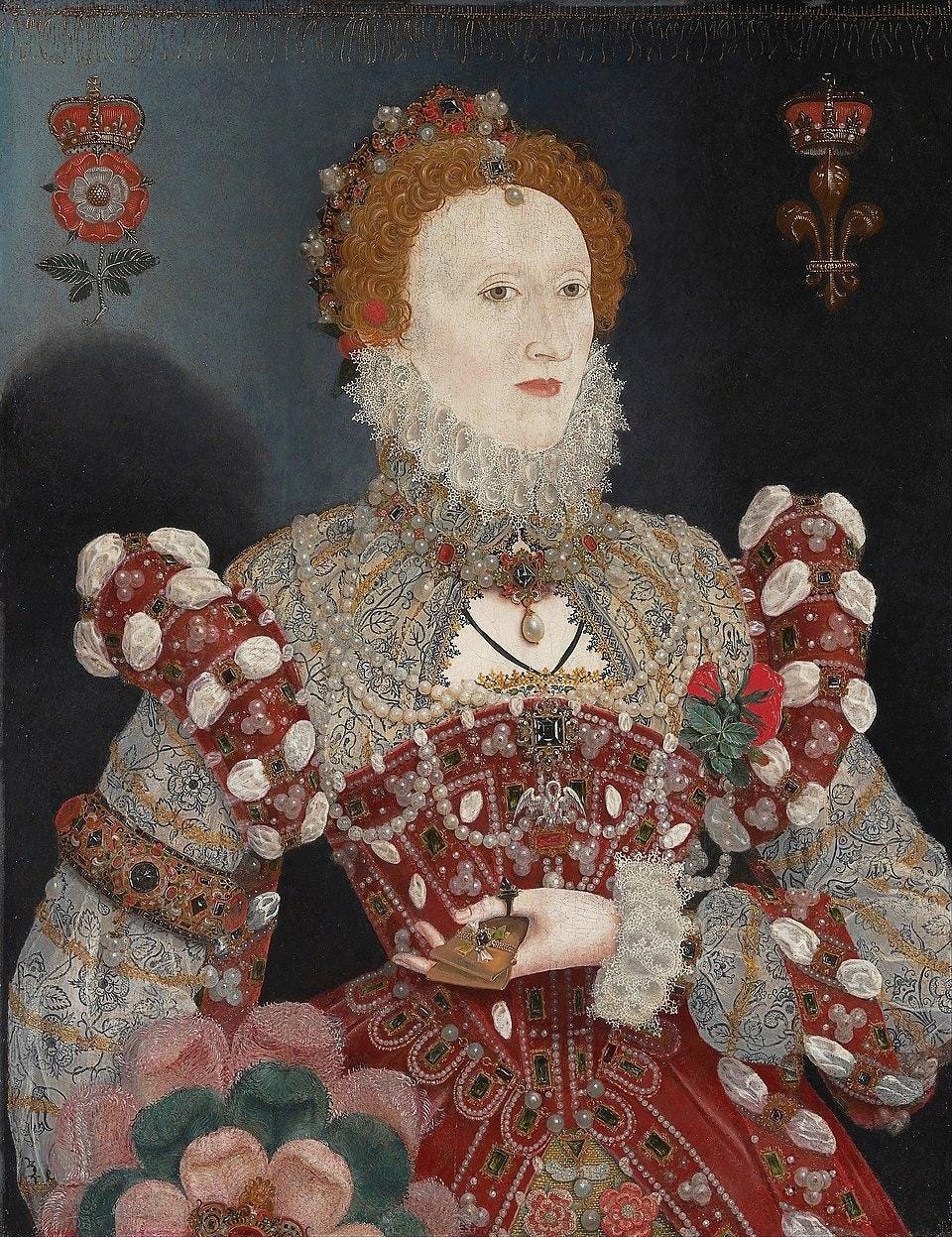
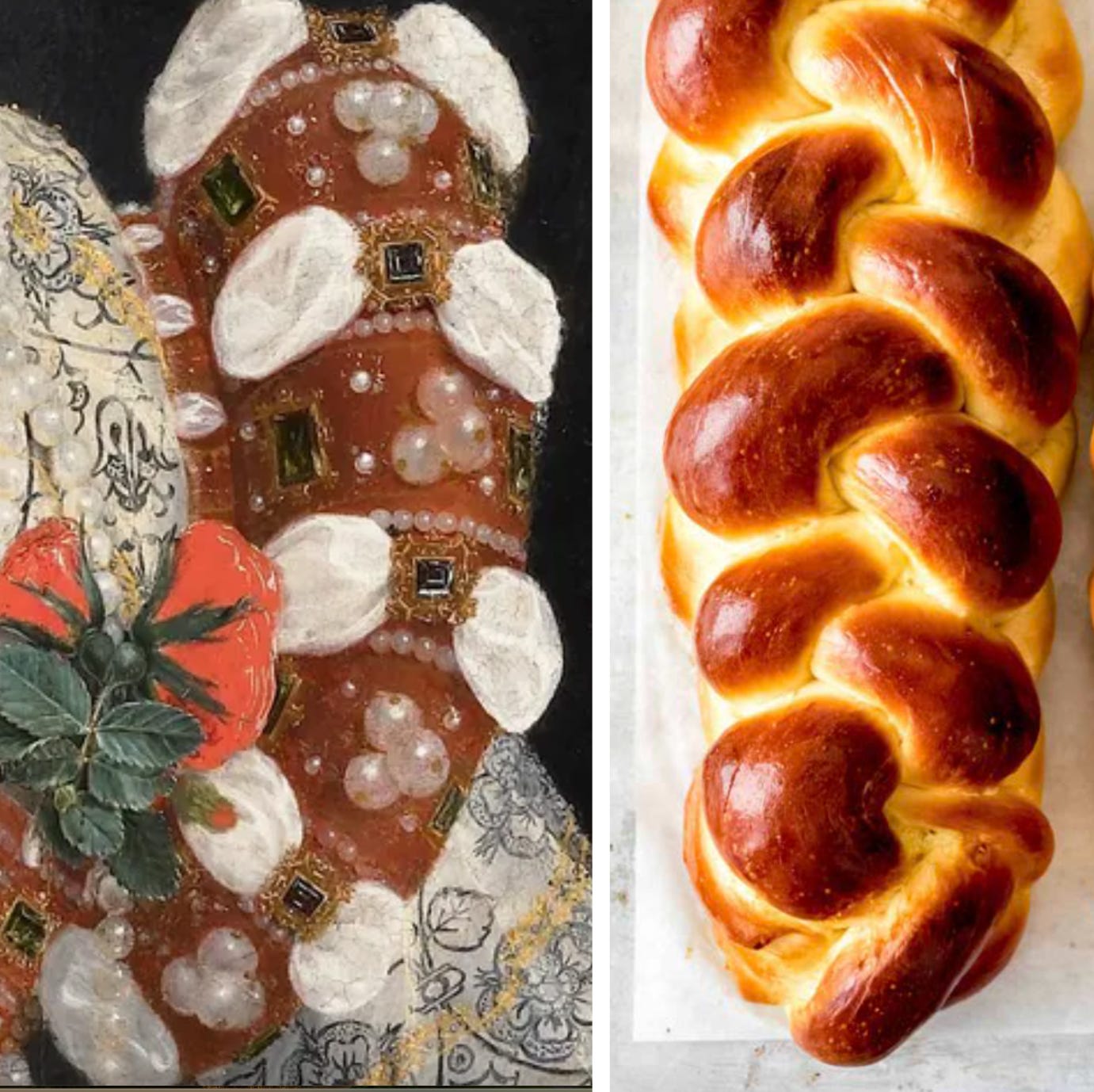
The protruding shoulder pieces in this painting reminded me of challah bread, so I decided to fabricate a headpiece for my new queenly character made of this blessed, braided carb.
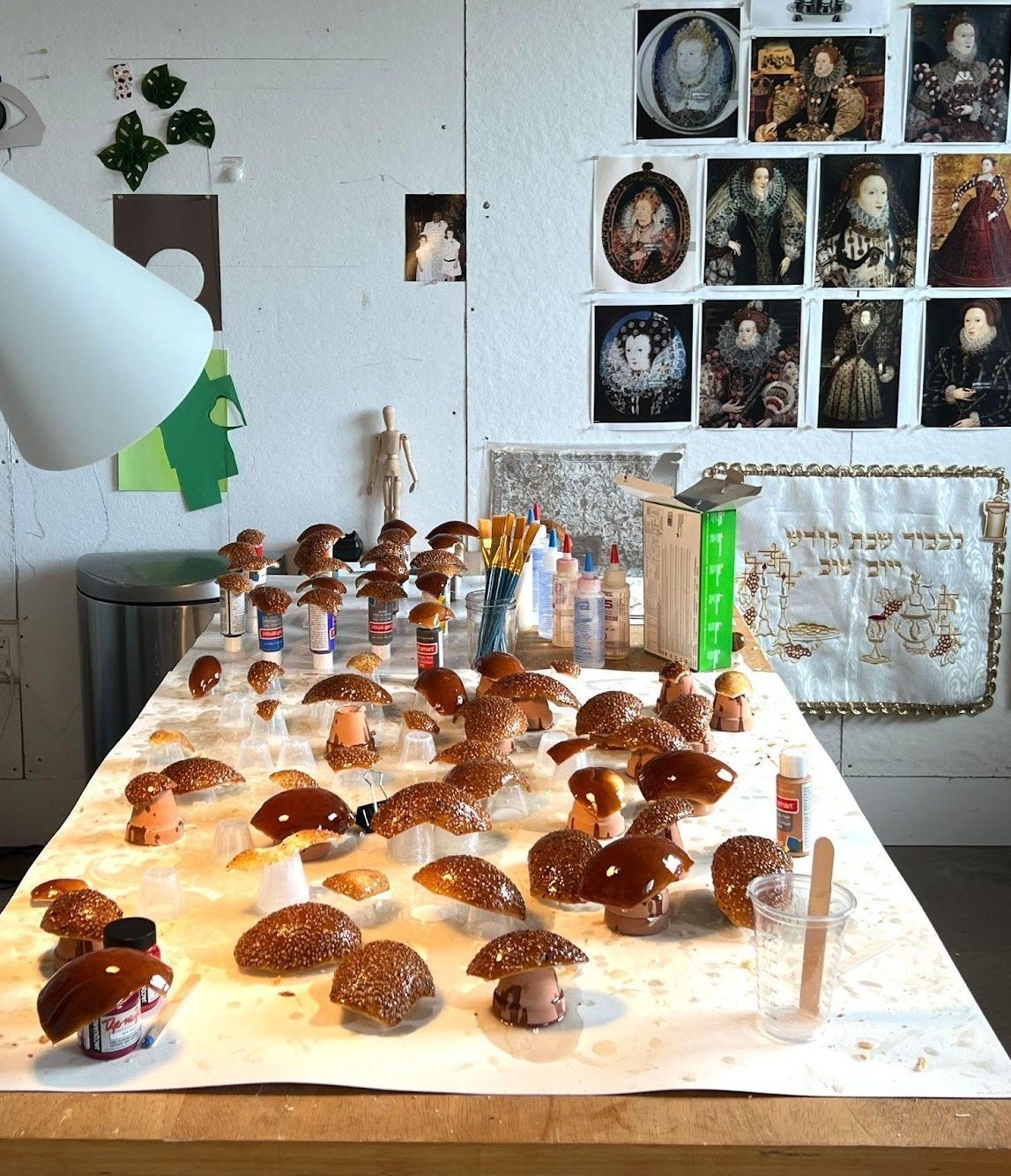
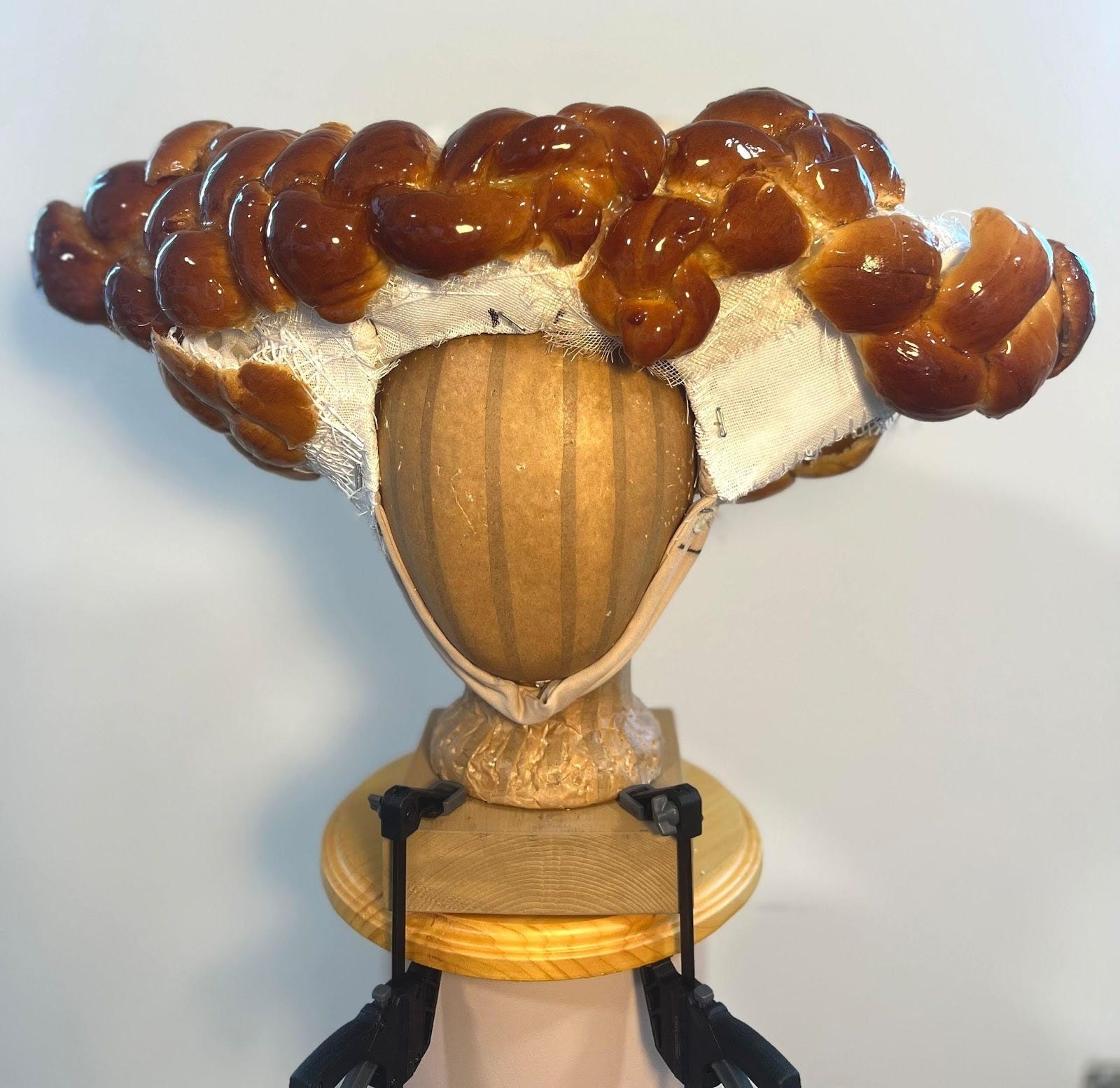
Bread, famously, does not want to be a hat. Somehow, though, after 5-plus months of technical failures, and my home studio stinking of rotting bread and resin, I improbably had a truly wearable challah headpiece for my Sabbath Queen.
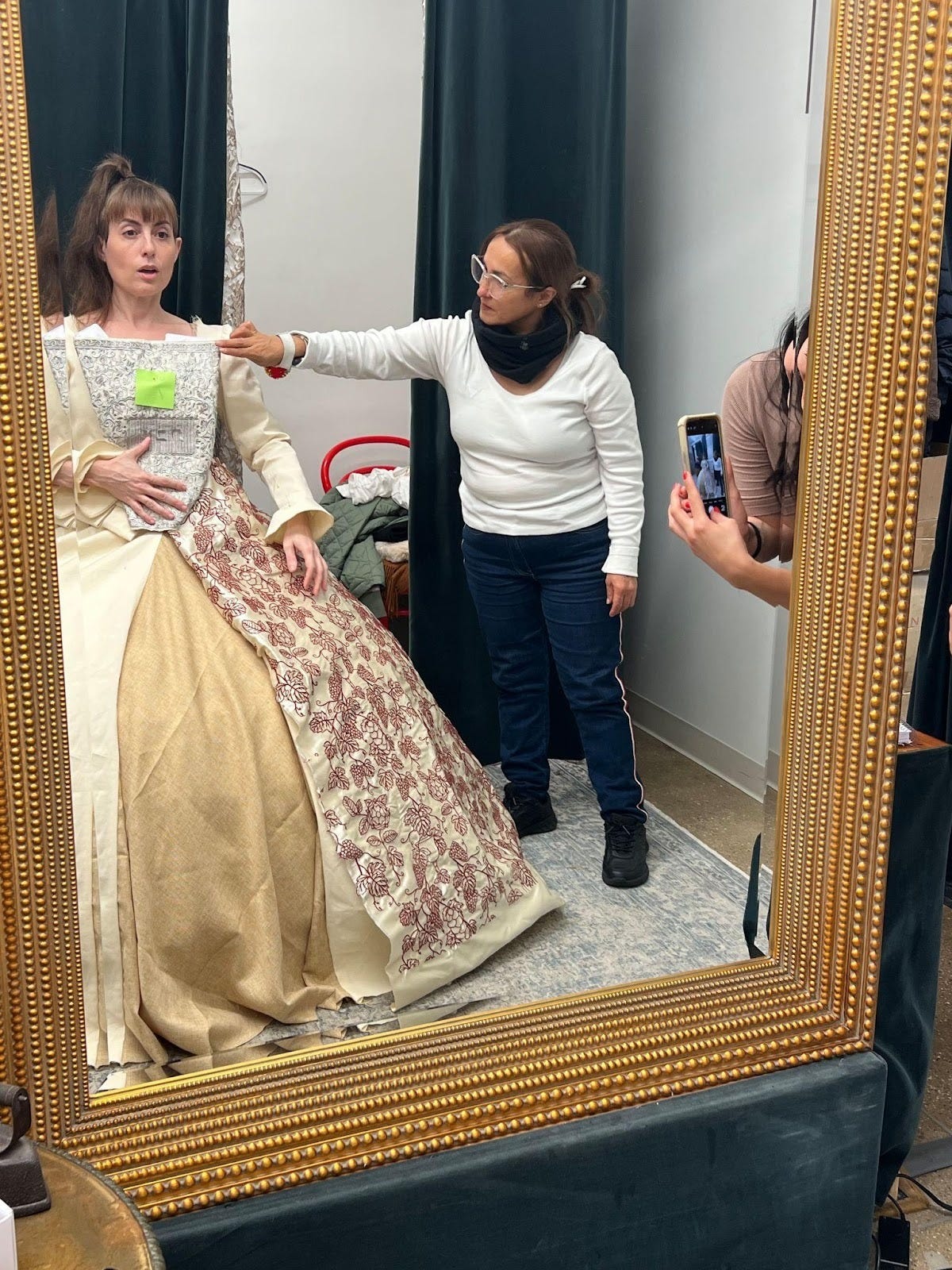
I next chose to use challah covers for the bodice and sleeve details. Embroidered challah covers, like many Jewish ritual objects, often copy ancient Christian royal aesthetics, making them a seamless visual fit for Tudor court fashion. Working with the wonderful artists at Flatiron Tailors, I created a gown made with embroidered fabric portraying candlesticks, challah, and kiddush cups alongside Elizabeth’s signature Tudor rose. Hundreds of fake pearls, Elizabeth’s signature jewel, each one adhered by hand, capped off the ensemble.
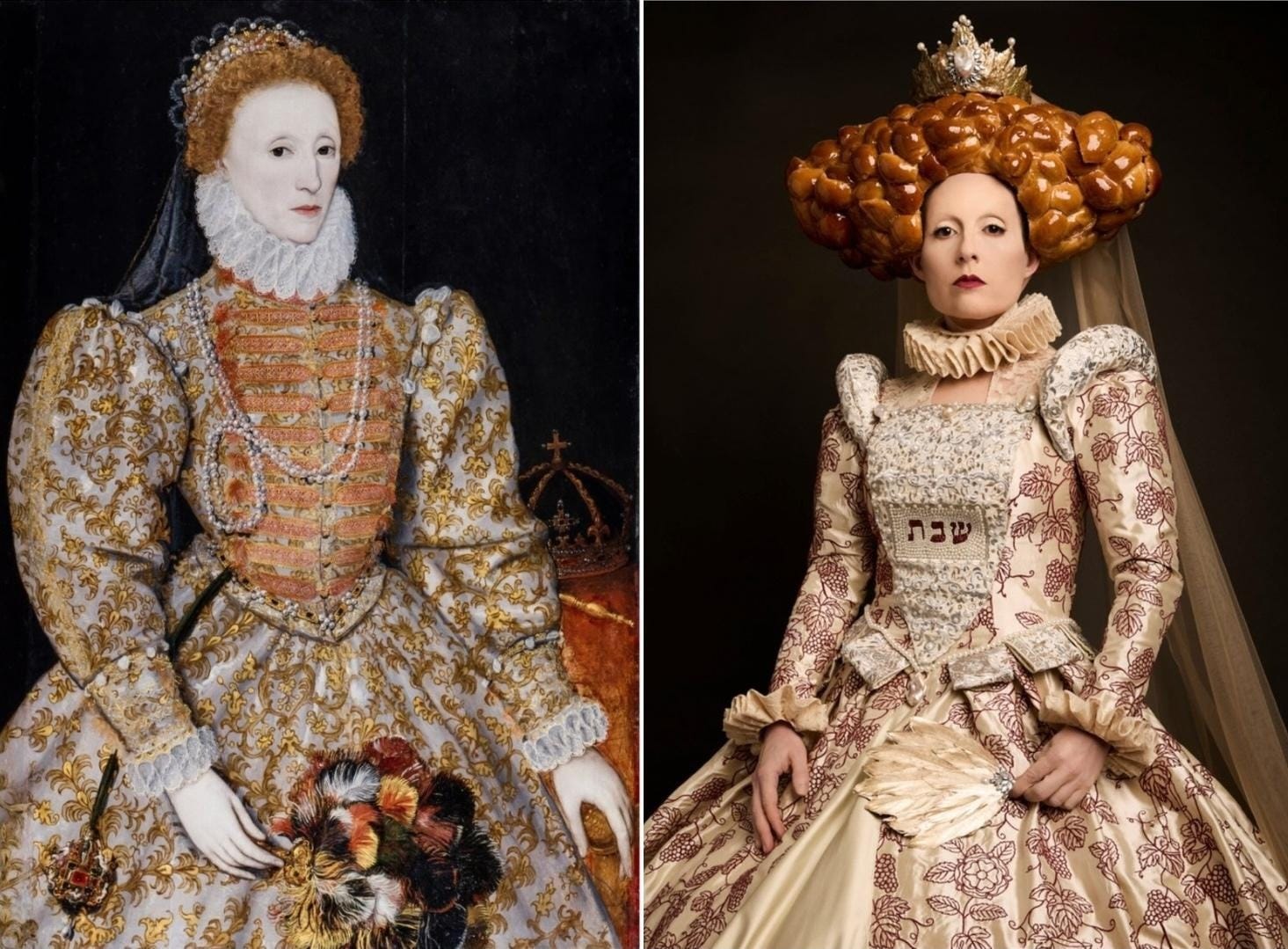
Sabbath Queen references not only Queen Elizabeth I’s looks, but also her politics: specifically her central role in encouraging and funding the beginnings of the British empire, a decision with tragic implications for the displacement of Palestinians centuries later. October 7th and the genocide of Gazans began while I worked on this character, emboldening me to make a bigger, louder political statement.
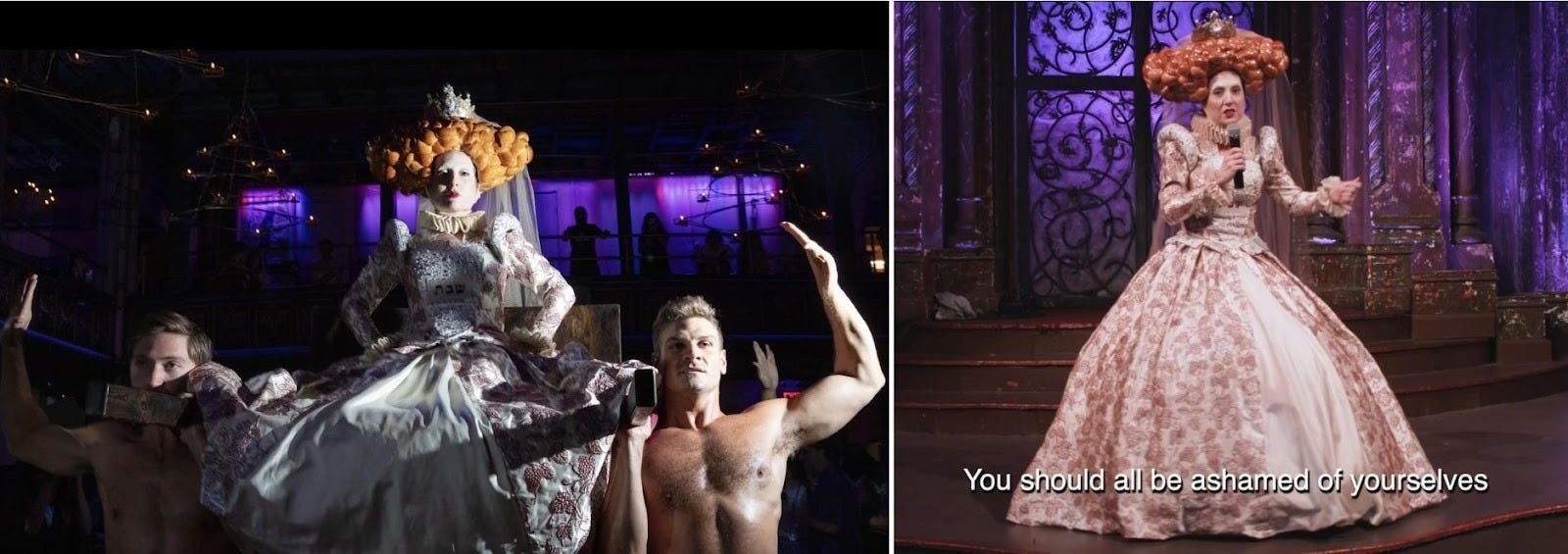
Whereas my Taylor Bonnet parade performance functioned mostly on vibes, I wanted The Sabbath Queen to make a proper public address, a clear declaration of her supremacist worldview. My queen is a haughty, religious, superior, imperialist, right-wing Zionist: an intolerant, lethally confident monarch. She’s my satirical critique of the contemporary Jewish relationship to conservative political power.
In 2024 I premiered her at a conference for the leftist magazine Jewish Currents, in queenly style. Chiseled men, wearing only yarmulkes and speedos, carried me slowly into the venue on a large palanquin, while I coldly waved to the surprised crowd. Once deposited onto the stage, I addressed the audience in character, deriding them for their traitorous progressive beliefs and accusing the event of being sponsored by Hamas. The audience roared. As a non-actress it proved the scariest, funnest, most empowering night of my professional career.
While the American-supported horrors in Gaza continued, I approached my next, and most recent, costume project.
In conversations with other leftist friends at that time, we talked about our outrage and sense of isolation from mainstream Jewish life, due to our opposition to Israel’s actions. I struggled to find the right outlet for my upset: I’m a nice middle-aged lady from Illinois, raised in the Midwestern tradition of Be Polite And Don’t Bother People. My internal response to global horrors runs more toward despair than ire.
So I decided to make my next persona someone both passionately identified with Jewishness, and strongly opposed to the crimes being done in its name. Someone like me, but bolder. For this I needed to channel a fashion movement charged with anti-establishment frustration and embodied rage. Naturally, I landed on early London punk.
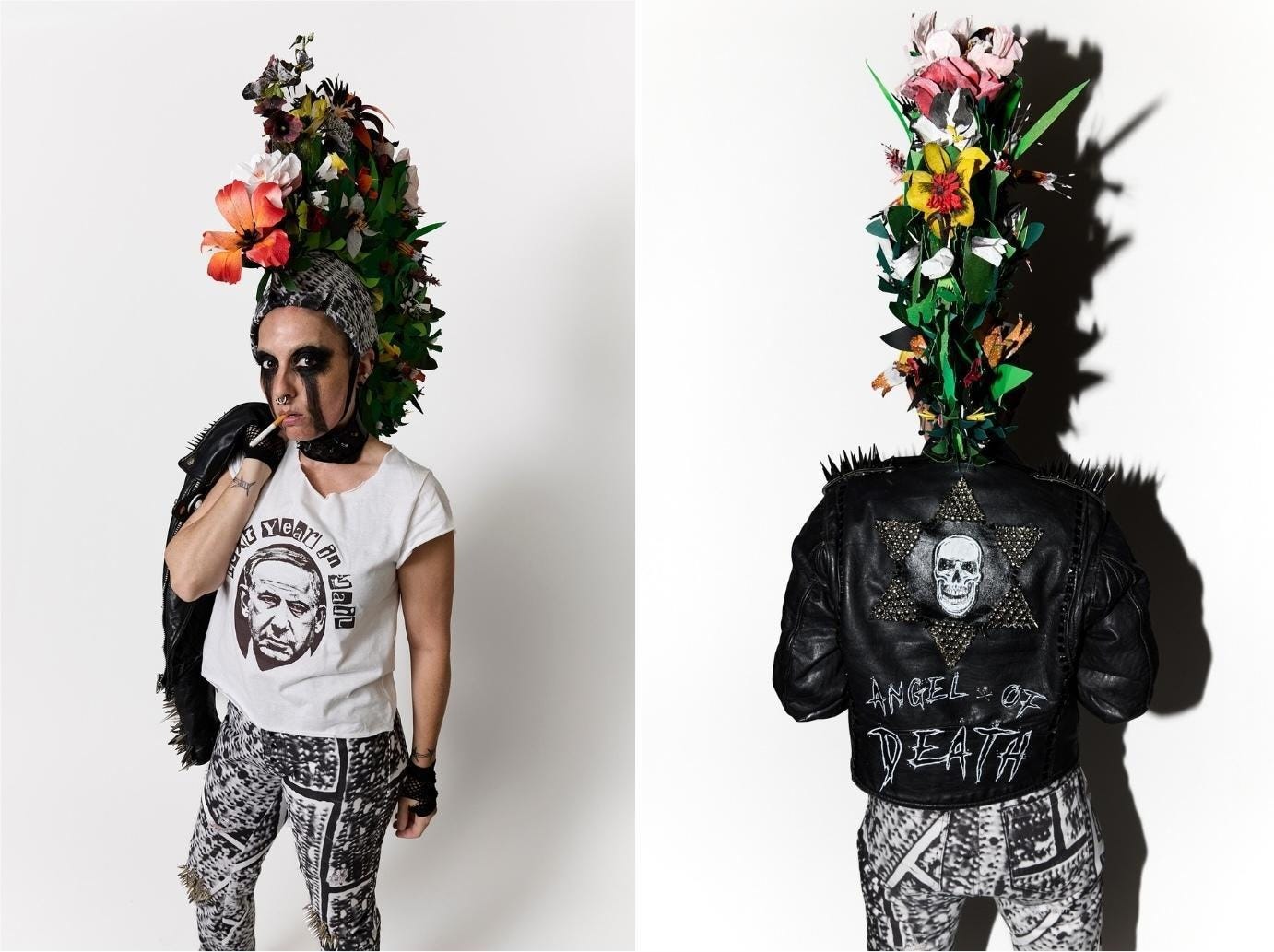
This new character, titled Pesach Punk, is a rebellious, intense, pained, anti-Zionist political activist; my wearable interpretation of Passover’s Angel of Death. To realize her, I immersed myself in the visual world of Vivienne Westwood, the punk movement’s aesthetic originator.
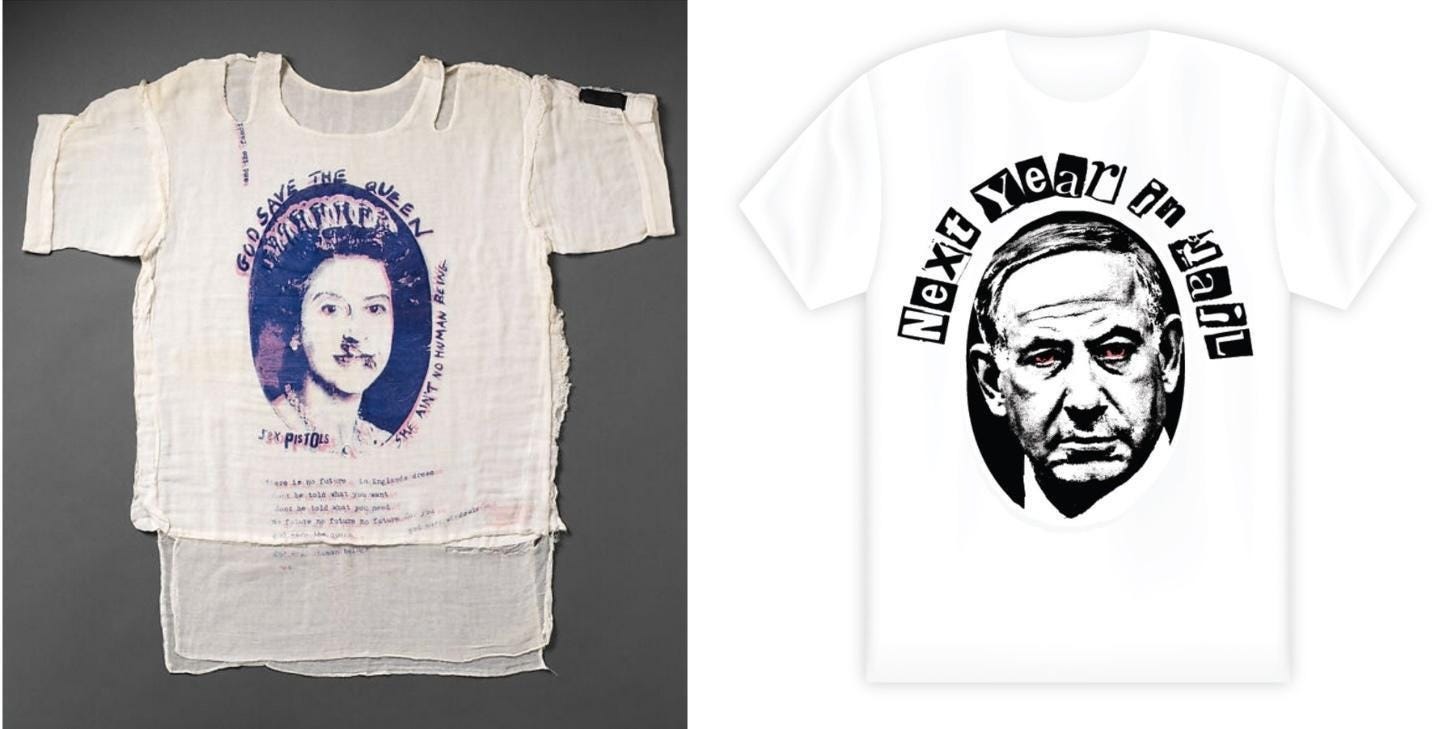
Pesach Punk’s pants and crown showcase an original black and white matzo bread pattern inspired by Westwood’s bold plaids. Her legendary “God Save The Queen” shirt gets an updated, Jewy nod as well. At the end of Passover meals, Jews traditionally collectively exclaim, “Next Year In Jerusalem!” My tee design for this character portrays Netanyahu rather than any monarch, his head crowned by the words, “Next Year in Jail.”
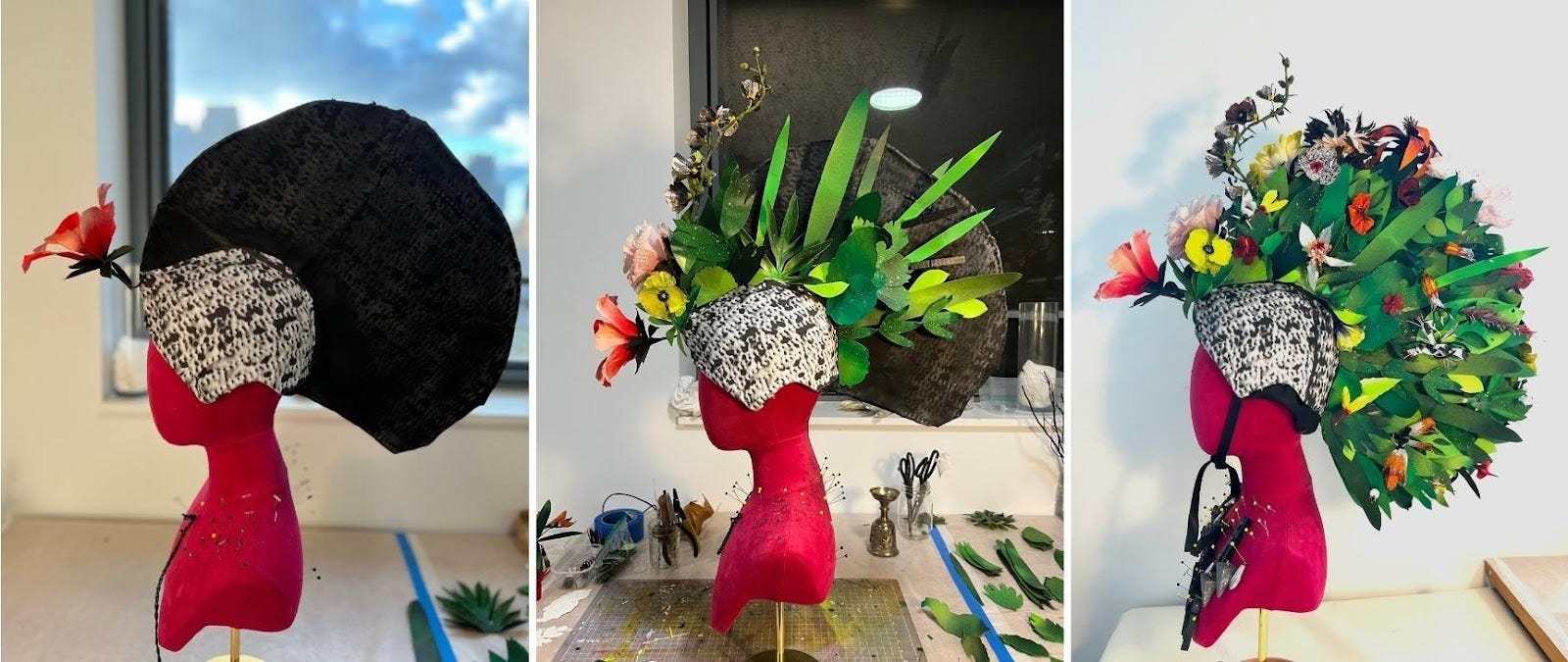
A fabulous punk ensemble requires a mohawk, so I began fabricating one made of flowers and leaves, to reference Passover’s marking of winter’s end. Over months I learned paper flower-making, the craft behind those large blooms on Anthropologie store walls. This old technique, often associated with women makers and dismissed by the art world, alchemized, in my studio, into a confident fine art object. Of course, unlike traditional examples, the Punk’s pulp-based blossoms visually embrace fury, covered in threatening nettles and doused with neon spray paint.
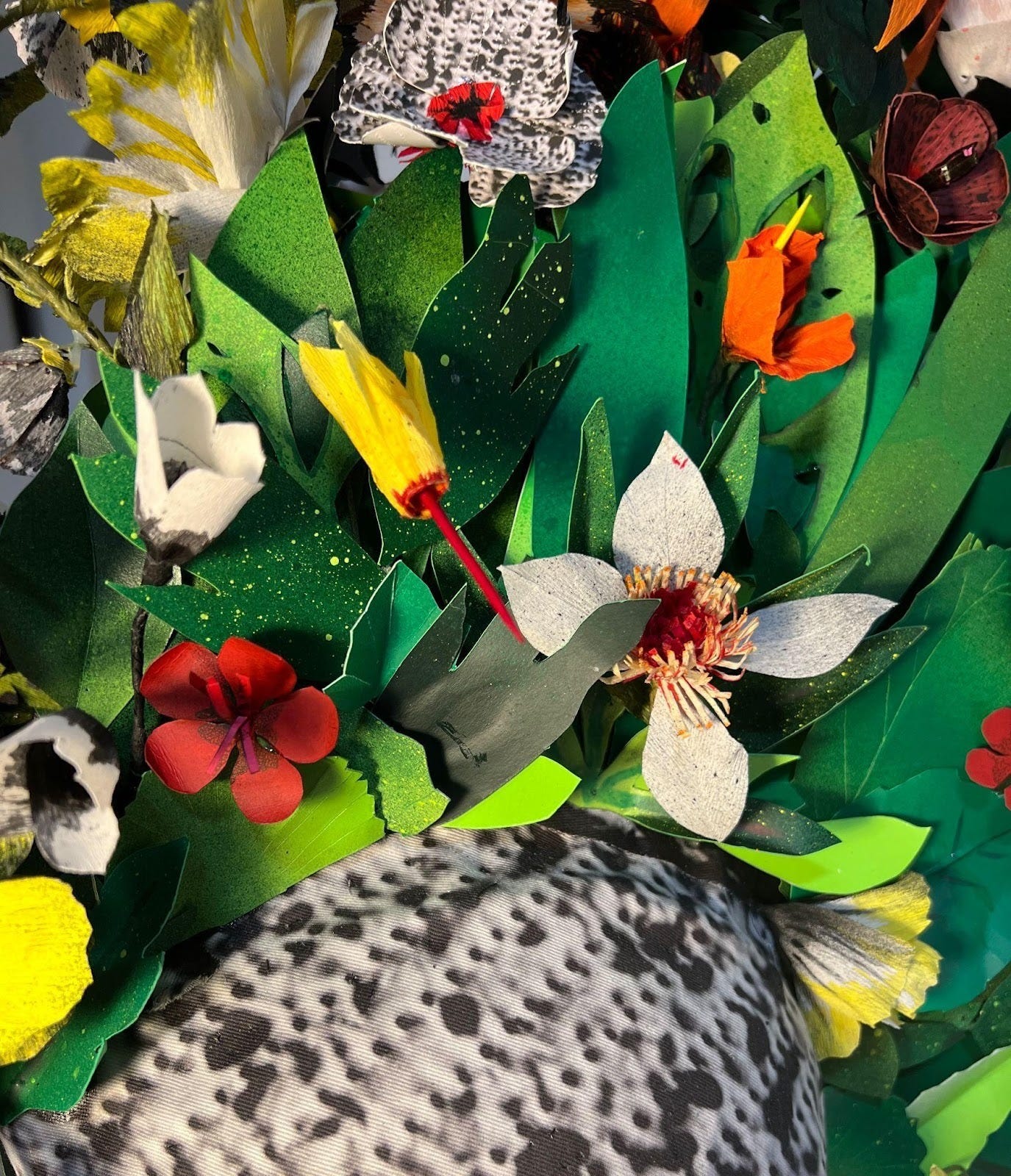
While Pesach Punk and I share politics, our temperaments could not diverge more. But accessing this persona freed me to feel, and project, wrath. I decided to write, direct, and star in a short music video as Pesach Punk for her world premiere, based on the classic Passover tune “Dayenu”. In my incensed, radical re-interpretation, titled Die(Ayenu)!, the Punk’s lyrics critique the many conservative sins of contemporary Jewish life.
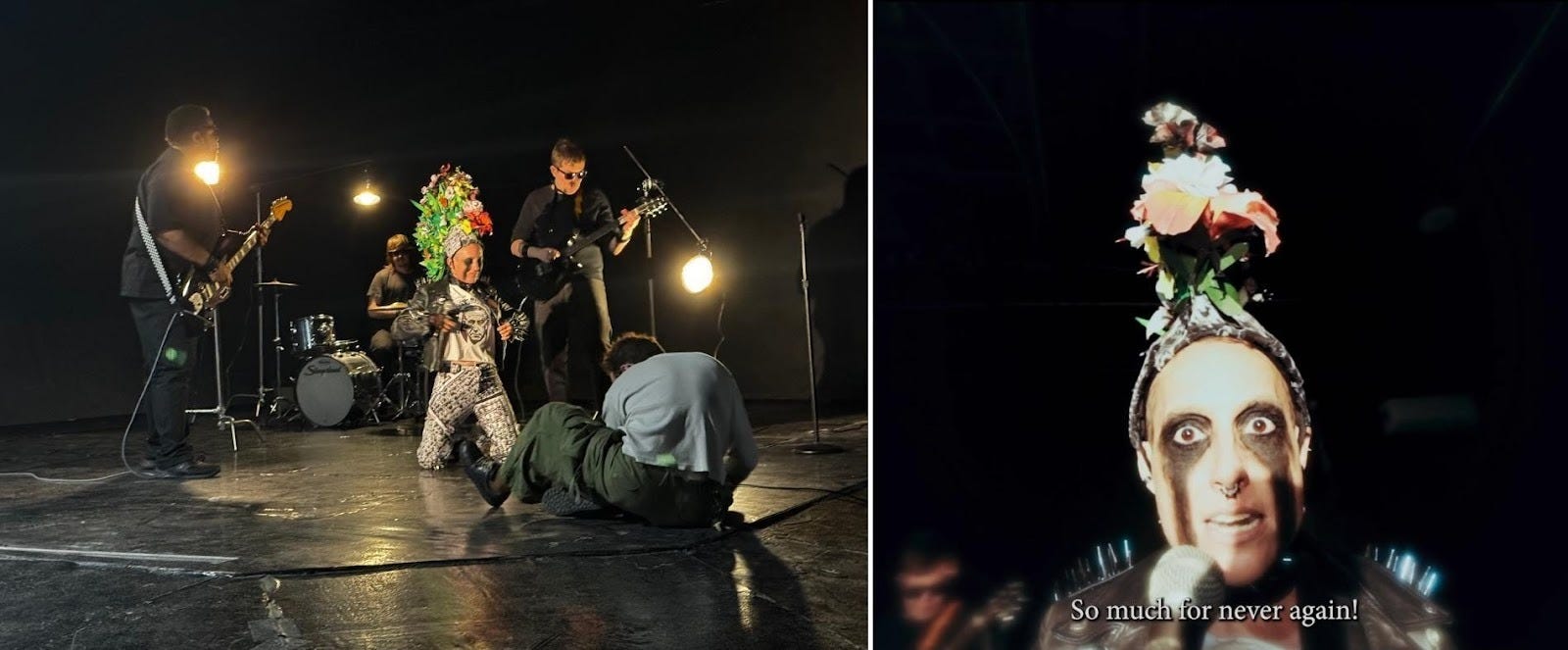
Ripping up an AIPAC sign and screaming, “Shove Your Men’s Minyan Up My Pussy!” on camera hadn’t originally been on my dance card for my 44th year, but I cannot recommend it enough.
I’ll always feel grateful for that fateful day, years ago, at the Easter Parade, and the weird, wonderful, Jewish, fashion-history oriented path it inspired. These projects embrace a range of techniques and themes, but all share one element at their center, to me perhaps the most important, and illusive, factor necessary for successful art making: permission.
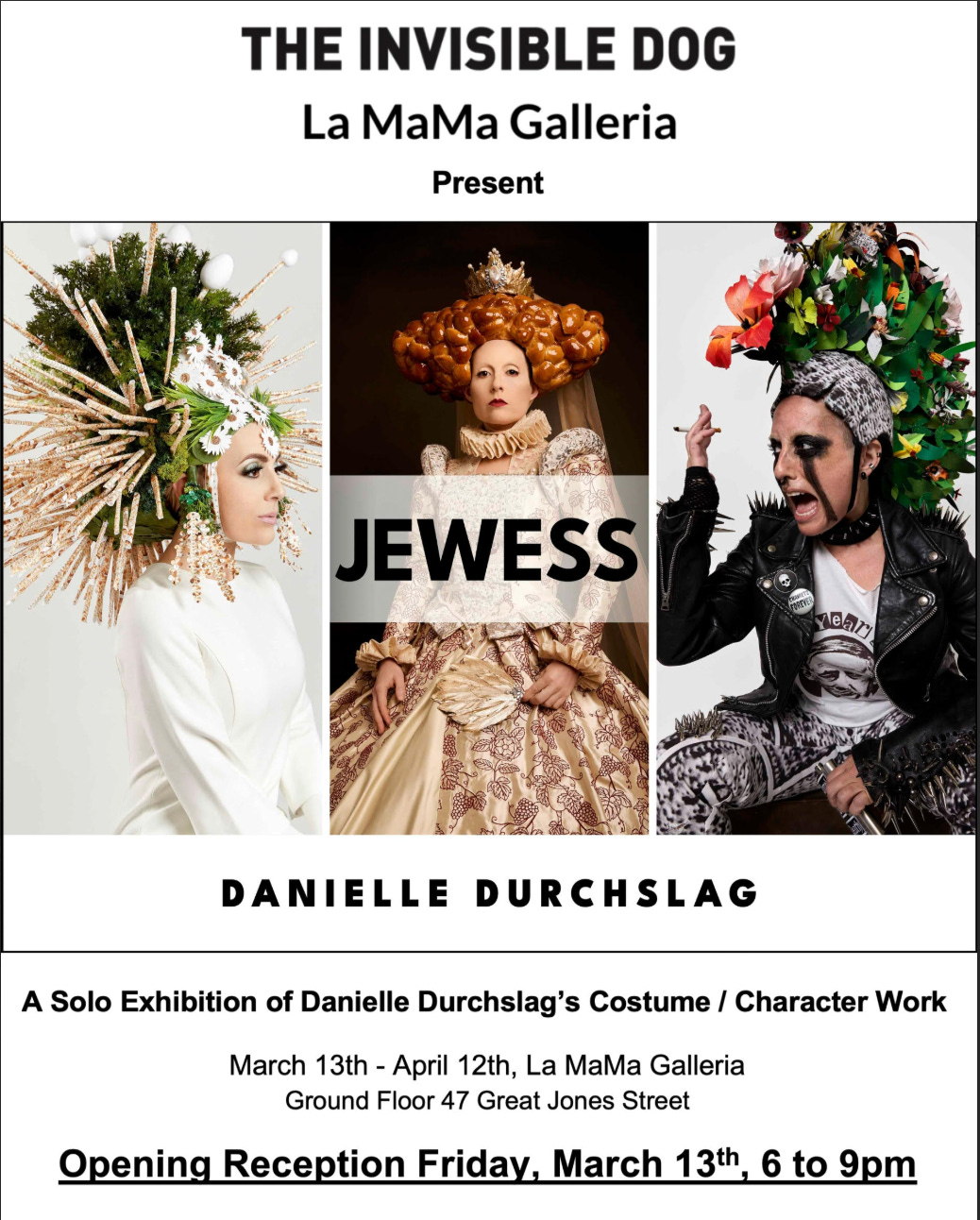
Danielle Durchslag is an artist and filmmaker based in Brooklyn, NY. A large solo exhibition of all her costume / character work described in this essay, titled JEWESS, will be on view this spring. Curated by Lucien Zayan and co-presented by The Invisible Dog and La MaMa Theater company, JEWESS opens the night of March 13th, 2026, from 6 to 9pm, at the La MaMa Galeria in Soho. RSVP here.
The show runs until April 12th.
danielledurchslag.com / @ddurch
 | A guest post by
|
I love everything about this! Thank you for sharing.
@danielle durschlag, thank you for sharing this wonderful work! I love it so much, so rich. What a great post at a time when art is so needed.