
Dressing the Revolution
The Brown Berets and a different kind of militarism


I have to admit- in that Gear series, I overlooked a big part of the story of the M65 field jacket.
And I’m not alone. This is, sadly, an often-overlooked part of American fashion history, which archivist and historian Mia Elliott brought to my attention.
Her senior thesis, “‘Dressing Up the Movement’: The Uniforms of the Black Panthers, Brown Berets, and Young Lords” was presented at Princeton University Library’s “Fashion, Fear, and Feminism: A Symposium on Clothing and Power.” And she’s made a little condensed version for us here.
Take it away Mia
“It was like a theater, a good theater.”1 This is how David Sanchez, the co-founder of the Brown Berets, describes the impact of their uniforms. The Brown Berets were an LA-based Chicano Nationalist organization active in the late 1960s through the early 1970s. Dressed in all-brown military berets and field jackets, the Brown Berets projected the ideal of the new man of the Chicano Movement, one that was militant, empowered, and proud of his heritage.
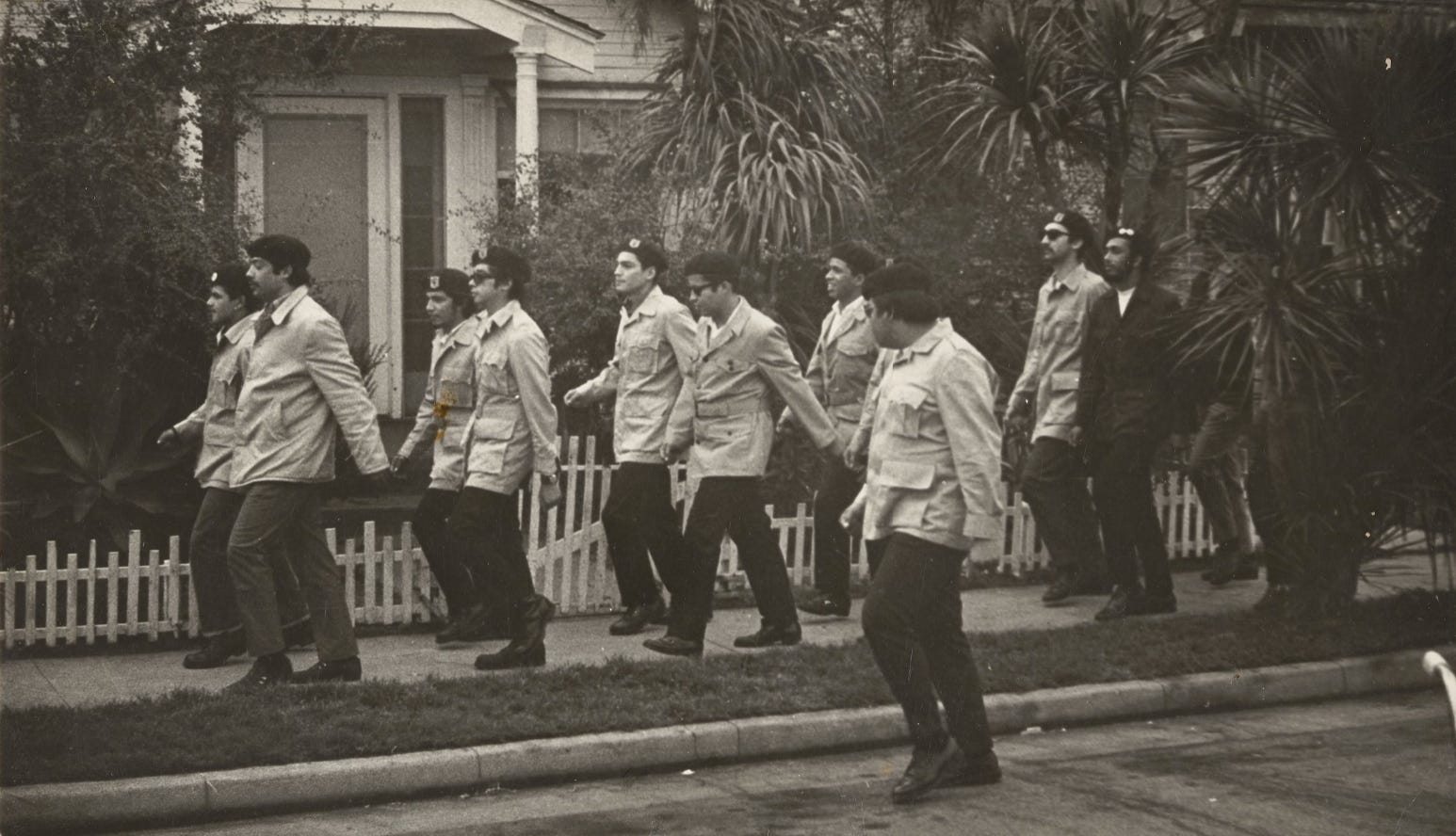
Much like the former GIs, anti-war protesters, and pop culture icons (described in chapter 4 of Gear), Young Chicanos in L.A. harnessed the symbolic power of the field jacket to reflect their militant demands for dignity and criticism of the Vietnam War. But the Brown Berets’ use of M65 military jackets reflects another, often neglected, side of the Anti-War movement, rooted in oppression that treated Chicano lives as expendable.
The Chicano Movement of the 1960s-70s emerged from a shared sense of Mestizo identity and belonging, based on collective experiences of oppression, double colonization, and pride surrounding their indigenous roots in the American Southwest. They developed the ideology of Aztlan, the mythical homeland that united Chicanos across areas of the American Southwest that once had been taken from their indigenous ancestors by Mexico and then the US. Aztlan was a rallying cry for a shared ethno-racial identity and rejection of Anglo-American assimilation.2
Following a Chicano Student organizing conference, a group of seven students founded the organization Young Citizens/Chicanos for Community Action (YCCA) in 1966. The following year, they opened La Piranya Coffee House in East Los Angeles as a place to host revolutionary speakers like Stokely Carmichael and facilitate organizing. As the cafe grew in popularity, police began targeting the young people who hung out there. This pushed the YCCA to adopt militant politics and posture, inspired by the Black Panther Party (BPP), that would be embodied in their new military-inspired look. 3
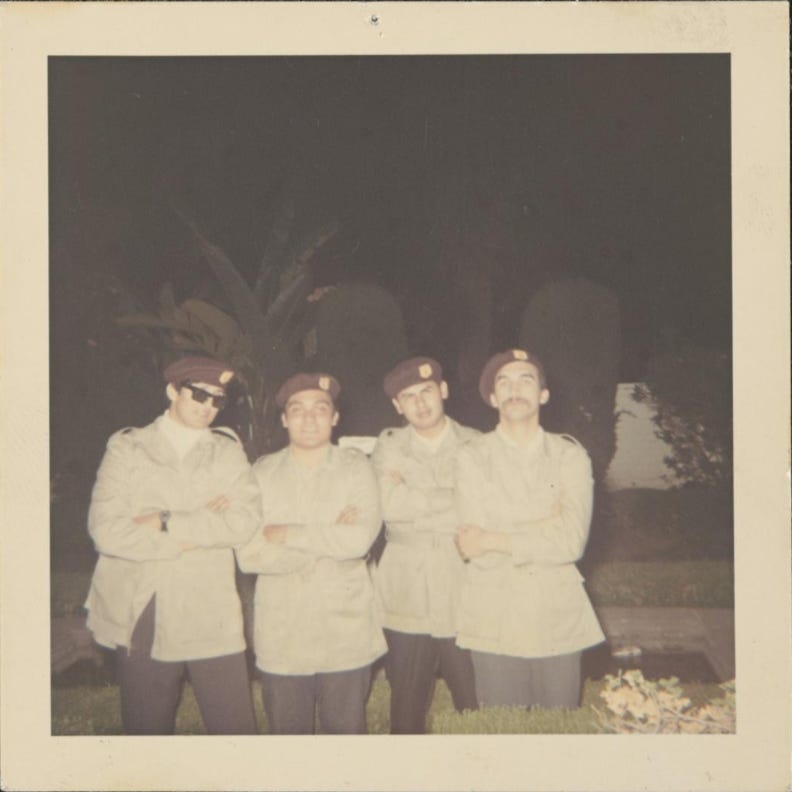
These young Chicanos knew that they needed an image that would reflect their pride in their Chicano heritage, yet also signify solidarity with their brothers in the BPP and other revolutionaries across borders and history. Above all though, the uniform needed to stand out– dramatize their movement– and attract the attention of their community and the media, even if that meant risking police and FBI attention too.
“The way to do it would be with the brown beret and with the bush jackets,” said founding Brown Beret member Cruz Olmeda Becerra. “Because the beret was like a symbol of urban guerrilla warfare from World War II and France… There was a history to that, and we would be tying in with that history, apart from the fact that the Panthers were wearing it as well… They were our brothers.”4
The Berets knew that their uniforms also needed to adapt to the varying climates of Southern California and the American Southwest to comfortably take action in L.A. and beyond. So, they turned to the fruits of the local Army Surplus stores. “Somebody would go to the army surplus and buy a bunch [of] khaki bush jackets,” recalled Carlos Montes, a leading member of the Berets. These brown military jackets made them feel like General Bernard Law Montgomery, the famous general who led British troops in World War II through the Egyptian desert. “We used to joke about it, and we used to see old pictures of World War II, that general… General Montgomery. So we would joke about, ‘Yeah, General Montgomery. But this is the Chicano look now.’”5
David Sanchez remembered that his first beret was blue, given to him by a local church member, but he “just didn’t feel right wearing a blue beret,” thinking, “This doesn’t make any sense to me. I need a brown beret!” So, Sanchez bought one, put it on, and everything clicked.6 To Carlos Montes, the brown color was key in representing their pride and power as Chicano people: “the brown beret, a symbol of pride in being Chicano, Mexicano, and it being brown, being brown and proud, a symbolism of pride, cultural pride.”7 Or at least, that’s what he hoped the beret would project.
To give the uniform a sort of test-drive, David Sanchez wore his new brown beret to a playground where he worked supervising neighborhood children. The kids in the program ran around teasing him, calling out, “Hey, brown beret!” Confused, David insisted his name was “David,” but they would retort, “No, brown beret. You’re wearing a brown beret.” But then David thought, “Hey, that sounds like a good name for an organization, you know.” So, he bought a bunch more brown berets and brought them to La Piranya Coffee House. The YCCA decided to officially adopt this look, and to debut it at a protest against police brutality at the East L.A. Sheriff’s Station.8
As soon as the Brown Berets arrived, armed with their military uniforms, the police caught onto their new name and ideology without the Berets even having to utter a word. Across police radios, Chicanos could hear the police chatter about the appearance of these new “Brown Berets,” comparing them to the Panthers, striking a formidable fear in the hearts of police (and FBI agents) across L.A.9 After the endorsement of neighborhood kids and the instant reaction from the police, their name and uniform became official and iconic. And thus, the Brown Berets were born and became the army of the Chicano movement.
The Brown Berets helped create dramatic, powerful, and shocking demonstrations that were pivotal to the Anti-Vietnam War movement. Thousands march the streets of L.A. to memorialize their loved ones and call attention to the disproportionate death rates of Chicano soldiers - who were only 10% of the US population, but 20% of all U.S. troops killed in Vietnam.10 At these marches and demonstrations, Brown Berets were posted every few blocks to protect protesters and preserve peace. In the event of police violence, the Brown Berets quickly assembled in formation and formed a wall between the police and protesters.
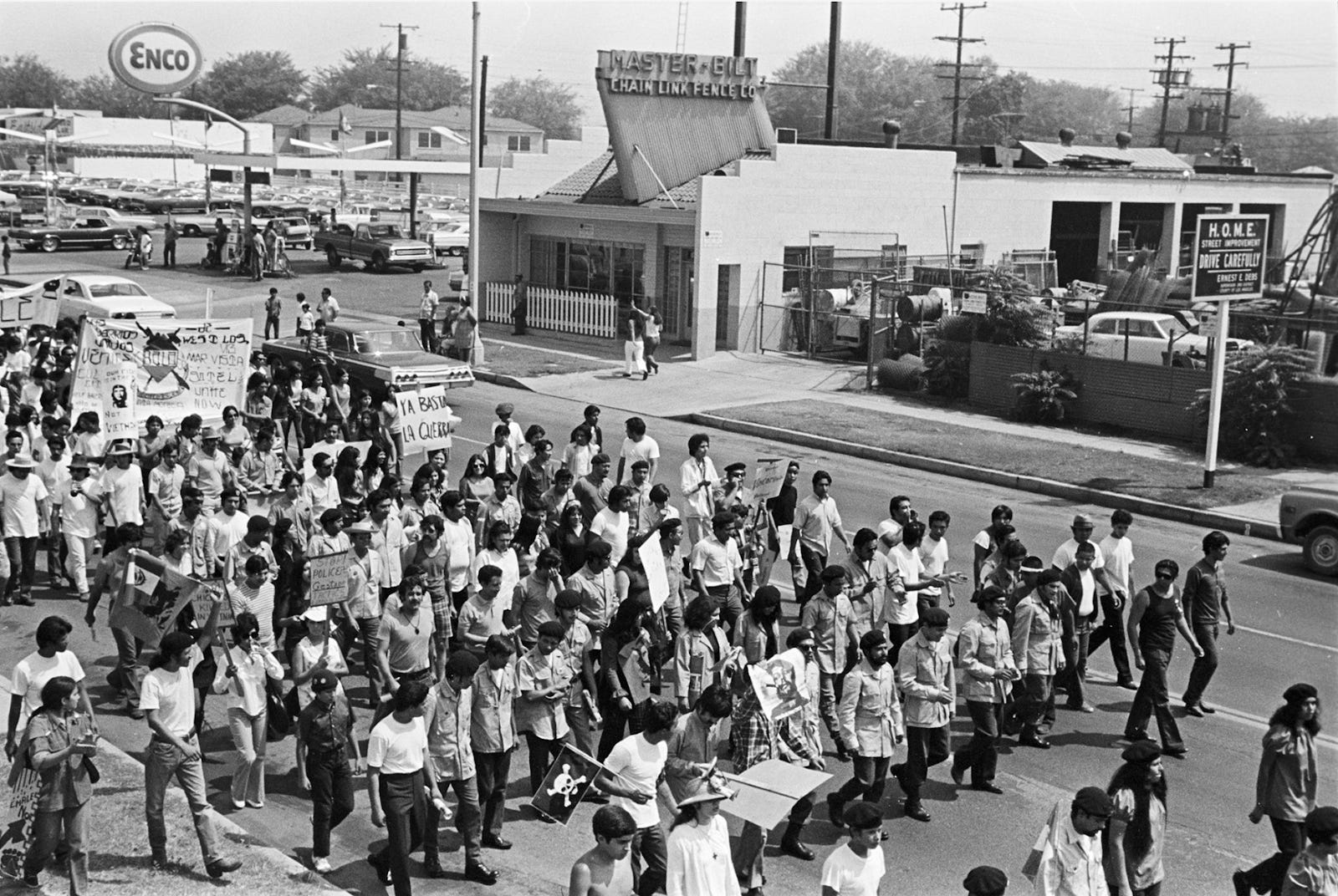
On August 29th, 1970, police attacked over 20,000 protestors, who were marching in the third Chicano Moratorium. Countless were injured, 200 jailed, and 3 killed, including renowned Chicano journalist, Reuben Salazar and a 15-year-old Brown Beret named Lynn Ward. After this tragedy, the Brown Berets decided to shift strategy. They would join forces with other Chicano activist organizations, and expand their focus from just East L.A. to the whole state of California.11
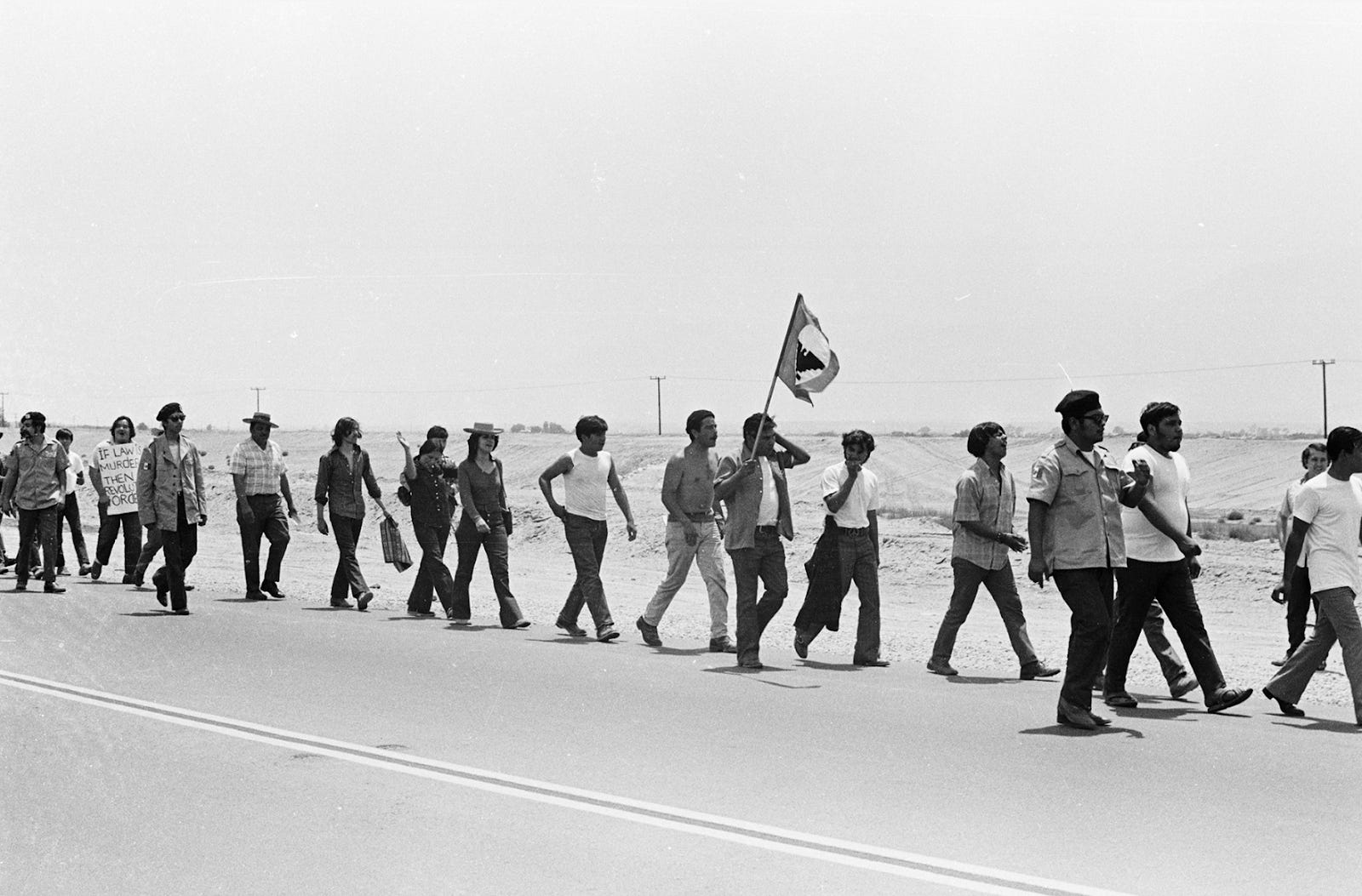
In 1971, the Berets organized multiple cross-state marches, called “La Marcha de la Reconquista,” to re-conquer their land and reclaim their indigenous heritage. Protestors marched down dirt roads, along highways, and through the deserts of Southern California and the American Southwest, with Brown Berets in uniform leading the way. Much like official US military uniforms, the Brown Berets uniforms could be adapted for different environments, and during the hot portions of the marches, Brown Berets would wear a short-sleeve version of their bush jackets. Not only was this versatility convenient, it sent a second powerful message: we belong in the outdoors.
Parks and the outdoors have historically been an exclusionary place for Chicanos. Aside from histories of segregated park systems and the zoning and property taxes that impact park access, the predominantly white nature of many outdoors spaces can be alienating and uncomfortable.12 However, through their uniforms, outdoors-based occupations, and emphasis on cultural unity, the Berets made the outdoors accessible. And this was perfectly exemplified with the Berets’ takeover of Catalina Island.
From August 30th through September 22nd, 1972, the Brown Berets occupied Catalina, setting up camp and living there for nearly a month.13 On the island, they wore their uniforms, while they raised their “La Causa” flag alongside the Mexican flag and practiced their drills. But they also set up tents on the island and enjoyed themselves around the campsite, all while wearing their berets and field jackets.
For the Brown Berets, the field jacket became a means to not only signal their anti-war ideology, but create the image of an army ready to “serve and protect” – the slogan of the Brown Berets– their communities from police, poverty, and racist political systems. They recontextualized the field jacket, and helped it stand for something more that ardent militarism. “We set a big, popular trend in that way,” recalls Carlos Montes. “About a few years later, everybody was buying them.”14
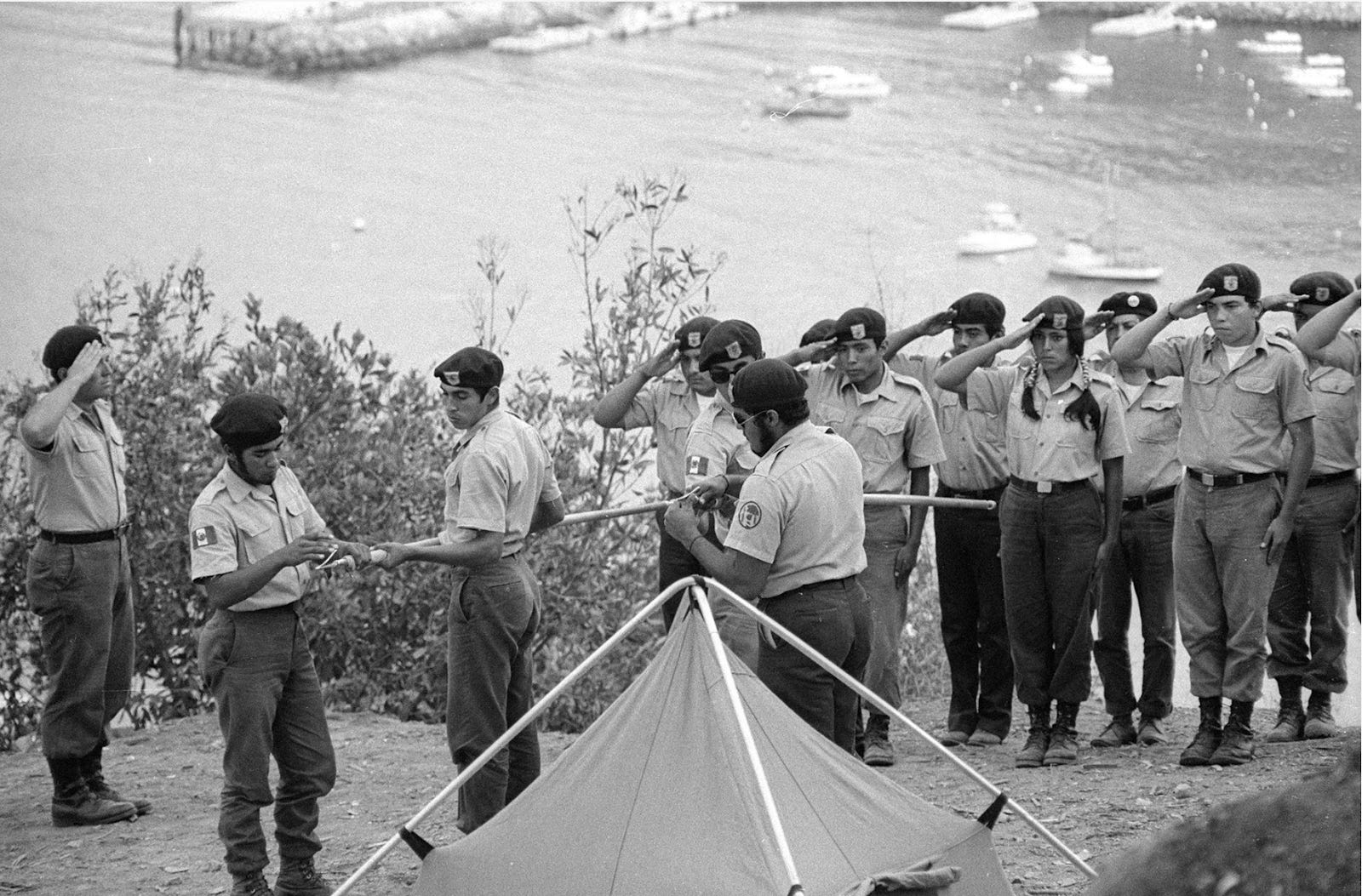
While the Black Panthers are frequent figures in pop culture depictions of the 1960s, the legacy of the Brown Berets is largely overlooked outside of the Chicano studies departments. However, in this moment, when the United States government is once again treating Chicané and Latiné people as expendable and trying to write them out of the history of America, it is crucial to remember their vital role in the life of this nation. The spirit of revolution that motivated the Brown Berets to organize, demand dignity, and fight fascism is more vital than ever. And it’s part of the story of the M65 field jacket.
“Oral History interview with David Sanchez conducted by Virginia Espino, Session 7,” from the UCLA Center for Oral History Research, “La Batalla Está Aquí”: The Chicana/o Movement in Los Angeles, February 4, 2013.
Carlos Muñoz Jr., “The Chicano Movement: Mexican American History and the Struggle for Equality.” Perspectives on Global Development and Technology 17, 1-2 (2018): 40-42; Rodolfo Gonzales, Alberto Urista, “El plan Espiritual de Aztlán,” El grito del Norte, July 6, 1969, 5, Chicano Studies Research Center, University of California, Los Angeles (UCLA).
Ernesto Chávez, “‘Birth of A New Symbol: The Brown Berets,’” ‘Mi Raza Primero!’ (My People First!): Nationalism, Identity, and Insurgency in the Chicano Movement in Los Angeles, 1966-1978, (University of California Press, ), 43-45.
“Oral History Interview with Cruz Olmeda Becerra conducted by Virgina Espino, Session 3,” from the UCLA Center for Oral History Research, “La Batalla Está Aquí”: The Chicana/o Movement in Los Angeles, May 20, 2013.
“Oral History Interview with Carlos Montes conducted by Virgina Espino, Session 4,” from the UCLA Center for Oral History Research, “La Batalla Está Aquí”: The Chicana/o Movement in Los Angeles, May 4, 2012.
“Oral History Interview with Carlos Montes conducted by Virgina Espino, Session 4,” from the UCLA Center for Oral History Research, “La Batalla Está Aquí”: The Chicana/o Movement in Los Angeles, May 4, 2012.
“Oral History interview with David Sanchez conducted by Virginia Espino, Session 1,” from the UCLA Center for Oral History Research, “La Batalla Está Aquí”: The Chicana/o Movement in Los Angeles, November 11, 2012.
Oral History Interview with Carlos Montes conducted by Virgina Espino, Session 3,” from the UCLA Center for Oral History Research, “La Batalla Está Aquí”: The Chicana/o Movement in Los Angeles, April 23, 2012.
“Oral History interview with David Sanchez conducted by Virginia Espino, Session 1,” from the UCLA Center for Oral History Research, “La Batalla Está Aquí”: The Chicana/o Movement in Los Angeles, November 11, 2012.
As quoted from Cruz (Olmeda) Becerra, interview by Chávez May 15, 1993 in Chávez, “‘Birth of A New Symbol,’” ‘Mi Raza Primero!’, 46;
Chávez, “‘Chale No, We Won’t Go!’: The Chicano Moratorium Committee,” ‘Mi Raza Primero!’, 70.
Jason Byrne, “When green is White: The cultural politics of race, nature and social exclusion in a Los Angeles urban national park,” Geoforum 43, no. 3 (2012): 595–611.
Steven Cuevas “The Invisible Force: Latinos at War in Vietnam,” KQED, May 25, 2015, https://www.kqed.org/news/10534280/the-invisible-force-latinos-at-war-in-vietnam.
“Oral History Interview with Carlos Montes conducted by Virgina Espino, Session 4,” from the UCLA Center for Oral History Research, “La Batalla Está Aquí”: The Chicana/o Movement in Los Angeles, May 4, 2012.
 | A guest post by
|
During my time at USC there was a student group called Aztlán that coalesced around these same ideas - they’d often join up with the Black Student Union to throw events for the (very few) Black and Brown folks on campus. Cool to read about the shared sartorial history that preceded all of that.
Good piece!
Fashion is Not Frivolous. And it never has been. What we wear announces who we are, and signals to others what they can expect in our behavior.
There are biases and interpretations used by the observer, and by the wearer of any clothing.
Societal symbolism, and personal needs and intentions, are woven into dress... Both for the viewer, and the wearer. What we wear affects perception and behaviors.
Any fashion, like the look the Panthers used-- and what cops use, and soldiers, and nurses, and how nuns look, and... --fashion always includes behavioral expectations, a role message, and a power message.
Bravo, Brown Berets!